Use our Peptide Reconstitution Calculator to determine solvent volume for peptide preparation. Ensure accurate concentrations and simplify lab solution prep.
Welcome to our comprehensive peptide reconstitution calculator, designed to help researchers achieve precise measurements when working with peptides. Whether you’re reconstituting BPC-157, AOD 9604, or other research peptides, our calculator provides accurate measurements to ensure optimal results in your research applications.
Understanding Peptides and Reconstitution
What Are Peptides?
Peptides are short chains of amino acids linked by peptide bonds. These compounds serve as the building blocks of proteins and play crucial roles in various biological processes. In research settings, peptides are typically supplied as lyophilized (freeze-dried) powders to ensure stability during shipping and storage.
Common research peptides include:
- BPC-157 for tissue healing research
- AOD 9604 for metabolic research
- Thymosin Beta-4 (TB-500) for regeneration studies
- GHK-Cu for skin and tissue research
- Melanotan II for pigmentation studies
What is Peptide Reconstitution?
Reconstitution is the process of dissolving lyophilized peptide powder in a suitable solvent to create a solution for research use. This critical step requires precision to ensure the correct concentration is achieved for accurate dosing in experimental protocols.
Common solvents used for peptide reconstitution include:
- Bacteriostatic water (0.9% benzyl alcohol)
- Sterile water for injection
- Acetic acid solution (for specific peptides)
- Sodium chloride solution
- Specialized buffers for specific applications
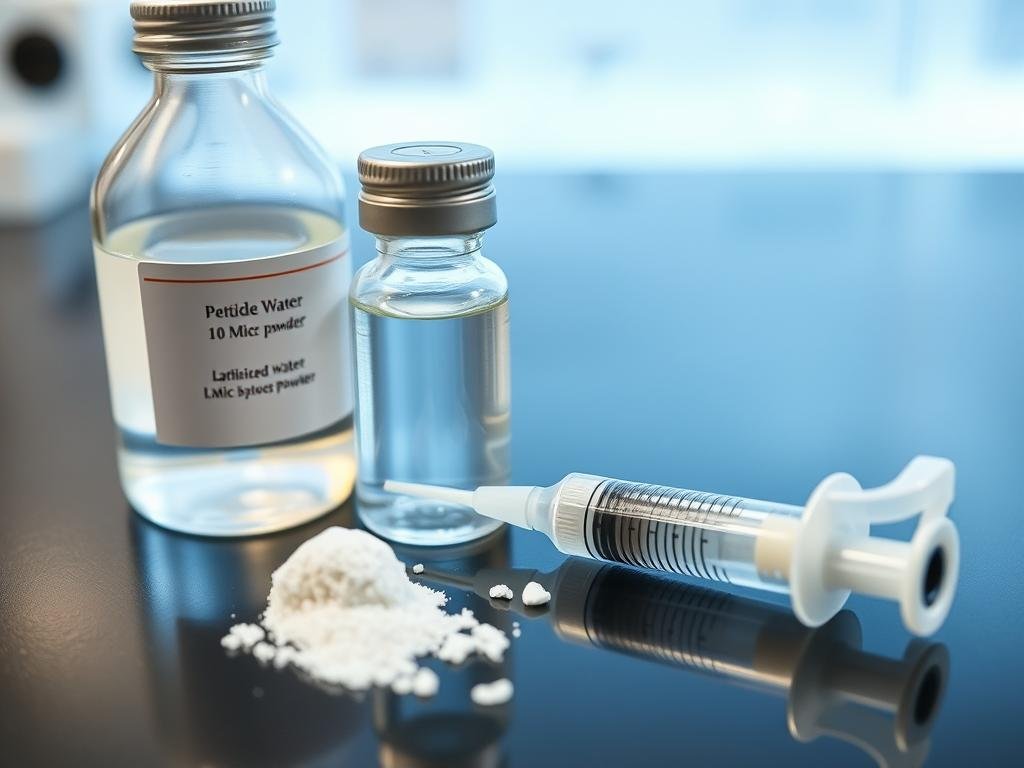
Peptide reconstitution requires bacteriostatic water, a peptide vial, and precise measurement tools
Why Accurate Peptide Reconstitution Matters
Benefits of Proper Reconstitution
- Ensures precise dosing for research protocols
- Maximizes peptide stability and shelf life
- Provides consistent research results
- Prevents waste of valuable research materials
- Allows for reproducible experimental conditions
Risks of Improper Reconstitution
- Inaccurate dosing leading to inconsistent results
- Premature peptide degradation
- Contamination of research materials
- Wasted resources due to calculation errors
- Compromised research integrity
Research Tip: Always allow lyophilized peptides and bacteriostatic water to reach room temperature before reconstitution to prevent condensation that could affect concentration accuracy.
How to Use the Peptide Reconstitution Calculator
-
Select Peptide Amount
Choose the amount of peptide in your vial (typically 5mg, 10mg, etc.). This information is printed on the vial label.
-
Enter Bacteriostatic Water Volume
Select how much bacteriostatic water you plan to add to the peptide vial (common amounts are 1ml, 2ml, or 3ml).
-
Specify Desired Dose
Enter your target dose in micrograms (mcg). Common research protocols often specify doses like 250 mcg or 500 mcg.
-
View Calculation Results
The calculator will show you exactly how far to pull the syringe (in ml and units) to obtain your desired dose.
Practical Reconstitution Examples
Example 1: BPC-157 (5mg vial)
Let’s calculate how to reconstitute a 5mg vial of BPC-157 peptide:
- Peptide amount: 5mg
- Bacteriostatic water added: 2ml
- Desired dose: 250 mcg
Using our peptide reconstitution calculator:
- The concentration will be 5mg ÷ 2ml = 2.5mg/ml
- For a 250 mcg dose (0.25mg), you need 0.25mg ÷ 2.5mg/ml = 0.1ml
- On a standard insulin syringe, pull to 10 units (0.1ml)
Example 2: AOD 9604 (10mg vial)
For a 10mg vial of AOD 9604 peptide:
- Peptide amount: 10mg
- Bacteriostatic water added: 3ml
- Desired dose: 500 mcg
Using our peptide reconstitution calculator:
- The concentration will be 10mg ÷ 3ml = 3.33mg/ml
- For a 500 mcg dose (0.5mg), you need 0.5mg ÷ 3.33mg/ml = 0.15ml
- On a standard insulin syringe, pull to 15 units (0.15ml)
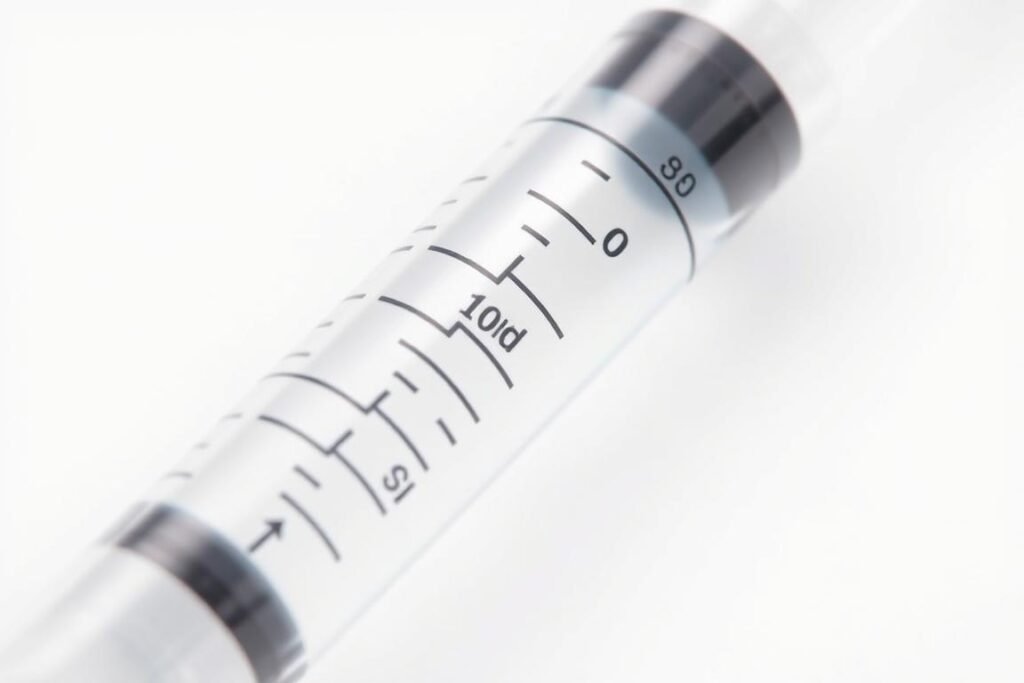
Insulin syringe showing the 10-unit (0.1ml) mark for a 250mcg dose of reconstituted peptide
Common Peptide Reconstitution Mistakes to Avoid
Important: Improper reconstitution can compromise peptide stability and research results. Always follow proper laboratory protocols when handling research peptides.
Calculation Errors
Miscalculating the amount of bacteriostatic water or the final concentration can lead to inaccurate dosing. Always double-check your calculations or use our peptide reconstitution calculator to ensure precision.
Improper Mixing Technique
Vigorously shaking the vial can damage delicate peptide structures. Instead, gently swirl the vial or roll it between your palms to ensure complete dissolution without damaging the peptide molecules.
Using Incorrect Solvent
Not all peptides dissolve well in bacteriostatic water. Some require acetic acid solutions or specific buffers. Always check the manufacturer’s recommendations for the appropriate reconstitution solvent.
Temperature Issues
Reconstituting cold peptides straight from refrigeration can cause condensation that affects concentration. Allow peptides and solvents to reach room temperature before reconstitution.
Contamination
Not using sterile technique can introduce contaminants. Always clean vial tops with alcohol swabs and use sterile syringes and needles when reconstituting peptides.
Improper Storage
Once reconstituted, peptides have limited stability. Store reconstituted peptides according to manufacturer guidelines, typically refrigerated (2-8°C) or frozen (-20°C) to maintain potency.
Proper Storage of Reconstituted Peptides
Storage Guidelines
After using our peptide reconstitution calculator and preparing your solution, proper storage is essential to maintain peptide integrity:
- Lyophilized (powder) peptides: Store at -20°C for long-term stability
- Reconstituted peptides: Store at 2-8°C for up to 2-4 weeks
- For extended storage: Aliquot reconstituted peptides and store at -20°C
- Avoid freeze-thaw cycles: Each cycle can degrade peptide quality
- Protect from light: Many peptides are photosensitive
Stability Factors
Several factors affect the stability of reconstituted peptides:
- Temperature: Higher temperatures accelerate degradation
- pH: Extreme pH values can destabilize peptide structures
- Solvent: The choice of reconstitution solvent affects stability
- Concentration: Higher concentrations may precipitate over time
- Peptide sequence: Some peptides are inherently more stable than others
Research Note: For peptides used in multiple sessions, consider reconstituting with bacteriostatic water containing 0.9% benzyl alcohol, which inhibits microbial growth for up to 28 days when refrigerated.
Frequently Asked Questions
What is the best solvent for peptide reconstitution?
Bacteriostatic water (0.9% benzyl alcohol) is the most commonly used solvent for peptide reconstitution as it prevents microbial growth and maintains stability. However, some peptides may require specific solvents like acetic acid solutions or specialized buffers. Always check the manufacturer’s recommendations for your specific peptide.
How long do reconstituted peptides last?
When reconstituted with bacteriostatic water and stored properly at 2-8°C, most peptides remain stable for 2-4 weeks. For longer storage, aliquot the solution and store at -20°C, where many peptides can remain stable for 3-6 months. Avoid repeated freeze-thaw cycles as they accelerate degradation.
How do I know if my peptide has degraded?
Signs of peptide degradation include visible particles in the solution, cloudy appearance, color changes, or decreased efficacy in research applications. If you suspect degradation, it’s best to reconstitute a fresh vial for accurate research results.
Can I use regular water instead of bacteriostatic water?
Regular water is not recommended as it lacks antimicrobial properties. Sterile water for injection can be used if the peptide will be used immediately, but bacteriostatic water is preferred for multi-use vials as it prevents microbial growth for up to 28 days when refrigerated.
How accurate is the peptide reconstitution calculator?
Our peptide reconstitution calculator provides highly accurate results based on mathematical principles of concentration and volume. However, the actual precision in practice depends on proper technique, accurate measurement of the bacteriostatic water, and the precision of your syringe. Using calibrated laboratory equipment enhances accuracy.
Scientific Resources for Peptide Research
Authoritative References
Conclusion
Our peptide reconstitution calculator provides a reliable tool for researchers working with peptides like BPC-157, AOD 9604, and others. By ensuring accurate reconstitution and dosing, you can maintain the integrity of your research and achieve consistent results. Remember that proper technique, appropriate solvents, and correct storage are all critical factors in successful peptide research.
We encourage you to bookmark our peptide reconstitution calculator for future reference and explore our other research calculators to enhance your scientific work. For specific questions about peptide reconstitution or calculator usage, please refer to our FAQ section or contact our support team.
Start Using Our Peptide Reconstitution Calculator Today
Ensure precision in your peptide research with our easy-to-use calculator.