Use our Pace Calculator to determine your running pace per mile or kilometer. Plan workouts, track progress, and improve endurance and performance effectively.
Whether you’re training for your first 5K or preparing for your twentieth marathon, understanding and managing your pace is crucial for success. A pace calculator is the tool that can transform your running, helping you train smarter and race more effectively. In this comprehensive guide, we’ll explore everything you need to know about pace calculators and how they can elevate your running performance.

What Is a Pace Calculator and Why Is It Important?
A pace calculator is a specialized tool that helps runners determine the relationship between distance, time, and pace. It allows you to input two of these variables to calculate the third, making it invaluable for planning training sessions and race strategies.
Core Functions of Pace Calculators
- Calculate your pace when you know distance and time
- Determine your finish time based on distance and pace
- Find out how far you can run in a given time at a specific pace
- Generate split times for consistent pacing during races
- Convert between different pace units (min/mile, min/km, mph, kph)

For runners, knowing your pace isn’t just about numbers—it’s about training efficiently, avoiding injury, and achieving your goals. Training at the right pace ensures you’re working at the appropriate intensity for each workout, whether it’s a recovery run, tempo session, or race-pace effort.
Different Types of Pace Calculations
Pace calculators offer various calculation types to meet different running needs. Understanding these calculations helps you apply them effectively to your training and racing.
Time/Distance Calculations
When you know how far you want to run and how much time you have, a pace calculator determines how fast you need to move. This is particularly useful for race planning when you have a specific finish time goal.
Formula: Pace = Time ÷ Distance
Example: If you run 5 miles in 40 minutes, your pace is 8 minutes per mile.
Distance/Time Calculations
If you know your pace and available time, you can calculate how far you’ll be able to run. This helps when planning training runs with time constraints or predicting race performance.
Formula: Distance = Time ÷ Pace
Example: If you run at a 9-minute mile pace for 45 minutes, you’ll cover 5 miles.
Split Time Calculations
Split times break down your overall pace into smaller segments, helping you maintain consistent effort throughout a run or race. They’re essential for pacing strategy and preventing burnout.
Formula: Split Time = Pace × Split Distance
Example: At a 7:30/mile pace, your 1-mile splits would be 7:30, 15:00, 22:30, etc.

How to Use a Pace Calculator Effectively
Getting the most from a pace calculator requires understanding how to apply it to your specific running goals. Here’s a step-by-step guide to using pace calculators effectively:
Step-by-Step Guide
- Determine your current fitness level through a time trial or recent race
- Set realistic time goals based on your current abilities
- Input your target distance and desired finish time
- Note the required pace to achieve your goal
- Break down the pace into manageable splits
- Use these splits to guide your training and racing

Pro Tip: For the most accurate results, use a recent race time as your baseline. This provides a realistic assessment of your current fitness level and helps set appropriate pace targets for future races.
Benefits of Using Pace Calculators
Pace calculators offer numerous advantages that can significantly improve your running experience and performance. Understanding these benefits helps you appreciate why this tool is essential for runners of all levels.
Benefits of Pace Calculators
- Prevents starting too fast in races (the most common racing mistake)
- Helps establish appropriate training intensities for different workouts
- Enables accurate race prediction based on current fitness
- Facilitates strategic race planning with precise split times
- Allows for realistic goal setting based on your capabilities
- Tracks improvement over time with objective measurements
- Reduces injury risk by preventing overtraining
Limitations to Consider
- Calculations are theoretical and may not account for all variables
- Doesn’t factor in weather conditions or terrain variations
- May not reflect your personal strengths and weaknesses
- Requires honest assessment of current fitness
- Can’t replace the importance of listening to your body

Practical Examples with Calculations
Let’s explore some real-world examples to demonstrate how pace calculators work in practice. These examples cover common scenarios that runners encounter when planning their training and races.
Example 1: Calculating Pace for a 5K with a Target Time of 25 Minutes
| Variable | Value | Calculation |
| Distance | 5 kilometers (3.1 miles) | Given |
| Target Time | 25 minutes | Given |
| Pace (min/km) | 5:00 min/km | 25 min ÷ 5 km = 5:00 min/km |
| Pace (min/mile) | 8:03 min/mile | 25 min ÷ 3.1 miles = 8:03 min/mile |
Example 2: Determining Finish Time for a Marathon at 8:30 min/mile Pace
| Variable | Value | Calculation |
| Distance | 26.2 miles (42.2 km) | Given |
| Pace | 8:30 min/mile | Given |
| Finish Time | 3:42:42 | 8:30 × 26.2 = 222.7 minutes = 3:42:42 |
Example 3: Calculating Split Times for a 10K Race
| Kilometer | Split Time (at 5:30 min/km pace) | Cumulative Time |
| 1 | 5:30 | 5:30 |
| 2 | 5:30 | 11:00 |
| 3 | 5:30 | 16:30 |
| 4 | 5:30 | 22:00 |
| 5 | 5:30 | 27:30 |
| 6 | 5:30 | 33:00 |
| 7 | 5:30 | 38:30 |
| 8 | 5:30 | 44:00 |
| 9 | 5:30 | 49:30 |
| 10 | 5:30 | 55:00 |

Recommended Pace Calculator Tools and Apps
Several excellent pace calculators are available online and as mobile apps. Here are some of the most reliable and feature-rich options to consider for your training needs.
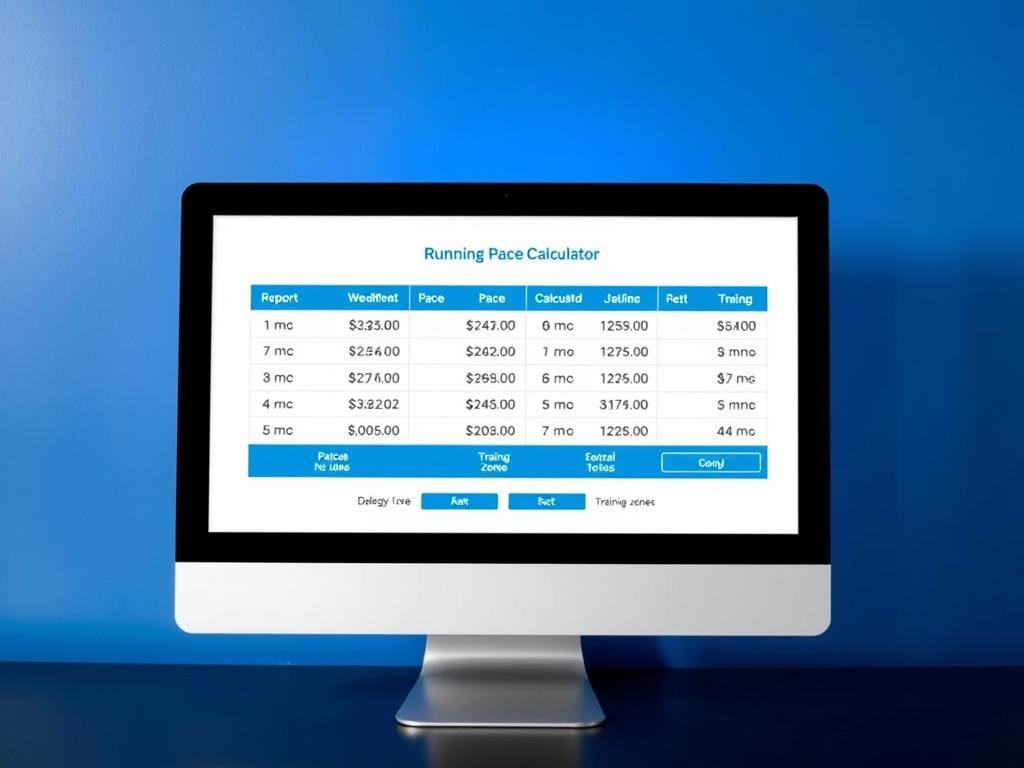
McMillan Running Calculator
Widely regarded as the gold standard for running calculators, McMillan’s tool provides comprehensive training paces based on your race times. It offers precise paces for every type of workout.
Calculator.net
A versatile and user-friendly calculator that offers multiple pace calculation options. It includes features like multipoint pace calculation and finish time prediction for races.
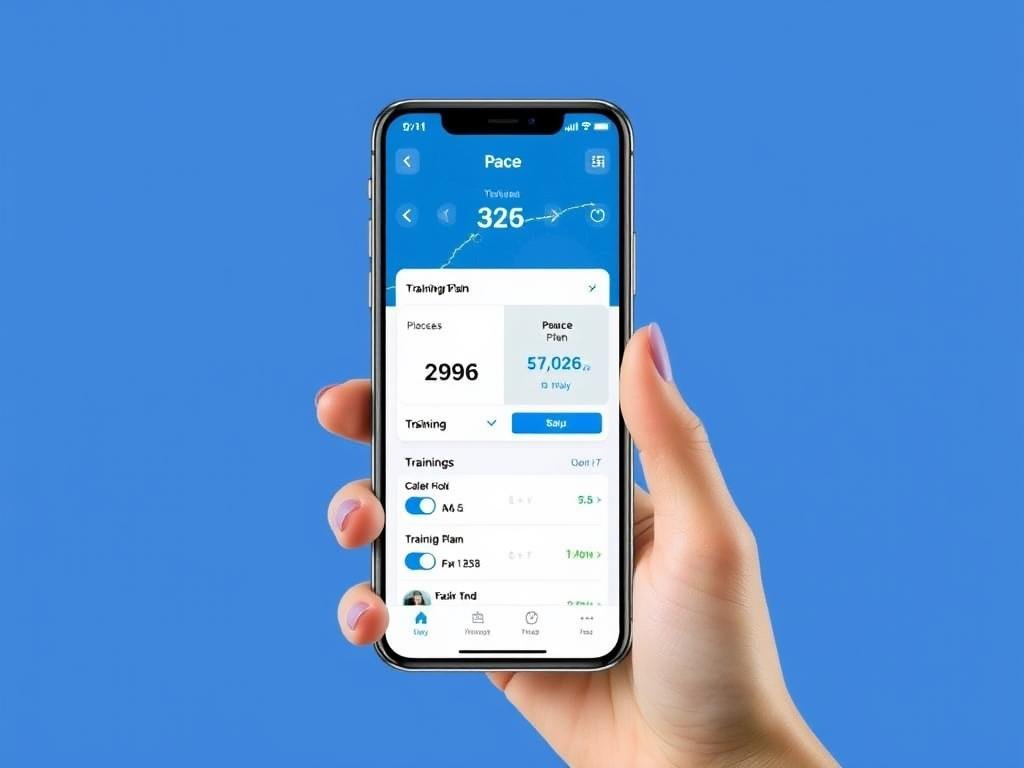
Runna
More than just a calculator, Runna offers personalized training plans based on your pace data. It includes detailed pace tables for various distances and integrates with your training schedule.

Tips for Adjusting Pace Based on Variables
While pace calculators provide valuable guidance, real-world running conditions often require adjustments. Here’s how to modify your calculated pace based on various factors.
Terrain Adjustments
- Uphill: Add 10-15 seconds per mile for each 1% grade
- Downhill: Subtract 5-10 seconds per mile for each 1% grade (but be cautious of increased impact)
- Trail running: Add 20-30% to your road pace depending on technical difficulty
- Beach sand: Add 30-40% to your normal pace
- Track running: Expect 1-3% faster pace than road running
Weather Adjustments
- Heat: Add 30 seconds per mile for every 5°F above 60°F
- Humidity: Add 15-20 seconds per mile for every 20% increase above 40% humidity
- Wind: Add 30 seconds per mile for every 10 mph headwind
- Cold: Expect 1-2% slower pace below 25°F due to muscle stiffness
- Altitude: Add 15 seconds per mile for every 1,000 feet above 5,000 feet
Fitness Level Adjustments
| Training Phase | Adjustment to Calculator Prediction | Example (for 8:00/mile pace) |
| Base building | Add 10-15% | 8:48-9:12/mile |
| Mid-training | Add 5-10% | 8:24-8:48/mile |
| Peak training | Use calculator pace | 8:00/mile |
| Taper/Race ready | Subtract 1-3% | 7:46-7:55/mile |
| Post-injury return | Add 15-20% | 9:12-9:36/mile |

Common Mistakes to Avoid When Using Pace Calculators
While pace calculators are powerful tools, they’re often misused. Avoiding these common mistakes will help you get more accurate and useful results from your pace calculations.
Ignoring Current Fitness
Many runners input aspirational times rather than their current capabilities. This leads to unrealistic pace targets that can result in burnout or injury.
Solution: Use a recent race result or time trial as your baseline. If you haven’t raced recently, conduct a 1-mile or 5K time trial to establish your current fitness level.
Not Adjusting for Conditions
Pace calculators provide ideal-condition estimates. Failing to adjust for heat, hills, wind, or altitude can lead to frustration when you can’t hit your target pace.
Solution: Apply the adjustment factors outlined in the previous section to modify your target pace based on the specific conditions you’ll be facing.
Overreliance on Technology
Some runners become so fixated on their calculated pace that they ignore body signals. This can lead to pushing too hard on easy days or not hard enough on workout days.
Solution: Use pace calculators as a guide, not a mandate. Learn to balance pace data with perceived effort and adjust accordingly during your runs.

Important: Remember that pace calculators are tools, not crystal balls. They provide estimates based on mathematical formulas that may not perfectly reflect your individual strengths, weaknesses, and training history. Always combine calculator data with your own experience and coaching advice for best results.
Conclusion: Making the Most of Your Pace Calculator
A pace calculator is more than just a number-crunching tool—it’s a key to smarter, more effective training. By understanding how to use pace calculators properly and interpret their results in the context of your unique circumstances, you can transform your running experience.
From planning your training sessions to executing your race strategy, pace calculators provide the objective data you need to make informed decisions. They help you avoid common pitfalls like starting too fast or training at inappropriate intensities, while giving you concrete targets to work toward.
As you incorporate pace calculations into your running routine, remember that they’re meant to serve you, not control you. Use them as guidelines, adjust them based on real-world conditions, and always listen to your body’s feedback. With this balanced approach, you’ll find that pace calculators become an invaluable ally in your running journey.
Ready to Optimize Your Training?
Try one of our recommended pace calculators today and take the guesswork out of your running. Whether you’re preparing for your first 5K or aiming for a marathon PR, the right pace calculator can help you train smarter and race faster.
