Use our Healthy Weight Calculator to estimate your ideal weight based on height, age, and gender. Plan fitness goals and maintain a balanced, healthy lifestyle.
Maintaining a healthy weight is a cornerstone of overall wellness. It can reduce your risk of chronic diseases, boost your energy levels, and improve your quality of life. But what exactly constitutes a “healthy weight” for you? This is where a healthy weight calculator comes in – a valuable tool that helps you understand your ideal weight range based on various factors like height, age, and body composition.
In this comprehensive guide, we’ll explore how healthy weight calculators work, the different methods used to determine ideal weight, and how to interpret the results in the context of your overall health journey.
What Is a Healthy Weight Calculator?

A healthy weight calculator is a tool designed to estimate an appropriate weight range for an individual based on various physical characteristics. Unlike generic weight charts, these calculators consider multiple factors to provide a more personalized assessment of what might constitute a healthy weight for your specific body type.
These calculators don’t just give you a single “ideal” number. Instead, they typically provide a range that accounts for natural variations in body composition. This approach acknowledges that healthy bodies come in different shapes and sizes, and that weight is just one of many health indicators.
Ready to Find Your Healthy Weight Range?
Use our interactive calculator to get a personalized assessment based on multiple health factors.
Methods for Calculating Healthy Weight
There are several established methods for determining what constitutes a healthy weight. Each approach has its strengths and limitations, which is why health professionals often use multiple methods for a more comprehensive assessment.
Body Mass Index (BMI)
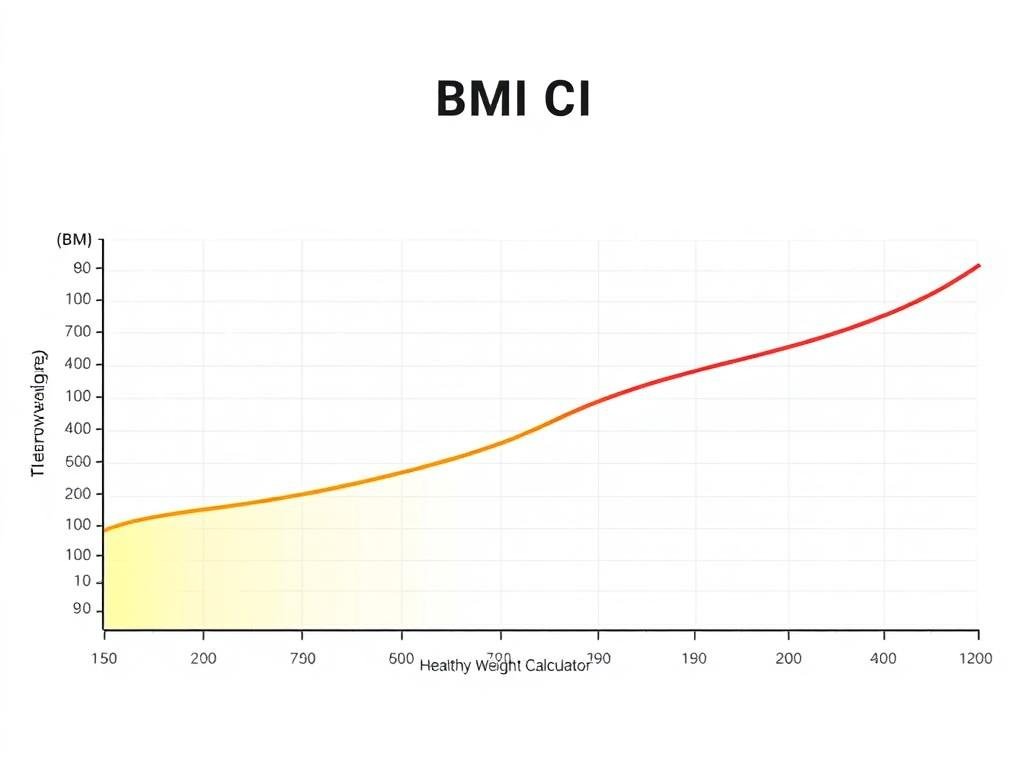
Body Mass Index (BMI) is the most widely used method for assessing healthy weight. It calculates the relationship between your height and weight using a simple mathematical formula:
BMI = Weight (kg) ÷ Height² (m²)
Based on your BMI result, your weight falls into one of these categories:
- Underweight: BMI less than 18.5
- Healthy weight: BMI between 18.5 and 24.9
- Overweight: BMI between 25 and 29.9
- Obesity: BMI of 30 or higher
Waist-to-Hip Ratio (WHR)

The Waist-to-Hip Ratio provides insight into how your body distributes fat, which can be a significant health indicator. Research shows that carrying excess weight around your midsection (an “apple” shape) may pose greater health risks than carrying weight around your hips and thighs (a “pear” shape).
To calculate WHR:
- Measure your waist at its narrowest point, usually just above the belly button
- Measure your hips at their widest point
- Divide your waist measurement by your hip measurement
According to the World Health Organization, a healthy WHR is:
- For men: Less than 0.9
- For women: Less than 0.85
Body Fat Percentage

Body fat percentage measures the proportion of your total body weight that consists of fat. This method provides valuable insight into your body composition, distinguishing between fat mass and lean mass (muscle, bone, organs, etc.).
Healthy body fat percentage ranges vary by sex and age:
| Classification | Women (% fat) | Men (% fat) |
| Essential fat | 10-13% | 2-5% |
| Athletes | 14-20% | 6-13% |
| Fitness | 21-24% | 14-17% |
| Average | 25-31% | 18-24% |
| Obese | 32%+ | 25%+ |
How to Use a Healthy Weight Calculator
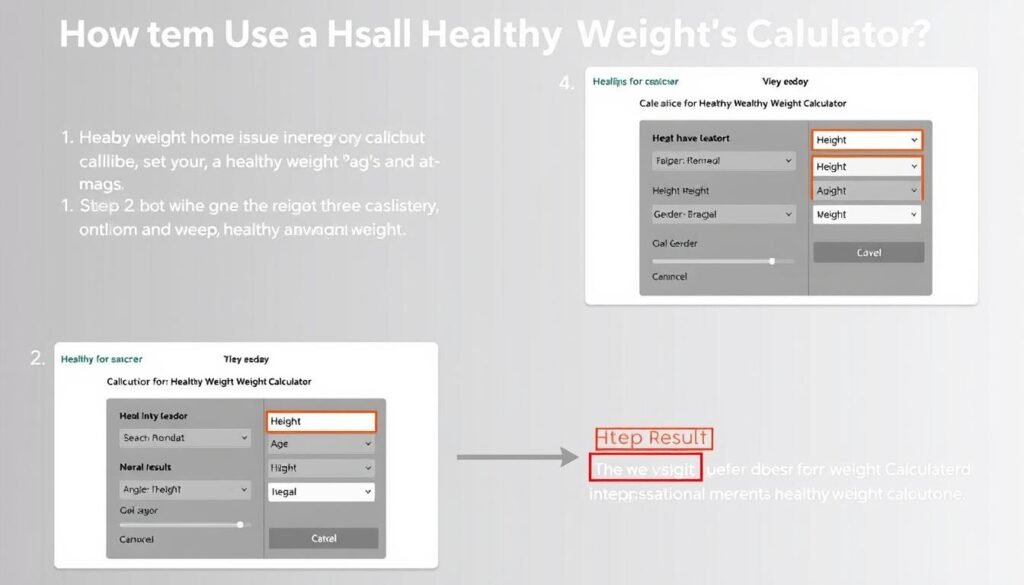
Using a healthy weight calculator is straightforward, but understanding how to interpret the results is key. Here’s a step-by-step guide to using most online healthy weight calculators:
Step 1: Gather Your Measurements
Before using a calculator, you’ll need to collect some basic information:
- Current weight (in pounds or kilograms)
- Height (in inches or centimeters)
- Age
- Sex (most calculators use biological sex due to physiological differences)
- Waist and hip measurements (for WHR calculations)
Step 2: Choose the Right Calculator
Different calculators use different formulas. For a comprehensive assessment, consider using multiple calculators:
- BMI Calculator: For a basic height-to-weight ratio assessment
- Waist-to-Hip Ratio Calculator: For fat distribution analysis
- Body Fat Percentage Calculator: For body composition assessment
- Ideal Weight Calculator: For formula-based ideal weight ranges
Step 3: Input Your Data
Enter your measurements accurately into the calculator. Even small errors can significantly affect your results. For example, a difference of just one inch in height can change your BMI calculation by up to 1.5 points.
Step 4: Interpret Your Results

When reviewing your results, remember that these calculations provide estimates, not definitive answers. Consider the following example:
Sarah is 5’6″ (167.6 cm) tall and weighs 150 lbs (68 kg). Her BMI calculation is 24.2, which falls within the “healthy weight” range. Her waist measures 30 inches (76.2 cm) and her hips 40 inches (101.6 cm), giving her a WHR of 0.75, which is also considered healthy. However, her body fat percentage is 32%, which is slightly above the recommended range for her age.
In this example, Sarah’s results show that while her weight-to-height ratio is healthy, her body composition might benefit from increasing muscle mass and reducing body fat through strength training.
Want a More Accurate Assessment?
For the most accurate body composition analysis, consult with a healthcare professional who can use advanced measurement techniques.
Limitations of Healthy Weight Calculators
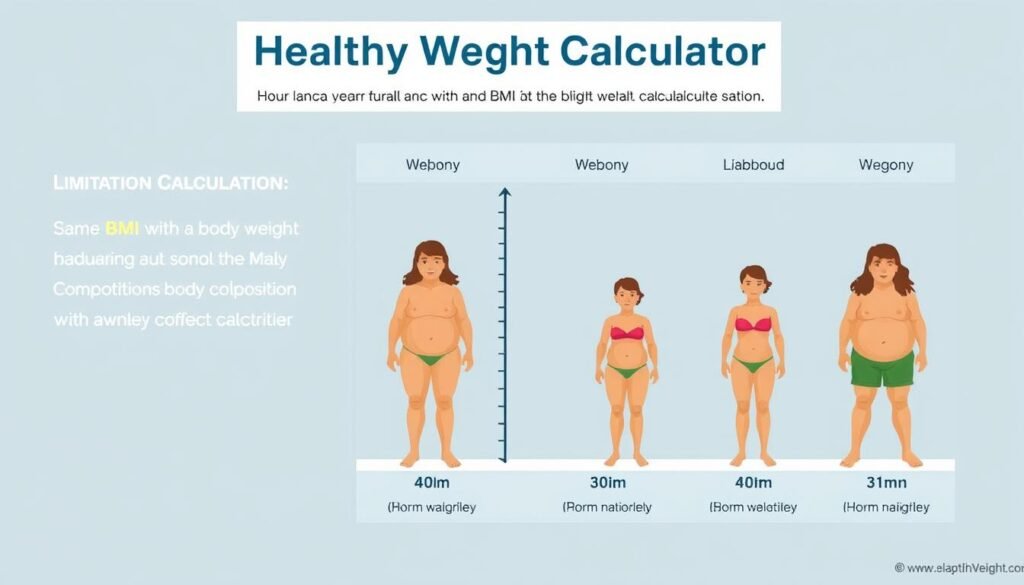
While healthy weight calculators provide valuable insights, they have several important limitations to keep in mind:
What Calculators Do Well
- Provide quick, accessible health assessments
- Offer standardized metrics for general population trends
- Raise awareness about weight-related health concerns
- Provide starting points for health discussions
Limitations of Calculators
- Don’t account for muscle mass (athletes often register as “overweight”)
- Fail to consider age-related body composition changes
- Don’t account for ethnic and racial differences in body composition
- Overlook individual health factors and medical history
Consider the case of professional athletes, who often have BMIs in the “overweight” category due to their higher muscle mass. Similarly, older adults may have healthy BMIs but unhealthy body compositions with too little muscle mass, a condition known as sarcopenia.
Important Note: Healthy weight calculators should be used as screening tools, not diagnostic instruments. They provide general guidelines rather than personalized health assessments.
Tips for Maintaining a Healthy Weight

Achieving and maintaining a healthy weight involves more than just watching numbers on a scale. It requires a holistic approach to health that includes nutrition, physical activity, and lifestyle factors.
Nutrition Tips
- Focus on whole foods like fruits, vegetables, lean proteins, and whole grains
- Practice portion control using the plate method (½ vegetables, ¼ protein, ¼ carbohydrates)
- Stay hydrated with water instead of sugary beverages
- Limit processed foods high in added sugars, sodium, and unhealthy fats
- Eat mindfully, paying attention to hunger and fullness cues
- Plan meals ahead to avoid impulsive, less healthy choices
Physical Activity Guidelines

The Centers for Disease Control and Prevention recommends:
- 150 minutes of moderate-intensity aerobic activity or 75 minutes of vigorous activity weekly
- Muscle-strengthening activities at least twice per week
- Reducing sedentary time by taking breaks from sitting
Remember that consistency matters more than intensity. Find activities you enjoy so you’re more likely to stick with them long-term.
Lifestyle Factors
- Prioritize quality sleep (7-9 hours for most adults)
- Manage stress through techniques like meditation, deep breathing, or yoga
- Build a support system of friends, family, or health professionals
- Set realistic, sustainable goals rather than pursuing rapid weight changes
Need Help With Your Nutrition Plan?
Get personalized nutrition and exercise recommendations based on your healthy weight calculation.
When to Consult Healthcare Professionals

While healthy weight calculators provide useful information, certain situations warrant professional medical advice:
Consult a Healthcare Provider If:
- Your BMI falls into the underweight or obese categories
- You’ve experienced unexplained weight changes (gain or loss)
- You have existing health conditions affected by weight (diabetes, heart disease, etc.)
- You’re planning significant changes to your diet or exercise routine
- You’re struggling with disordered eating patterns or body image concerns
- You need personalized guidance for special circumstances (pregnancy, athletic training, etc.)
Healthcare professionals who can provide guidance include:
- Primary care physicians
- Registered dietitians
- Certified personal trainers
- Endocrinologists (for hormone-related weight issues)
- Mental health professionals (for emotional aspects of weight management)
These experts can provide personalized assessments that go beyond what calculators offer, including blood tests, detailed body composition analyses, and tailored recommendations based on your specific health history and goals.
Conclusion: A Balanced Approach to Weight Management

Healthy weight calculators are valuable tools that can help you understand where you stand in relation to general health guidelines. However, they represent just one piece of the overall health puzzle.
Remember that health encompasses much more than weight alone. Factors like energy levels, sleep quality, mental wellbeing, and the absence of disease are equally important indicators of overall health.
Use healthy weight calculators as starting points for your wellness journey, but focus on developing sustainable habits that support your overall health rather than fixating on reaching a specific number. By taking this balanced approach, you’ll be more likely to achieve lasting results and improved wellbeing.
Start Your Health Journey Today
Calculate your healthy weight range and receive weekly tips for maintaining a balanced lifestyle.
How often should I recalculate my healthy weight?
For most adults, recalculating every 6-12 months is sufficient unless you experience significant changes in your health, fitness level, or body composition. During periods of intentional weight change, you might want to recalculate more frequently to track your progress.
Why do different calculators give me different results?
Different calculators use different formulas and consider different factors. For example, some ideal weight calculators use the Devine formula, while others use the Hamwi, Robinson, or Miller formulas. Each was developed for slightly different purposes and populations, which explains the variation in results.
Is BMI accurate for everyone?
No, BMI has significant limitations. It doesn’t account for differences in muscle mass, bone density, overall body composition, or ethnic and racial differences. It’s particularly inaccurate for athletes, older adults, and certain ethnic groups. That’s why it’s best used alongside other health assessments.