Understanding the relationship between speed, distance, and time is essential in many aspects of our daily lives. Whether you’re planning a road trip, analyzing athletic performance, or solving physics problems, our Speed Calculator provides a simple way to determine how fast an object is moving, how far it travels, or how long a journey takes. This comprehensive guide explains everything you need to know about speed calculations, from basic formulas to practical applications.

What is Speed? Understanding the Basic Concept
Speed is defined as the rate at which an object covers distance. It tells us how fast something is moving by measuring the distance traveled per unit of time. In physics, speed is a scalar quantity, meaning it has magnitude but no direction (unlike velocity, which includes direction).
Need to Calculate Speed Quickly?
Our Speed Calculator makes it easy to find speed, distance, or time with just a few clicks.
The concept of speed is something we encounter daily. When driving, we monitor our car’s speedometer to ensure we’re within legal limits. Athletes track their running or cycling speed to measure performance. Even in casual conversations, we discuss how quickly we can complete tasks or travel between locations.

The Speed Formula: How to Calculate Speed, Distance, and Time
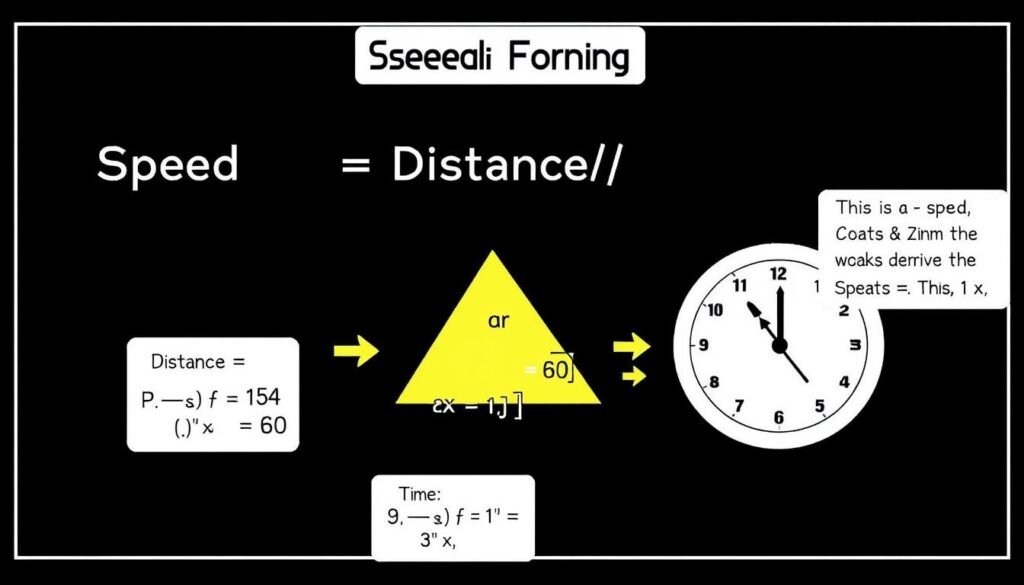
The fundamental relationship between speed, distance, and time is expressed through a simple formula that forms the basis of all speed calculations:
Speed = Distance ÷ Time
This formula can be rearranged to find any of the three variables:
Distance = Speed × Time
Time = Distance ÷ Speed
Understanding this relationship allows you to solve a wide range of practical problems. For example, if you know you need to travel 150 miles and want to arrive in 3 hours, you can calculate that you need to maintain an average speed of 50 miles per hour.
Step-by-Step Guide to Manual Speed Calculations
Calculating Speed
- Identify the total distance traveled in your preferred unit (miles, kilometers, meters, etc.)
- Determine the time taken in appropriate units (hours, minutes, seconds)
- Ensure both measurements use compatible units
- Divide the distance by the time
- The result is your speed in distance units per time unit
Calculating Distance or Time
- For distance: Multiply speed by time
- For time: Divide distance by speed
- Always check that your units are consistent
- Convert your final answer to the desired unit if necessary
Practical Example: Road Trip Planning
You’re planning a road trip from New York to Washington DC, a distance of approximately 225 miles. If you want to arrive in 4 hours, what average speed must you maintain?
Using the formula: Speed = Distance ÷ Time
Speed = 225 miles ÷ 4 hours = 56.25 miles per hour
This simple calculation helps you plan your journey effectively, accounting for speed limits and potential rest stops.
Save Time on Calculations
Why calculate manually when our Speed Calculator can do it instantly? Try it now for quick and accurate results.
Speed Units and Conversions: From MPH to KM/H and Beyond
Speed can be measured in various units depending on the context and regional standards. Understanding these different units and how to convert between them is essential for many practical applications.
Common Speed Units
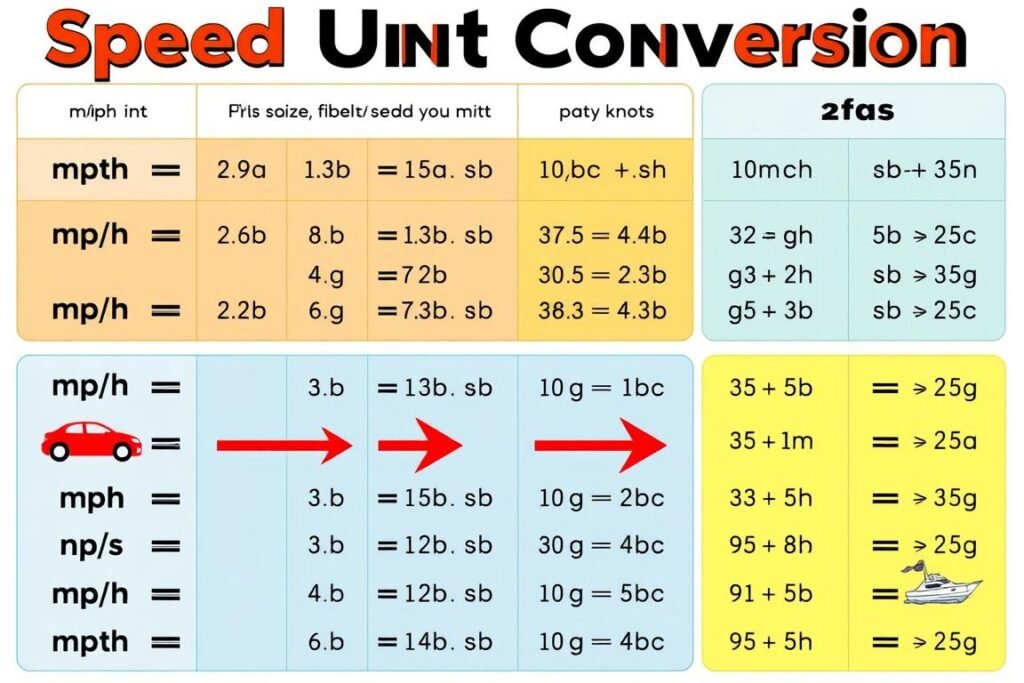
| Unit | Abbreviation | Common Usage | Equivalent in m/s |
| Miles per hour | mph | Road speeds in US, UK | 0.447 m/s |
| Kilometers per hour | km/h | Road speeds in most countries | 0.278 m/s |
| Meters per second | m/s | Scientific measurements | 1 m/s |
| Feet per second | ft/s | Engineering in US | 0.305 m/s |
| Knots | kn | Maritime and aviation | 0.514 m/s |
How to Convert Between Speed Units
MPH to KM/H
To convert miles per hour to kilometers per hour, multiply by 1.60934.
Example: 60 mph = 60 × 1.60934 = 96.56 km/h
KM/H to MPH
To convert kilometers per hour to miles per hour, multiply by 0.62137.
Example: 100 km/h = 100 × 0.62137 = 62.14 mph
KM/H to M/S
To convert kilometers per hour to meters per second, divide by 3.6.
Example: 72 km/h = 72 ÷ 3.6 = 20 m/s
Converting between speed units is essential when working with international data or when switching between scientific and everyday contexts. Our Speed Calculator can automatically handle these conversions for you, saving time and preventing errors.
Convert Between Speed Units Instantly
No need to memorize conversion factors. Our calculator handles all speed unit conversions automatically.
Practical Applications of Speed Calculations
Speed calculations are fundamental in numerous fields and everyday situations. Understanding how to calculate and interpret speed can help you make better decisions in many aspects of life.

Transportation
- Planning travel time for road trips
- Calculating fuel efficiency at different speeds
- Determining arrival times for flights and trains
- Optimizing delivery routes and schedules
Sports and Fitness
- Tracking running or cycling pace
- Measuring athletic performance improvements
- Calculating swimming speeds
- Planning training schedules based on pace
Science and Education
- Solving physics problems
- Understanding motion concepts
- Analyzing experimental data
- Demonstrating scientific principles
Interesting Speed Facts
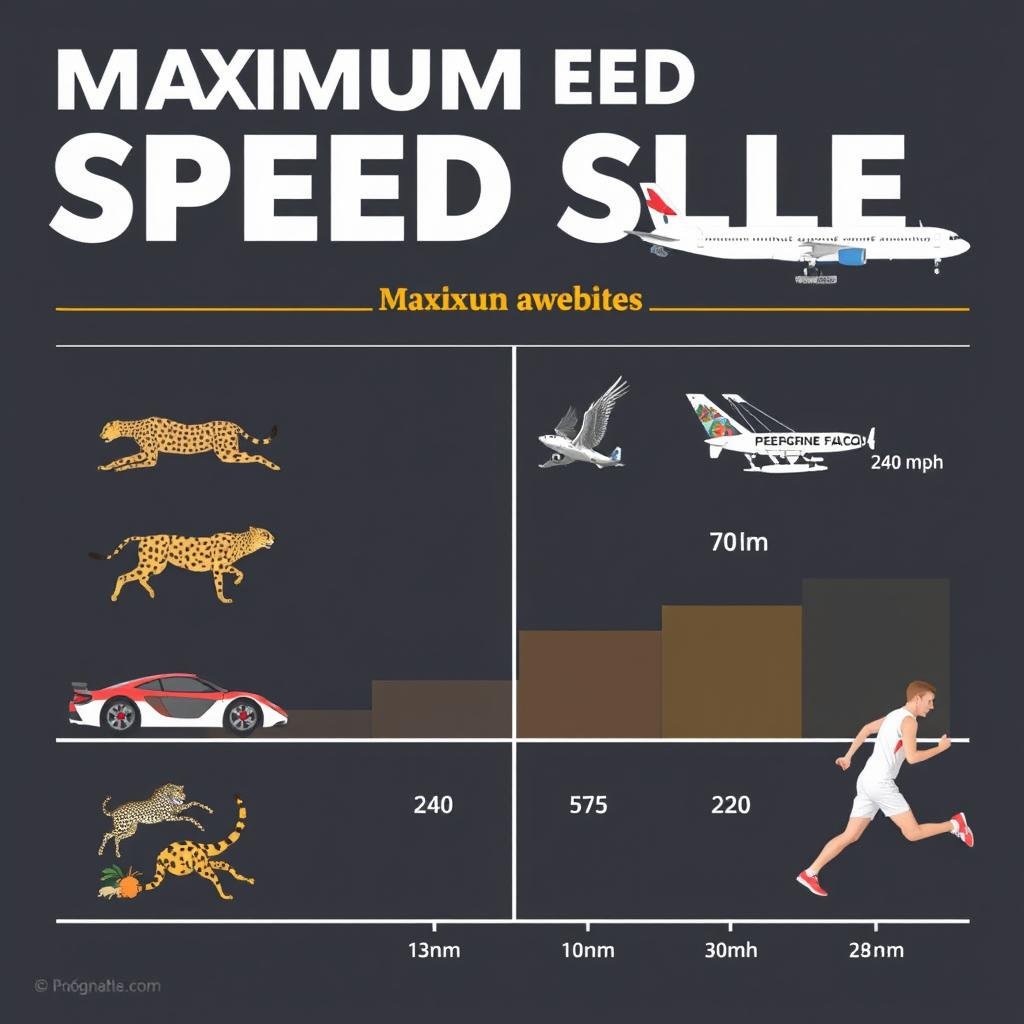
- The speed of light in a vacuum is approximately 299,792,458 meters per second (about 670,616,629 mph)
- Sound travels through air at around 343 meters per second (767 mph) at sea level
- The fastest recorded human, Usain Bolt, reached a top speed of about 27.8 mph
- A cheetah can reach speeds of up to 70 mph in short bursts
- The Earth orbits the Sun at an average speed of 67,000 mph
These diverse applications demonstrate why understanding speed calculations is valuable across many fields and everyday situations.
Understanding Average Speed vs. Instantaneous Speed
When discussing speed, it’s important to distinguish between average speed and instantaneous speed, as they represent different measurements and serve different purposes.
Average Speed
Average speed represents the total distance traveled divided by the total time taken. It gives you an overall picture of how fast something moved over an entire journey, regardless of variations in speed along the way.
Formula: Average Speed = Total Distance ÷ Total Time
Example: If you drive 200 miles in 4 hours, your average speed is 50 mph, even if you drove at 70 mph for some portions and 30 mph for others.
Instantaneous Speed
Instantaneous speed is the speed at a specific moment in time. It’s what your car’s speedometer shows—your exact speed at that precise instant.
Unlike average speed, instantaneous speed can vary from moment to moment throughout a journey.
Example: When your car speedometer shows 60 mph, that’s your instantaneous speed at that exact moment.
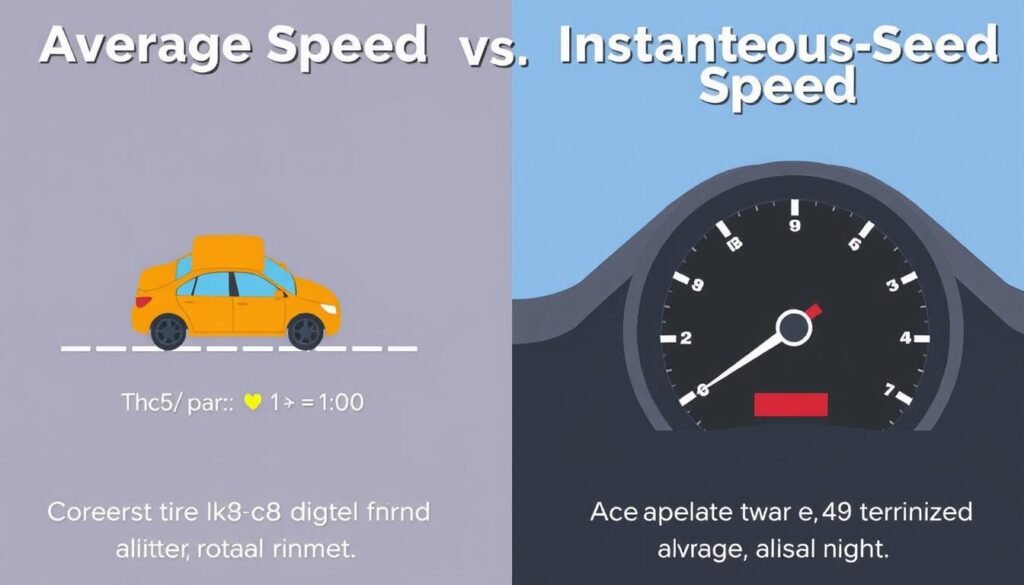
Understanding the difference between these two concepts is crucial for accurate speed calculations. For most practical purposes like trip planning, average speed is the more useful measurement, while instantaneous speed is important for moment-to-moment decisions like adjusting to speed limits.
Calculate Your Average Speed
Planning a trip or analyzing your last journey? Calculate your average speed quickly and accurately.
Speed vs. Velocity: Understanding the Difference
While often used interchangeably in everyday conversation, speed and velocity have distinct meanings in physics and mathematics.
Speed
- Scalar quantity (magnitude only)
- Measures how fast an object moves
- Always positive or zero
- Example: 60 mph
Velocity
- Vector quantity (magnitude and direction)
- Measures how fast an object moves in a specific direction
- Can be positive, negative, or zero
- Example: 60 mph northeast
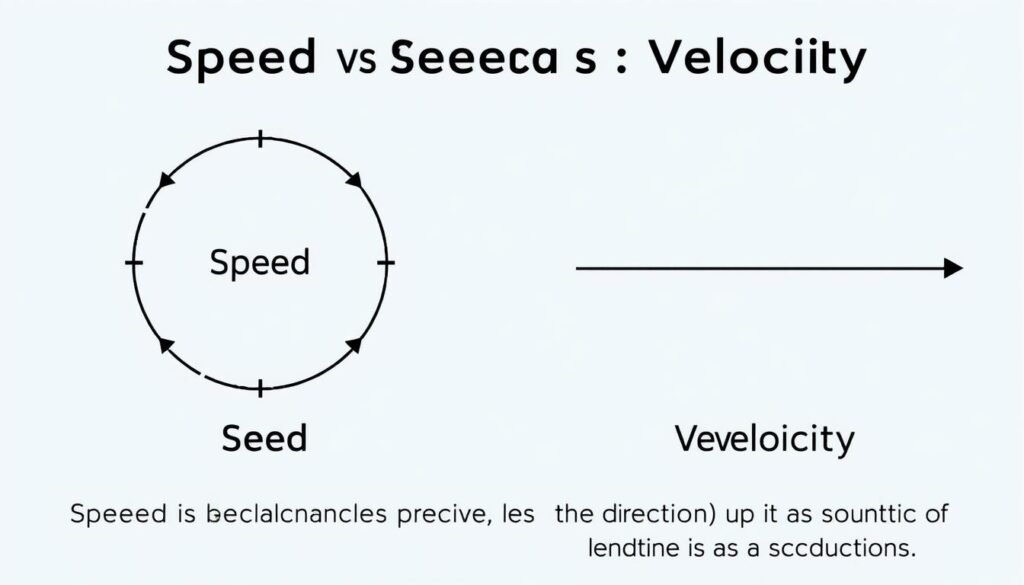
This distinction becomes important in many practical applications. For example, if you drive in a complete circle at a constant 60 mph, your average speed is 60 mph, but your average velocity is zero because you ended up at the same position where you started.
Our Speed Calculator focuses primarily on speed calculations, but understanding the relationship between speed and velocity provides a more complete picture of motion concepts.
Benefits of Using a Digital Speed Calculator
While manual calculations are valuable for understanding the concepts, using a digital Speed Calculator offers numerous advantages for practical applications.

Accuracy
- Eliminates human calculation errors
- Provides precise results to multiple decimal places
- Handles complex calculations effortlessly
Convenience
- Instant results with no manual computation
- Automatic unit conversions
- Available anytime on various devices
- No need to remember formulas
Versatility
- Calculates speed, distance, or time from any two variables
- Supports multiple unit systems
- Handles both simple and complex scenarios
Experience the Benefits Yourself
Try our Speed Calculator now and see how it simplifies your calculations while providing accurate results instantly.
Frequently Asked Questions About Speed Calculations
How do I calculate average speed?
To calculate average speed, divide the total distance traveled by the total time taken. For example, if you travel 240 miles in 4 hours, your average speed is 240 ÷ 4 = 60 miles per hour.
What’s the difference between mph and km/h?
Miles per hour (mph) and kilometers per hour (km/h) are different units for measuring speed. One mile equals approximately 1.60934 kilometers, so to convert from mph to km/h, multiply by 1.60934. To convert from km/h to mph, multiply by 0.62137.
How do I calculate how long a journey will take?
To calculate journey time, divide the distance by the speed. For example, if you need to travel 300 miles at an average speed of 60 mph, the journey will take 300 ÷ 60 = 5 hours.
What speed units are used in scientific calculations?
In scientific contexts, speed is typically measured in meters per second (m/s) in the International System of Units (SI). However, depending on the specific field and application, other units like kilometers per hour (km/h) or feet per second (ft/s) might also be used.
How do I convert between different speed units?
To convert between speed units, you need to know the conversion factors:
- 1 mph = 1.60934 km/h = 0.44704 m/s = 1.46667 ft/s
- 1 km/h = 0.62137 mph = 0.27778 m/s = 0.91134 ft/s
- 1 m/s = 3.6 km/h = 2.23694 mph = 3.28084 ft/s
Our Speed Calculator can handle these conversions automatically for you.
What is the most fuel-efficient driving speed?
For most vehicles, the most fuel-efficient speed is typically between 45-65 mph (72-105 km/h). Fuel efficiency tends to decrease significantly at speeds above 65 mph due to increased air resistance. However, the exact optimal speed varies depending on the specific vehicle, road conditions, and other factors.

Have More Questions?
Our Speed Calculator can help answer your specific questions about speed, distance, and time calculations.
Conclusion: Mastering Speed Calculations
Understanding the relationship between speed, distance, and time is essential for many aspects of daily life and professional work. Whether you’re planning a trip, analyzing athletic performance, or solving physics problems, the ability to calculate speed accurately can help you make better decisions and achieve your goals more efficiently.
While manual calculations using the speed formula (Speed = Distance ÷ Time) are straightforward for simple scenarios, a digital Speed Calculator offers significant advantages in terms of accuracy, convenience, and versatility. It eliminates calculation errors, provides instant results, and handles unit conversions automatically.
We hope this guide has helped you understand the concepts and applications of speed calculations. Remember that practice makes perfect—the more you work with these formulas, the more intuitive they’ll become.

Ready to Calculate?
Try our Speed Calculator now for quick, accurate calculations of speed, distance, and time.