Understanding your vehicle’s gas mileage is one of the most effective ways to manage fuel expenses and reduce your environmental impact. Whether you’re comparing vehicles, planning a road trip budget, or simply trying to save money at the pump, knowing how to calculate and track your miles per gallon (MPG) is an essential skill for any driver. This comprehensive guide will walk you through everything you need to know about gas mileage calculation, helping you make informed decisions that can lead to significant savings over time.
What is Gas Mileage and Why Does It Matter?

Modern vehicles often display real-time fuel economy information on the dashboard
Gas mileage, commonly measured as miles per gallon (MPG) in the United States, is the standard metric for measuring a vehicle’s fuel efficiency. It represents how far your vehicle can travel on a single gallon of fuel. The higher your MPG, the more efficient your vehicle is at converting fuel into distance traveled.
Understanding your gas mileage matters for several important reasons:
With fuel prices constantly fluctuating and environmental concerns growing, monitoring and improving your gas mileage has never been more relevant. Let’s explore how to calculate this important metric accurately.
How to Calculate Gas Mileage Manually
While there are many digital tools available, knowing how to calculate your gas mileage manually is a valuable skill. The process is straightforward and requires just a few simple steps:
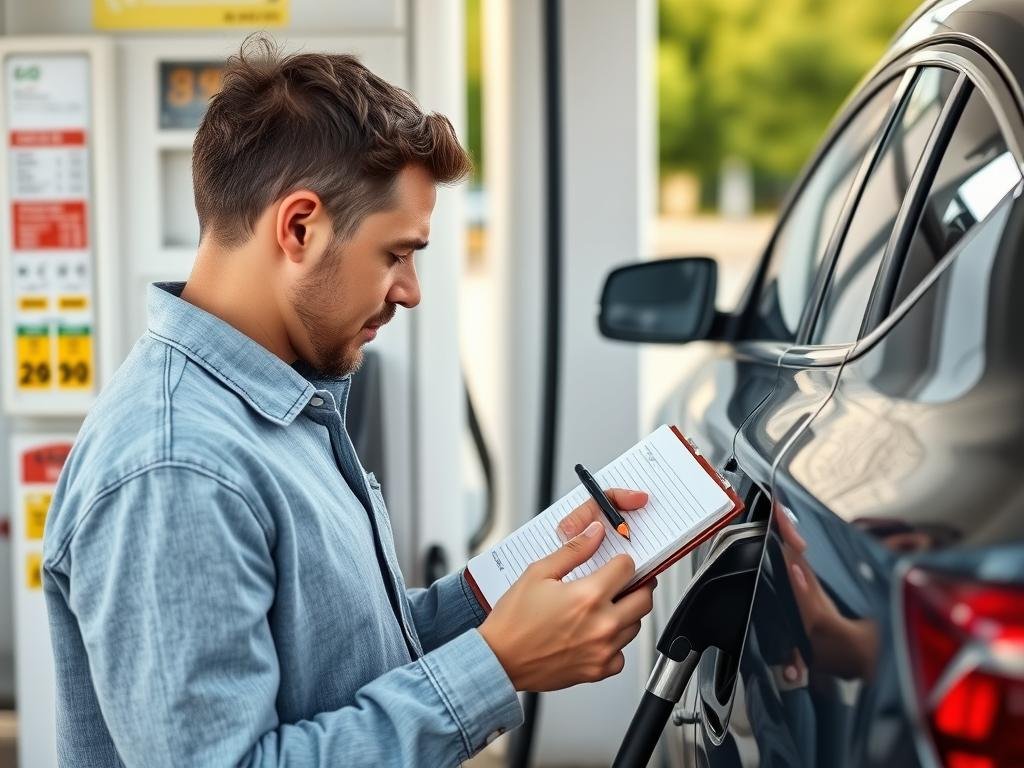
Tracking your odometer readings and fuel fill-ups is essential for accurate MPG calculations
The Formula: Miles Driven ÷ Gallons Used = MPG (Miles Per Gallon)
Example Calculation
Let’s walk through a practical example:
| Measurement | Value |
| Starting Odometer | 45,230 miles |
| Ending Odometer | 45,580 miles |
| Miles Driven | 350 miles |
| Fuel Used | 12.5 gallons |
| Calculated MPG | 28 MPG (350 ÷ 12.5) |
For those outside the United States, you might use different units of measurement:
Kilometers per Liter (km/l)
Formula: Kilometers Driven ÷ Liters Used = km/l
Liters per 100 Kilometers (l/100km)
Formula: (Liters Used × 100) ÷ Kilometers Driven = l/100km
Ready to Calculate Your Gas Mileage?
Skip the manual calculations and get instant, accurate results with our easy-to-use Gas Mileage Calculator.
Why Use a Gas Mileage Calculator?
While manual calculation is straightforward, using a dedicated Gas Mileage Calculator offers several advantages:

Digital calculators make tracking your fuel efficiency quick and convenient
Benefits of Using a Gas Mileage Calculator
- Saves time with instant calculations
- Eliminates mathematical errors
- Allows for easy conversion between different units (MPG, km/l, l/100km)
- Enables tracking of multiple vehicles
- Provides historical data to monitor efficiency over time
- Calculates fuel costs based on current gas prices
- Helps identify trends and anomalies in your vehicle’s performance
Limitations of Manual Calculations
- Time-consuming process
- Potential for mathematical errors
- Difficult to track multiple vehicles
- No automatic unit conversion
- Challenging to maintain historical records
- No built-in cost calculations
- Requires consistent record-keeping discipline
A good Gas Mileage Calculator can also help you estimate fuel costs for upcoming trips, compare the efficiency of different vehicles, and even calculate your carbon footprint based on your driving habits.
Did You Know?
The average fuel economy for new vehicles in the United States has improved significantly over the years. In 1975, the average was just 13.1 MPG, while today’s new vehicles average around 25.7 MPG. Using a Gas Mileage Calculator can help you determine if your vehicle is performing at, above, or below the average for its class and age.
Factors Affecting Your Gas Mileage
Understanding what influences your vehicle’s fuel efficiency can help you make adjustments to improve your MPG. Here are the key factors that affect gas mileage:
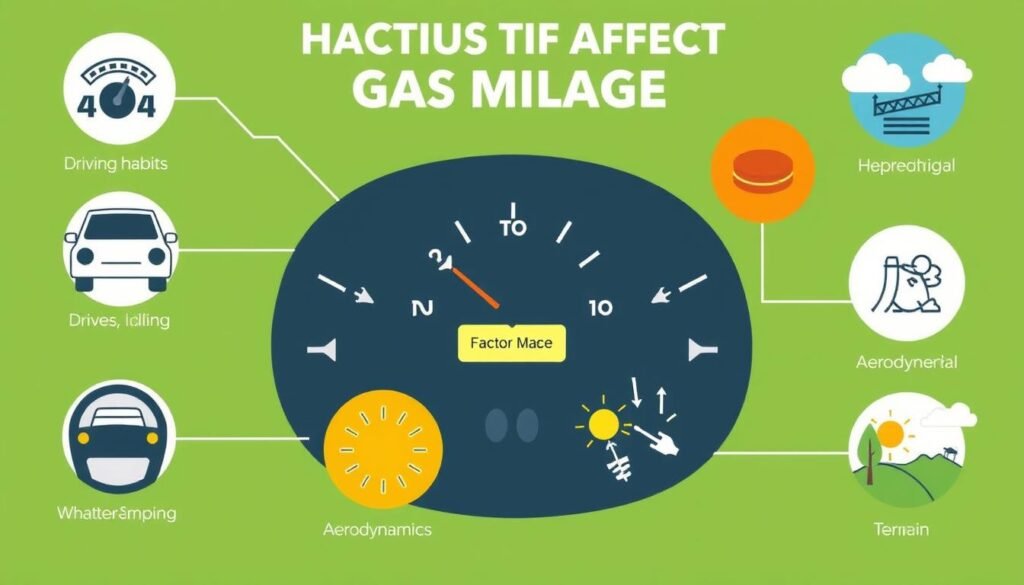
Multiple factors contribute to your vehicle’s overall fuel efficiency
Driving Habits
Vehicle Maintenance
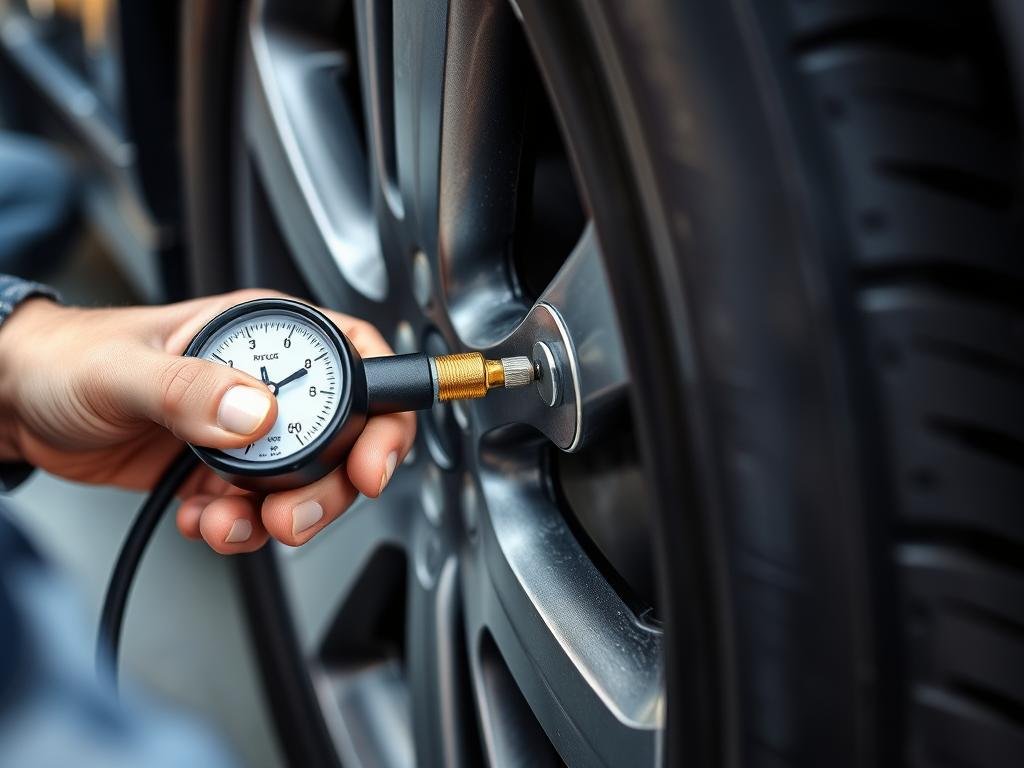
Proper tire inflation is one of the simplest ways to maintain good fuel efficiency
Environmental Factors
By understanding these factors, you can make informed decisions about your driving habits and vehicle maintenance to maximize your fuel efficiency. Even small improvements can add up to significant savings over time.
10 Practical Tips to Improve Your Gas Mileage
Now that you understand what affects your gas mileage, here are actionable tips to help you improve your vehicle’s fuel efficiency:

Smooth, gradual acceleration helps maximize fuel efficiency
Driving Techniques
Vehicle Maintenance
Planning & Organization

Removing unnecessary items from your vehicle can improve fuel efficiency
“The most fuel-efficient drivers can get up to 30% better gas mileage than the average driver using the same vehicle.”
Implementing these tips can lead to noticeable improvements in your gas mileage. To accurately measure these improvements, it’s important to track your MPG consistently before and after making changes to your driving habits or vehicle maintenance routine.
Track Your Improvement
Start monitoring your gas mileage today to see how these tips impact your fuel efficiency.
Understanding Different Fuel Economy Units
Depending on your location, you might encounter different units for measuring fuel economy. Here’s a quick guide to understanding and converting between these units:
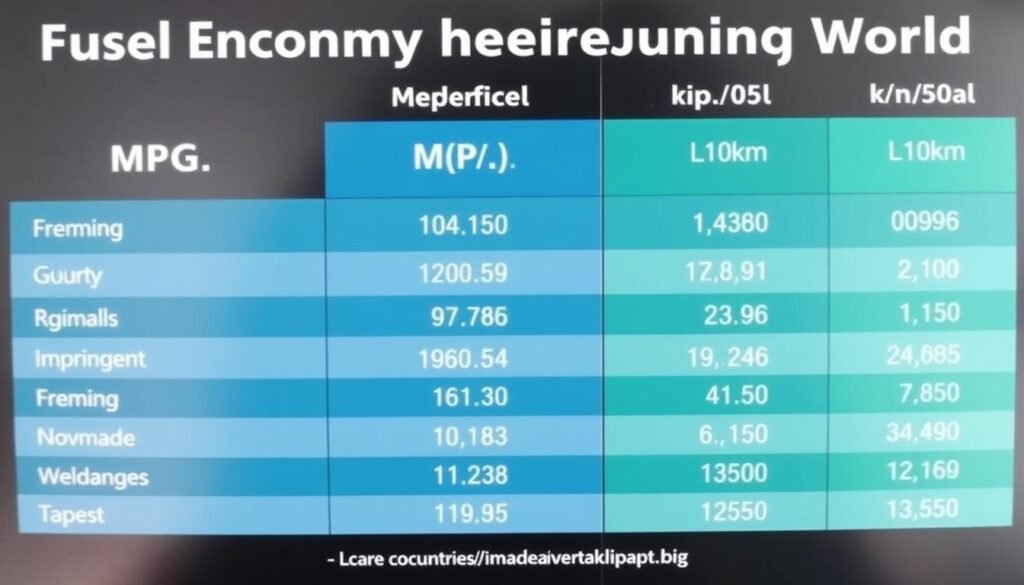
Fuel economy is measured differently around the world
| Unit | Used In | Description | Example Value |
| MPG (US) | United States | Miles per US Gallon | 25 MPG |
| MPG (Imperial) | United Kingdom | Miles per Imperial Gallon | 30 MPG |
| L/100km | Europe, Australia | Liters per 100 Kilometers | 9.4 L/100km |
| km/L | Japan, India | Kilometers per Liter | 10.6 km/L |
When comparing vehicles from different regions or reading international fuel economy standards, you may need to convert between these units. A good Gas Mileage Calculator can perform these conversions automatically, saving you time and ensuring accuracy.
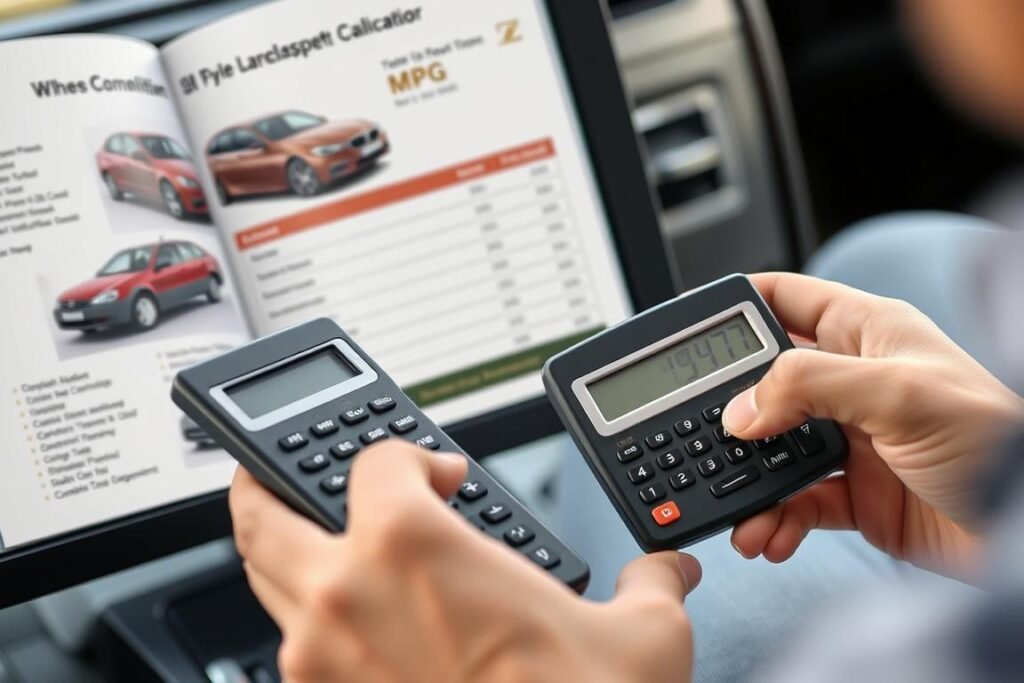
Comparing vehicles with different fuel economy measurements requires accurate conversion
Quick Conversion Guide:
To convert from MPG (US) to L/100km: 235.214 ÷ MPG = L/100km
To convert from L/100km to MPG (US): 235.214 ÷ L/100km = MPG
Start Tracking Your Gas Mileage Today

Regular tracking can reveal patterns and help you optimize your fuel efficiency
Understanding and monitoring your gas mileage is a simple yet effective way to save money, reduce your environmental impact, and keep your vehicle running efficiently. By calculating your MPG regularly, you can identify trends, spot potential issues early, and measure the impact of any changes you make to your driving habits or vehicle maintenance.
Whether you choose to calculate your gas mileage manually or use a dedicated calculator tool, the important thing is to start tracking consistently. Over time, the insights you gain can lead to significant savings and a smaller carbon footprint.
Ready to Start Saving?
Use our Gas Mileage Calculator to easily track your fuel efficiency, calculate potential savings, and make informed decisions about your vehicle and driving habits.
Remember, even small improvements in your gas mileage can add up to substantial savings over time. Start tracking today, implement the tips we’ve shared, and watch your fuel efficiency improve mile after mile.