Understanding your golf handicap is essential for tracking improvement and competing fairly with players of different skill levels. A golf handicap represents your potential playing ability on a course of standard difficulty. Whether you’re a seasoned golfer or just starting out, knowing how to calculate and use your handicap can transform your golfing experience.
Our comprehensive guide explains everything you need to know about golf handicaps – from basic concepts to calculation methods used by golf associations worldwide. We’ll walk you through the official formulas, explain course ratings and slope indexes, and show you how to interpret your results.
Ready to Find Your Golf Handicap?
Calculate your official handicap index using our easy-to-use golf handicap calculator. Just enter your recent scores and get instant results.
What Is a Golf Handicap and Why Do You Need One?

A golf handicap is a numerical measure of a golfer’s potential playing ability based on their previous performance. The lower your handicap, the better your golf game. A scratch golfer has a handicap of zero, while beginners might have handicaps of 24 or higher.
The handicap system serves several important purposes in the game of golf:
Level Playing Field
Handicaps allow players of different skill levels to compete fairly against each other. When handicaps are applied, a less skilled player receives extra strokes that can be deducted from their score.
Track Improvement
Your handicap provides a concrete way to measure your progress over time. As your skills improve, your handicap will decrease, giving you tangible evidence of your development.
Tournament Eligibility
Many golf tournaments require participants to have an official handicap. Without one, you might be excluded from competitions or club events that could enhance your golfing experience.
Universal Standard
The World Handicap System (WHS) provides a universal measure of ability that’s recognized globally, allowing you to play and compete at courses worldwide.
How Golf Handicaps Are Calculated
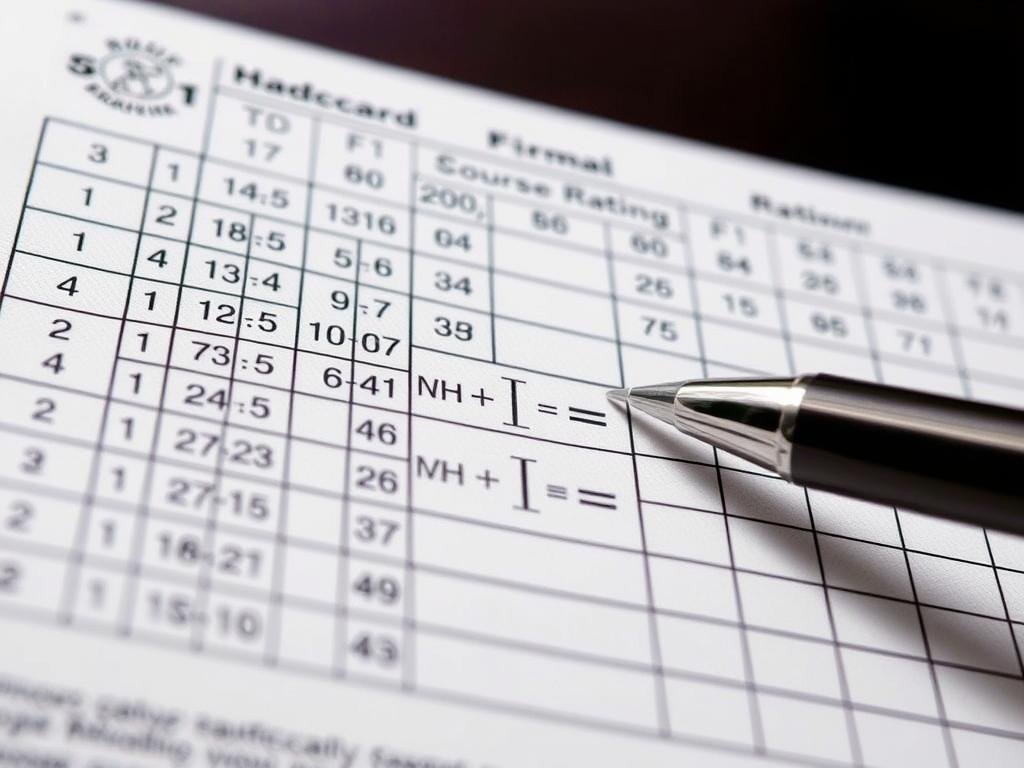
The World Handicap System uses a specific formula to calculate your handicap index. Understanding this process helps you make sense of your handicap and how it changes over time.
The Basic Handicap Formula
The current World Handicap System uses this formula to calculate your handicap index:
Handicap Index = (Sum of the 8 best Score Differentials from your most recent 20 rounds) ÷ 8 × 0.96
To calculate each Score Differential, you’ll need:
Score Differential Formula
Score Differential = (113 ÷ Slope Rating) × (Adjusted Gross Score – Course Rating – PCC)
Where PCC = Playing Conditions Calculation (-1 to +3)
This formula standardizes your score across different courses, accounting for varying difficulty levels. The number 113 is the standard slope rating used for normalization.
Understanding Course Handicap vs. Handicap Index

Your handicap index is portable across all golf courses, but your course handicap will vary depending on where you play. The course handicap represents the number of strokes you receive on a specific course from a specific set of tees.
Course Handicap Formula
Course Handicap = Handicap Index × (Slope Rating ÷ 113) + (Course Rating – Par)
This adjustment ensures that your handicap accurately reflects the difficulty of the specific course and tees you’re playing. A more challenging course will result in a higher course handicap, giving you more strokes.
| Term | Definition | Typical Range |
| Course Rating | The expected score for a scratch golfer | 67-77 |
| Slope Rating | The relative difficulty for a bogey golfer compared to a scratch golfer | 55-155 (113 is average) |
| Handicap Index | Your portable handicap that travels with you to any course | +5 to 54 |
| Course Handicap | The strokes you receive on a specific course | Varies by course |
Get Your Precise Course Handicap
Different courses require different adjustments. Calculate your specific course handicap for any golf course you play.
How Playing Conditions Affect Your Handicap

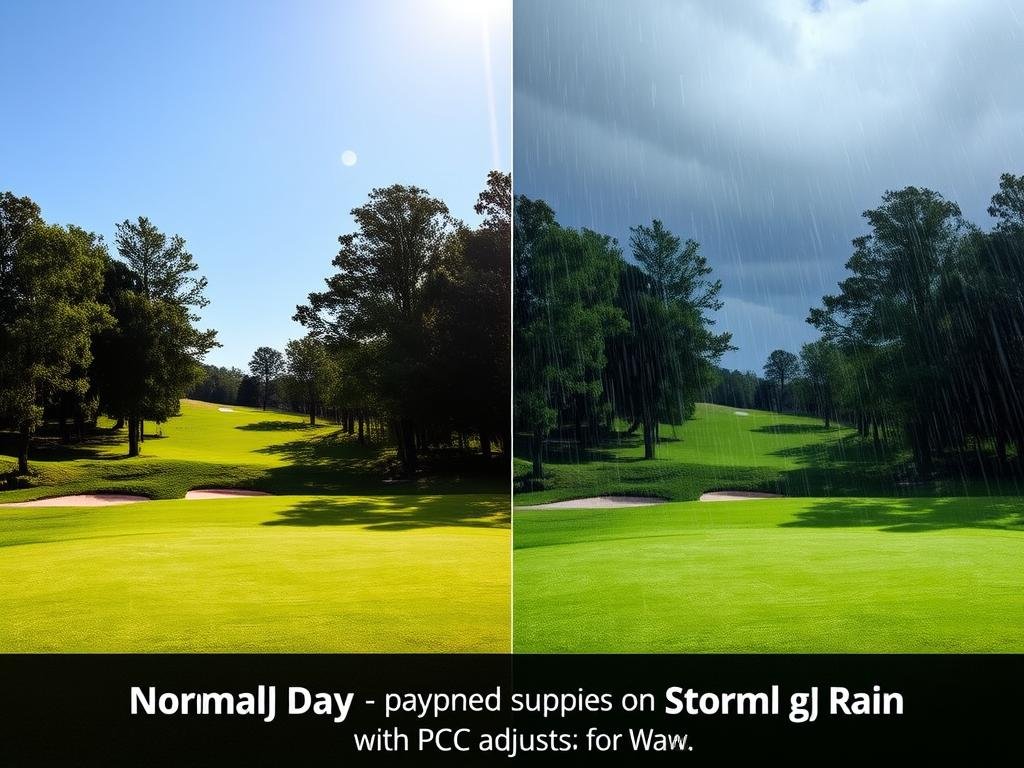
The World Handicap System includes a Playing Conditions Calculation (PCC) that accounts for unusual weather or course conditions that might make scoring more difficult or easier than normal.
Playing Conditions Calculation (PCC)
The PCC ranges from -1 (easier conditions) to +3 (extremely difficult conditions) and is automatically calculated based on all scores submitted on a given day at a specific course.
Factors Affecting PCC
Why PCC Matters
Without PCC, your handicap might be unfairly affected by unusual conditions. For example, if everyone scores higher due to strong winds, the PCC adjustment ensures your handicap doesn’t increase unfairly.
This is why it’s important to submit your scores on the day you play, so the correct PCC is applied to your score.
Benefits of Using a Golf Handicap Calculator

Accuracy
A proper handicap calculator ensures your handicap is computed correctly according to the World Handicap System rules, avoiding manual calculation errors.
Convenience
Quickly calculate your handicap without needing to understand all the mathematical formulas and adjustments required by the official system.
Consistency
Get consistent results that follow the same methodology used by golf associations worldwide, ensuring your handicap is recognized everywhere.
Progress Tracking
Monitor your improvement over time with accurate handicap tracking that shows your development as a golfer.
Fair Competition
Participate in competitions with players of all skill levels on equal footing, making the game more enjoyable for everyone.
Global Compatibility
Your calculated handicap will be compatible with the World Handicap System used at courses around the globe.
What’s Considered a Good Golf Handicap?
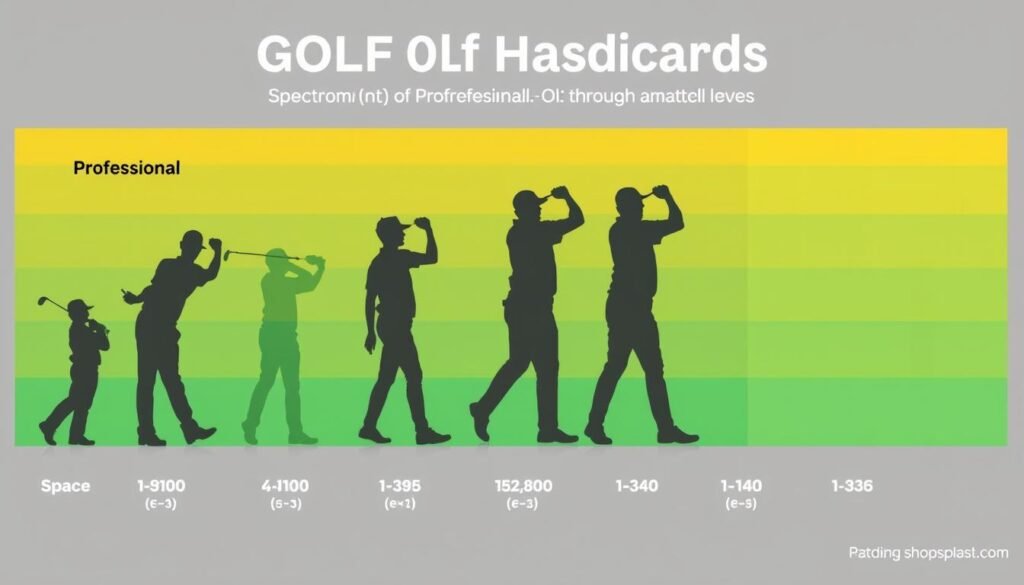
There’s no single definition of a “good” handicap, as it depends on your experience, goals, and how long you’ve been playing. However, understanding where different handicap ranges fall can help you set realistic goals.
| Handicap Range | Skill Level | Typical Characteristics |
| Below 0 (Plus Handicap) | Elite/Professional | Consistently shoots under par, exceptional in all aspects of the game |
| 0-5 | Excellent | Very skilled players, often with competitive experience |
| 6-10 | Very Good | Solid all-around game with few weaknesses |
| 11-18 | Good | Consistent players who break 90 regularly |
| 19-28 | Average | Typical recreational golfers |
| 29+ | Beginner | New to the game or play infrequently |
Remember that the average handicap for male golfers is around 14, while for female golfers it’s approximately 27. Most recreational golfers fall in the 15-30 range, so don’t be discouraged if your handicap is higher than you’d like.
See How Your Handicap Compares
Calculate your handicap now and see where you stand compared to other golfers.
Frequently Asked Questions About Golf Handicaps

How many rounds do I need to establish a handicap?
Under the World Handicap System, you need a minimum of 54 holes (three 18-hole rounds or six 9-hole rounds) to establish an initial handicap index. For the most accurate handicap, the system uses your 8 best score differentials from your most recent 20 rounds.
How often should I update my handicap?
You should submit your score after every round you play. Under the World Handicap System, handicap indexes are updated daily, allowing for the most current reflection of your playing ability.
What’s the difference between a scratch golfer and a bogey golfer?
A scratch golfer has a handicap of zero and typically shoots around par. A bogey golfer has a handicap around 18 and typically scores about one over par on each hole (hence “bogey”). These two skill levels are used as reference points in the handicap system, particularly for course and slope ratings.
Can my handicap be negative?
Yes, exceptional players can have a negative handicap (also called a “plus” handicap). For example, a +2 handicap means the golfer typically scores 2 strokes better than the course rating. In handicap competitions, these players add strokes to their scores rather than subtract them.
Do I need an official handicap to play golf?
No, you don’t need an official handicap for casual play. However, most tournaments, club championships, and organized competitions require an official handicap. Even for casual play, a handicap helps you track your progress and compete fairly with friends of different skill levels.
How do I get an official USGA handicap?
To obtain an official USGA handicap, you need to join a golf club that’s authorized to issue USGA handicaps or register directly with your state or regional golf association. There are also online services authorized by the USGA that allow you to establish and maintain an official handicap for an annual fee.
Start Tracking Your Golf Progress Today
Whether you’re preparing for a tournament or just want to track your improvement, our golf handicap calculator gives you accurate results based on the World Handicap System.
Improve Your Game with Accurate Handicap Tracking
Understanding and tracking your golf handicap is an essential part of improving your game and enjoying fair competition with players of all skill levels. Our golf handicap calculator makes it easy to calculate your handicap index and course handicap according to the World Handicap System standards.
Remember that your handicap is a reflection of your potential, not just your average score. As you continue to play and improve, your handicap will adjust to reflect your developing skills. Use it as a tool to set realistic goals, track your progress, and enhance your enjoyment of this wonderful game.
Start calculating your golf handicap today and take the first step toward more meaningful, competitive, and enjoyable golf experiences.