Use our One Rep Max Calculator to estimate the maximum weight you can lift for one repetition. Plan workouts, track progress, and optimize strength training safely.
Knowing your one rep max (1RM) is crucial for effective strength training. This maximum weight you can lift for a single repetition serves as the foundation for designing programs, tracking progress, and setting realistic goals. Our comprehensive guide and calculator will help you accurately determine your 1RM and apply it to transform your training approach.

What Is a One Rep Max (1RM)?
A one rep max represents the maximum weight you can lift for a single complete repetition of an exercise while maintaining proper form. It’s the gold standard for measuring maximal strength in weightlifting and serves as a key metric for designing effective training programs.
Your 1RM is specific to each exercise—your bench press max will differ from your squat or deadlift max. This specificity makes it an invaluable tool for creating personalized workout plans that target your unique strength profile.
Strength coaches and athletes rely on 1RM values to:
- Calculate appropriate training loads
- Track strength improvements over time
- Design periodized training programs
- Set realistic strength goals
One Rep Max Calculator Tool
Use our calculator to estimate your one rep max based on the weight you can lift for multiple repetitions. For the most accurate results, use a weight you can lift between 2-10 repetitions with proper form.
1RM Calculator
Pro Tip: For the most accurate estimate, use a weight that you can lift for 2-5 repetitions. The fewer repetitions performed, the more accurate your 1RM estimate will be.
Understanding 1RM Calculation Formulas
Several formulas have been developed to estimate your one rep max without actually attempting a maximal lift. Each formula has its strengths and may work better for different individuals or exercises.
Brzycki Formula
1RM = Weight × (36 / (37 – Reps))
Best for: Moderate to high rep ranges (8-10)
Example: 200 lbs × (36 / (37 – 8)) = 248 lbs
Epley Formula
1RM = Weight × (1 + (0.0333 × Reps))
Best for: Lower rep ranges (1-6)
Example: 200 lbs × (1 + (0.0333 × 5)) = 233 lbs
Lombardi Formula
1RM = Weight × (Reps)0.10
Best for: Mixed rep ranges
Example: 200 lbs × (6)0.10 = 231 lbs
“The most accurate formula varies between individuals. For best results, try multiple formulas and consider using the average of their results.”
How to Use a One Rep Max Calculator
Follow these steps to get the most accurate estimate of your one rep max using our calculator:
- Select a weight you can lift with proper form for 2-10 repetitions
- Perform as many repetitions as possible while maintaining good technique
- Stop when your form begins to deteriorate
- Enter the weight and number of completed repetitions into the calculator
- Choose your preferred formula (or use the average)
- Review your estimated one rep max and percentage breakdowns
When to Recalculate Your 1RM
Your one rep max will change as you progress in your training. Consider recalculating your 1RM:
- Every 4-6 weeks during a strength phase
- After completing a training cycle
- When switching to a new program
- If you feel significantly stronger or weaker than before
Benefits of Knowing Your One Rep Max
Understanding your one rep max provides numerous advantages for designing effective training programs and tracking your progress over time.
Benefits of Using 1RM
- Precisely calculate training percentages for different goals
- Objectively track strength improvements over time
- Customize your training intensity based on specific goals
- Compare strength levels across different exercises
- Set realistic, data-driven strength goals
- Determine appropriate loads for different training phases
Limitations to Consider
- Estimation formulas may not be 100% accurate
- Different formulas work better for different people
- Day-to-day strength fluctuations can affect results
- Technique and form factors aren’t accounted for
- Not suitable for beginners without proper supervision
- Some exercises aren’t appropriate for 1RM testing

Safety Considerations for 1RM Testing
While knowing your one rep max is valuable, testing it directly can pose risks if not done properly. Consider these safety guidelines when assessing your maximum strength.
Important Safety Warning
Direct 1RM testing is not recommended for beginners, those returning from injury, or individuals without proper spotting or supervision. Using estimation methods is safer and still provides valuable data.
Safe Testing Guidelines
- Always perform a thorough warm-up
- Use proper form throughout the entire lift
- Have experienced spotters for free-weight exercises
- Start with conservative weight estimates
- Rest fully between attempts (3-5 minutes)
- Stop if form deteriorates or pain occurs
- Consider using submaximal testing methods

“The safest way to determine your one rep max is through submaximal testing using established formulas. This approach minimizes injury risk while still providing valuable data for program design.”
Practical Examples: Calculating 1RM for Popular Exercises
Let’s look at how to calculate and apply your one rep max for three fundamental strength exercises: bench press, squat, and deadlift.
Bench Press Example

Weight Used: 185 lbs
Reps Completed: 6
Estimated 1RM: 220 lbs (Epley Formula)
Training Application: For hypertrophy, use 165 lbs (75%) for 8-12 reps
Squat Example

Weight Used: 225 lbs
Reps Completed: 5
Estimated 1RM: 255 lbs (Brzycki Formula)
Training Application: For strength, use 215 lbs (85%) for 5 sets of 3
Deadlift Example
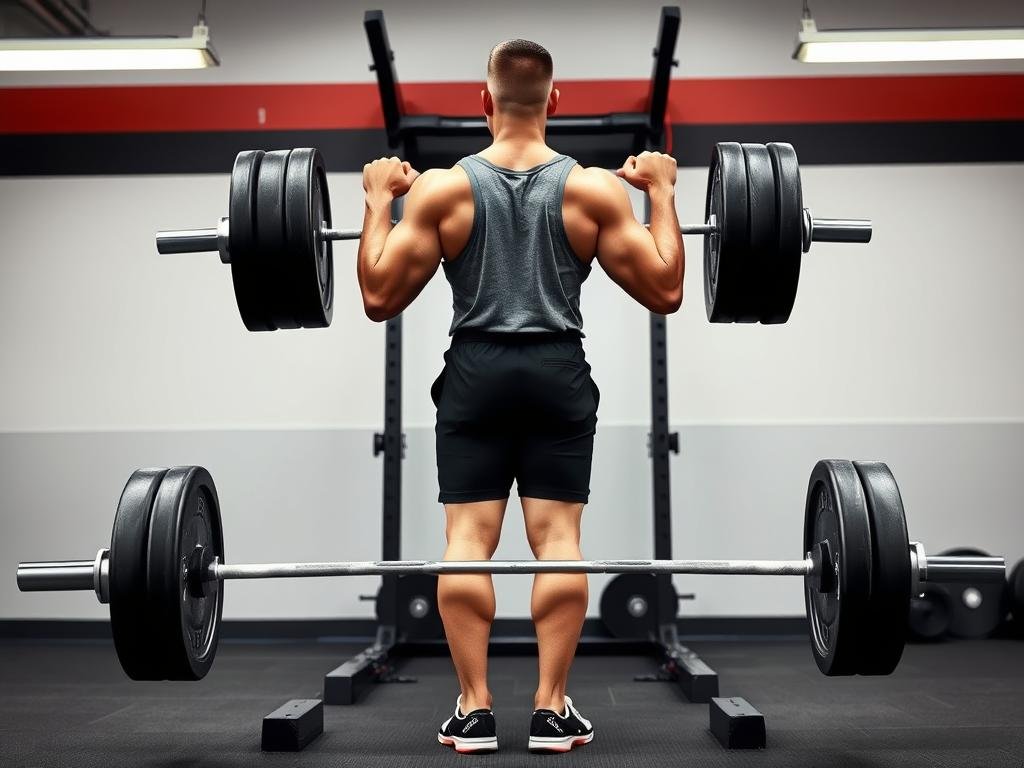
Weight Used: 275 lbs
Reps Completed: 4
Estimated 1RM: 308 lbs (Lombardi Formula)
Training Application: For power, use 215 lbs (70%) for explosive reps
Incorporating 1RM into Your Training Program
Once you know your one rep max, you can design more effective workouts by using specific percentages of your 1RM based on your training goals.
| Training Goal | Percentage of 1RM | Rep Range | Sets | Rest Period |
| Power/Speed | 50-60% | 3-5 | 3-5 | 2-3 minutes |
| Muscle Endurance | 60-70% | 12-15 | 3-4 | 30-90 seconds |
| Hypertrophy (Size) | 70-80% | 8-12 | 3-5 | 1-2 minutes |
| Strength | 80-90% | 4-6 | 3-5 | 2-4 minutes |
| Maximal Strength | 90-100% | 1-3 | 2-3 | 3-5 minutes |
Sample 4-Week Strength Program Based on 1RM
Week 1: 4 sets of 5 reps at 80% 1RM
Week 2: 4 sets of 4 reps at 85% 1RM
Week 3: 3 sets of 3 reps at 90% 1RM
Week 4: 2 sets of 2 reps at 95% 1RM, followed by deload
Limitations and Accuracy of 1RM Calculations
While one rep max calculators are valuable tools, it’s important to understand their limitations and factors that affect their accuracy.
Factors Affecting Accuracy
- Training experience (more accurate for experienced lifters)
- Exercise selection (more accurate for compound movements)
- Rep range used (lower reps = higher accuracy)
- Individual strength-endurance relationship
- Daily fluctuations in strength and recovery
- Technical proficiency with the exercise

“No formula is perfect for everyone. The relationship between repetitions and percentage of 1RM varies between individuals based on fiber type composition, training history, and exercise selection.”
Improving Accuracy
For the most accurate results:
- Use multiple formulas and compare results
- Test with lower rep ranges (2-5) when possible
- Be consistent with technique and range of motion
- Test when well-rested, not fatigued
- Retest periodically to confirm estimates
Frequently Asked Questions About One Rep Max
How often should I test my one rep max?
For most recreational lifters, testing or estimating your 1RM every 4-6 weeks is sufficient. More frequent testing can interfere with your regular training program and recovery. Competitive lifters might test more frequently during specific training phases.
Is it safe for beginners to test their one rep max?
Direct 1RM testing is not recommended for beginners. Novice lifters should use submaximal testing (with weights they can lift for 5-10 reps) and estimation formulas. This provides useful data while minimizing injury risk until proper technique is developed.
Which formula is most accurate for calculating 1RM?
No single formula works best for everyone. Research suggests the Epley formula tends to be more accurate for lower rep ranges (1-5), while the Brzycki formula may work better for higher rep ranges (8-10). Using the average of multiple formulas often provides the most reliable estimate.
Can I use 1RM calculations for all exercises?
1RM calculations work best for compound, multi-joint exercises like squats, deadlifts, bench press, and overhead press. They tend to be less accurate for isolation exercises, machine-based movements, or highly technical lifts. Use caution when applying these formulas to specialized exercises.
How do I improve my one rep max?
To improve your 1RM, focus on progressive overload using periodized training that includes both hypertrophy work (70-80% of 1RM for 8-12 reps) and strength-specific training (80-90% for 3-6 reps). Include technique work, adequate recovery, proper nutrition, and occasional testing to track progress.
Explore Our Other Fitness Calculators
BMI Calculator
Calculate your Body Mass Index to assess your weight relative to your height and determine if you’re in a healthy range.
Calorie Calculator
Determine your daily caloric needs based on your age, weight, height, gender, and activity level to support your fitness goals.
Body Fat Calculator
Estimate your body fat percentage using various measurement methods to track your body composition changes.
Conclusion: Maximizing Your Strength Potential
Understanding and tracking your one rep max is a powerful tool for optimizing your strength training program. Whether you’re a competitive powerlifter or a recreational gym-goer, knowing your 1RM allows you to train with precision, set realistic goals, and measure your progress objectively.
Remember that while 1RM calculations provide valuable estimates, they should be used as guidelines rather than absolute values. Focus on consistent training, proper technique, and gradual progression to build strength safely and effectively over time.
Use our calculator regularly to track your progress, adjust your training percentages, and continue making gains in your strength journey. With the right approach to testing and applying your one rep max data, you’ll be well-equipped to reach your full strength potential.