Use our Pregnancy Due Date Calculator to estimate your baby’s arrival. Track gestation, plan appointments, and prepare for your pregnancy journey confidently.
Wondering when your baby will arrive? Our Pregnancy Due Date Calculator helps you estimate your due date based on your last menstrual period, conception date, or ultrasound information. While only about 5% of women deliver exactly on their due date, this tool provides a reliable timeline to help you prepare for your baby’s arrival and track important pregnancy milestones.
Calculate Your Due Date
Enter your information below to find your estimated due date, current pregnancy week, and trimester.
Your Results
Estimated Due Date:
Current Week:
Trimester:
Days Remaining:

Planning for your baby’s arrival starts with knowing your due date
How Does the Pregnancy Due Date Calculator Work?
Our pregnancy calculator uses several scientifically-backed methods to estimate your due date. The calculation depends on which information you provide:
Last Menstrual Period

The most common method uses the first day of your last menstrual period (LMP) and adds 280 days (40 weeks). This is known as Naegele’s rule and assumes a 28-day cycle with ovulation on day 14.
Conception Date
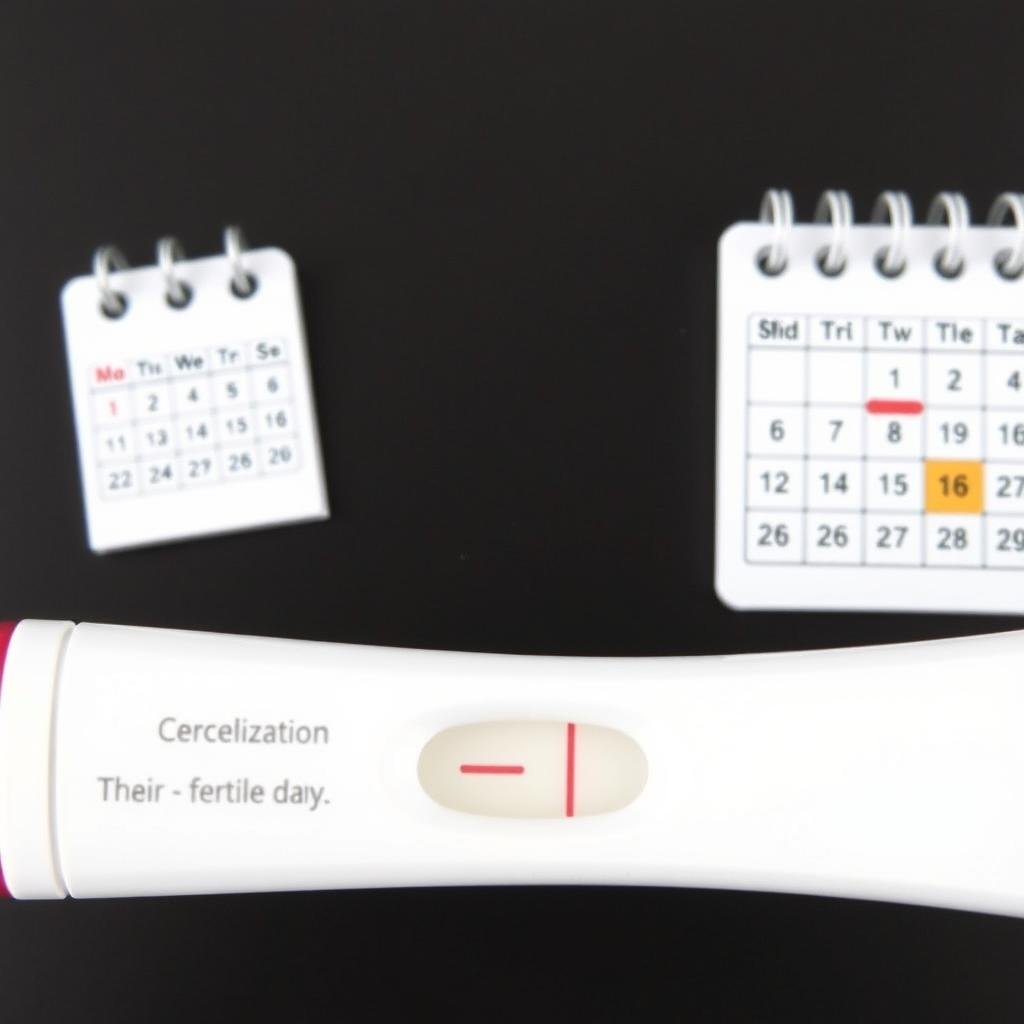
If you know when you conceived (perhaps through tracking ovulation), we add 266 days (38 weeks) to your conception date to calculate your estimated due date.
IVF Transfer

For IVF pregnancies, we add 261 days to a 5-day embryo transfer date or 263 days to a 3-day embryo transfer date for precise calculation.
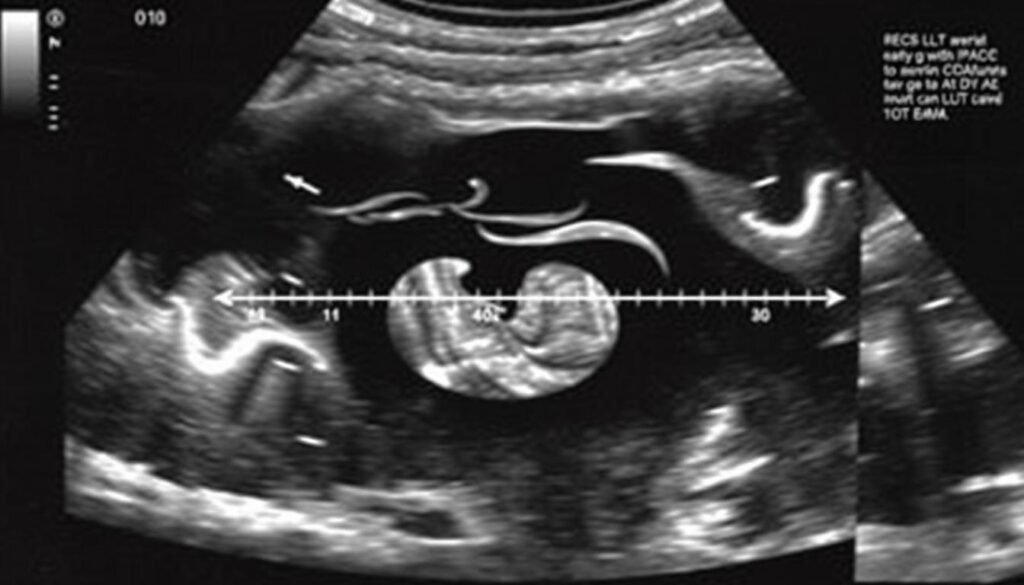
Early ultrasounds provide the most accurate dating of pregnancy
Ultrasound Dating
If you’ve had an early ultrasound (typically in the first trimester), we can calculate your due date based on the gestational age determined by the ultrasound measurements. This is often the most accurate method, especially if you have irregular cycles or aren’t sure when your last period was.
Step-by-Step Guide to Using the Due Date Calculator
- Select your calculation method from the dropdown menu (Last Menstrual Period, Conception Date, IVF Transfer Date, or Ultrasound Date).
- Enter the requested date based on your selected method. For Last Menstrual Period, this would be the first day of your last period.
- If using the LMP method, select your average cycle length if you know it. If unsure, leave it at the default 28 days.
- For IVF transfers, indicate whether it was a 3-day or 5-day transfer.
- For ultrasound dating, enter the date of your ultrasound and the gestational age determined at that time.
- Click “Calculate Due Date” to see your results.
- Review your results, which include your estimated due date, current pregnancy week, trimester, and days remaining until your due date.

Our calculator is designed to be simple and user-friendly
Factors Affecting Due Date Accuracy
While due date calculators provide helpful estimates, several factors can affect their accuracy. Understanding these can help you interpret your results better:
Irregular Menstrual Cycles

If your cycles are consistently shorter or longer than 28 days, or if they vary significantly from month to month, standard calculations may be less accurate. Our calculator allows you to adjust for cycle length, but ultrasound dating may be more reliable.
Late Ovulation
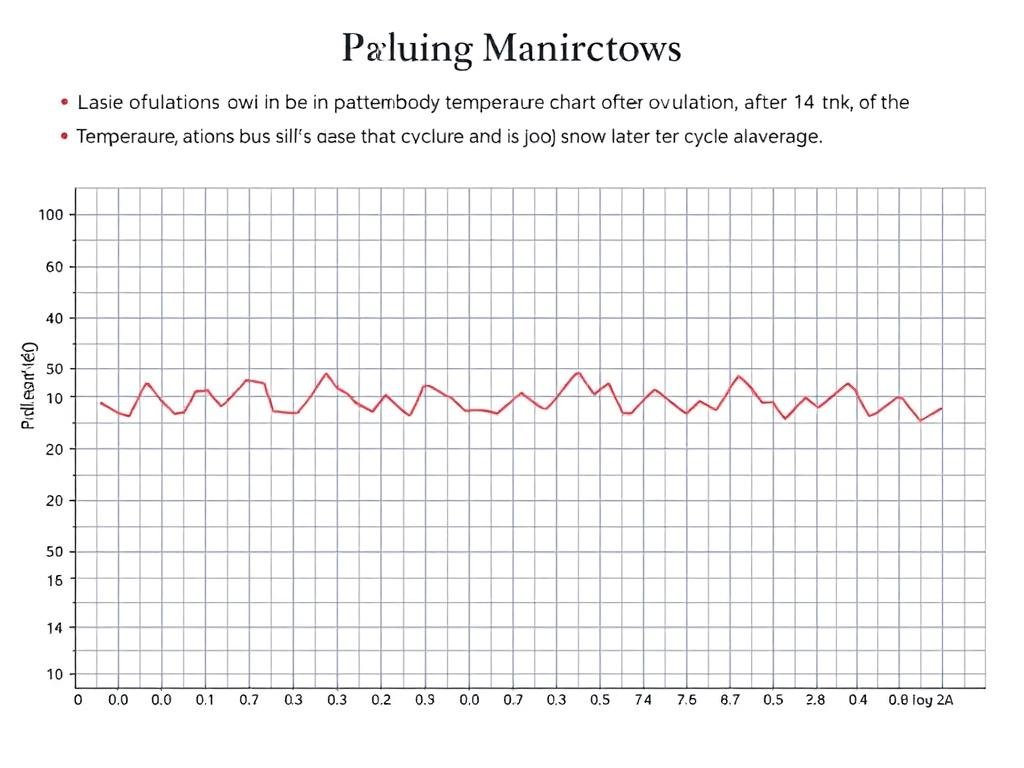
The standard calculation assumes ovulation occurs on day 14 of your cycle. If you regularly ovulate earlier or later, your due date may differ from the calculator’s estimate. Tracking ovulation can provide more accurate dates.
IVF and Assisted Reproduction

IVF pregnancies have more precise dating since the exact date of embryo transfer is known. However, adjustments are needed based on whether it was a 3-day or 5-day embryo transfer.
First Pregnancy vs. Subsequent Pregnancies

First-time mothers (primiparas) tend to deliver later than the estimated due date, while women who have given birth before (multiparas) may deliver earlier. This individual variation isn’t accounted for in standard calculations.
Remember:
Only about 5% of women deliver exactly on their due date. Most babies arrive within two weeks before or after the calculated date. Your healthcare provider may adjust your due date based on ultrasound measurements or other clinical factors.
Comparing Due Date Calculation Methods
| Calculation Method | Accuracy | Best Used When | Limitations |
| Last Menstrual Period (LMP) | Moderate | You have regular cycles and know the date of your last period | Less accurate for irregular cycles or if you can’t recall exact date |
| Conception Date | High | You tracked ovulation or know exact conception date | Most women don’t know exact conception date |
| IVF Transfer | Very High | You conceived through IVF | Only applicable to IVF pregnancies |
| Early Ultrasound (6-12 weeks) | Highest | You have irregular cycles or uncertain LMP | Requires medical appointment; less accurate after first trimester |
| Later Ultrasound (after 12 weeks) | Moderate | No earlier dating is available | Less accurate as pregnancy progresses due to individual growth variations |

Healthcare providers often use multiple methods to determine the most accurate due date
Can My Due Date Change?
Yes, your due date may change during your pregnancy for several reasons:

- Early Ultrasound Results: If your first ultrasound shows a significant difference between the gestational age based on LMP and the baby’s measurements, your provider may adjust your due date.
- Growth Discrepancies: If your baby is consistently measuring larger or smaller than expected, your provider might reconsider your due date.
- Multiple Pregnancies: Twins and other multiples often deliver earlier than singletons, so your due date might be adjusted accordingly.
- Medical Complications: Certain conditions may lead to recommendations for earlier delivery, effectively changing your “target” date.
“Due dates are always estimates. Think of your due date as the middle of a range of about four weeks—from two weeks before to two weeks after—during which your baby might arrive.”
What to Expect as Your Due Date Approaches
Signs Labor Is Approaching

- Lightening: Your baby drops lower into your pelvis, sometimes weeks before labor.
- Braxton Hicks Contractions: Practice contractions that don’t lead to cervical dilation.
- Cervical Changes: Your cervix begins to soften, thin, and possibly dilate.
- Mucus Plug Release: Loss of the mucus plug that sealed your cervix during pregnancy.
- Increased Back Pain: Persistent lower back pain as your body prepares for labor.
Preparing for Birth

- Pack Your Hospital Bag: Have essentials ready by 36 weeks.
- Finalize Birth Plan: Discuss preferences with your healthcare provider.
- Install Car Seat: Have it properly installed before your due date.
- Arrange Childcare: If you have other children, plan for their care during labor.
- Rest: Prioritize sleep and relaxation in the final weeks.
When to Call Your Healthcare Provider:
Contact your provider immediately if you experience:
- Regular, painful contractions (especially if before 37 weeks)
- Water breaking (clear fluid leaking or gushing)
- Bright red bleeding
- Decreased fetal movement
- Severe headache, vision changes, or sudden swelling
Frequently Asked Questions About Due Dates
How accurate are due date calculators?
Due date calculators provide estimates, not guarantees. Only about 5% of women deliver exactly on their due date. Most babies arrive within two weeks before or after the calculated date. Early ultrasound dating (before 12 weeks) tends to be the most accurate method.
What if I don’t know the first day of my last period?
If you’re unsure about your last period date, an early ultrasound is the best way to determine your due date. Your healthcare provider can measure the baby during an ultrasound to estimate gestational age. You can also try using our calculator with your best guess, but be aware the result will be less accurate.
Does a longer or shorter menstrual cycle affect my due date?
Yes. The standard calculation assumes a 28-day cycle with ovulation on day 14. If your cycle is consistently longer or shorter, your due date may be different. Our calculator allows you to adjust for cycle length, which can provide a more accurate estimate.
Am I considered “late” if I go past my due date?
Not necessarily. A pregnancy isn’t considered “overdue” or “post-term” until you reach 42 weeks. The period between 40 and 42 weeks is considered “late-term.” Many first-time mothers deliver after their due date, which is completely normal.
How is my due date calculated if I’m having twins or multiples?
The initial due date calculation for twins or multiples is the same as for single pregnancies. However, multiple pregnancies often deliver earlier—twins at around 36-37 weeks and triplets even earlier. Your healthcare provider may adjust your “target” date accordingly during your prenatal care.
Can I plan my due date by timing conception?
While you can try to time conception to aim for a particular season or month, remember that the exact timing of ovulation can be unpredictable, and most babies don’t arrive precisely on their due date. Planning conception gives you a general timeframe but not an exact date.
Additional Pregnancy Resources

Ovulation Calculator
Track your fertile days to increase your chances of conception with our easy-to-use ovulation calculator.
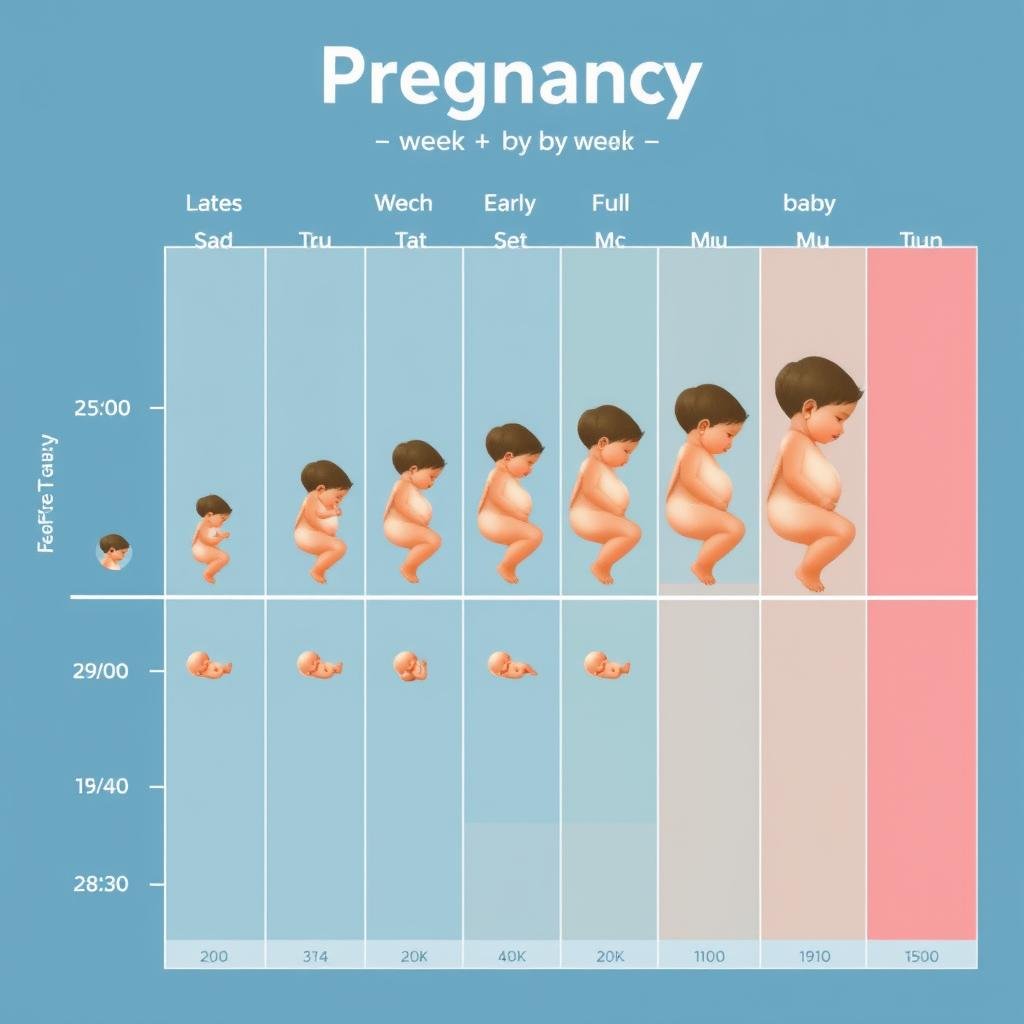
Pregnancy Week by Week
Follow your baby’s development from conception to birth with detailed weekly updates and guidance.

Pregnancy Weight Tracker
Monitor your pregnancy weight gain and compare it to recommended guidelines based on your pre-pregnancy BMI.
Stay Updated Throughout Your Pregnancy
Sign up for our weekly pregnancy newsletter to receive personalized updates based on your due date, expert advice, and helpful tips for each stage of your pregnancy journey.
Medical Disclaimer
The Pregnancy Due Date Calculator is provided for informational and educational purposes only. It is not intended to replace professional medical advice, diagnosis, or treatment.
Due date calculations are estimates based on statistical averages and may not accurately predict when your baby will be born. Only about 5% of babies are born exactly on their due date.
Always consult with a qualified healthcare provider regarding your pregnancy, including questions about your due date, prenatal care, and any concerns you may have about your pregnancy.