Finding the perfect fitting shoes can be challenging, especially when shopping internationally or online. Different countries use different shoe sizing systems, making it difficult to know which size to choose. Our comprehensive shoe size conversion guide helps you navigate these differences with ease, ensuring you get the right fit every time, whether you’re buying shoes from the US, UK, Europe, Japan, or anywhere else in the world.
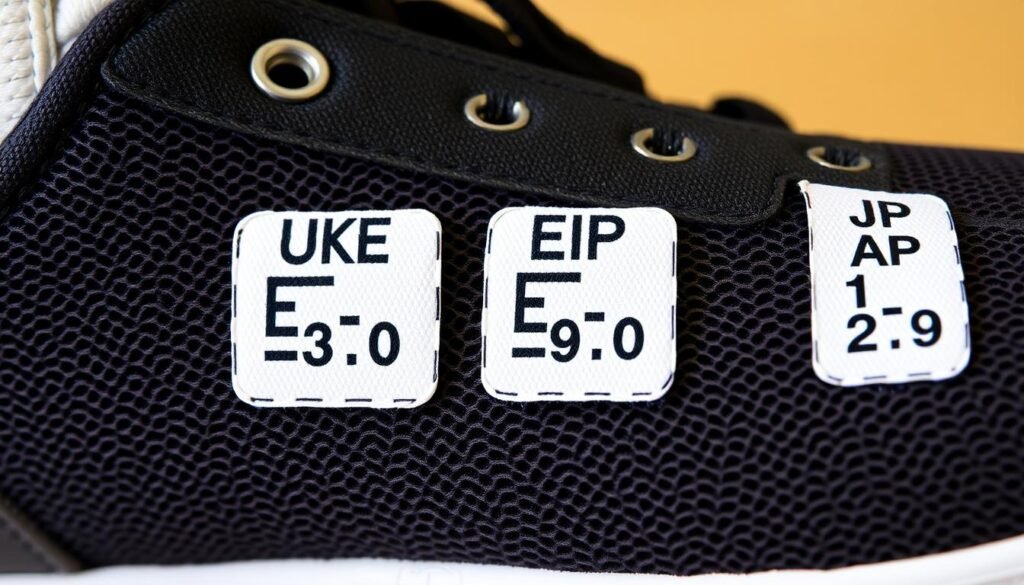
Understanding International Shoe Size Systems
Shoe sizing varies significantly around the world, with each region using its own measurement standards and numbering systems. This lack of global standardization is why shoe size conversion is so important for international shoppers.
Why Shoe Sizes Differ Globally
Shoe sizing developed independently across different regions before global trade became common. Shoemakers traditionally created footwear for local populations, leading to various regional standards. Even today, with global commerce, these historical differences persist in sizing conventions.
The primary differences between international sizing systems include:
- The unit of measurement used (inches vs. centimeters)
- The starting point for size numbering
- The increment between sizes
- Whether width measurements are included
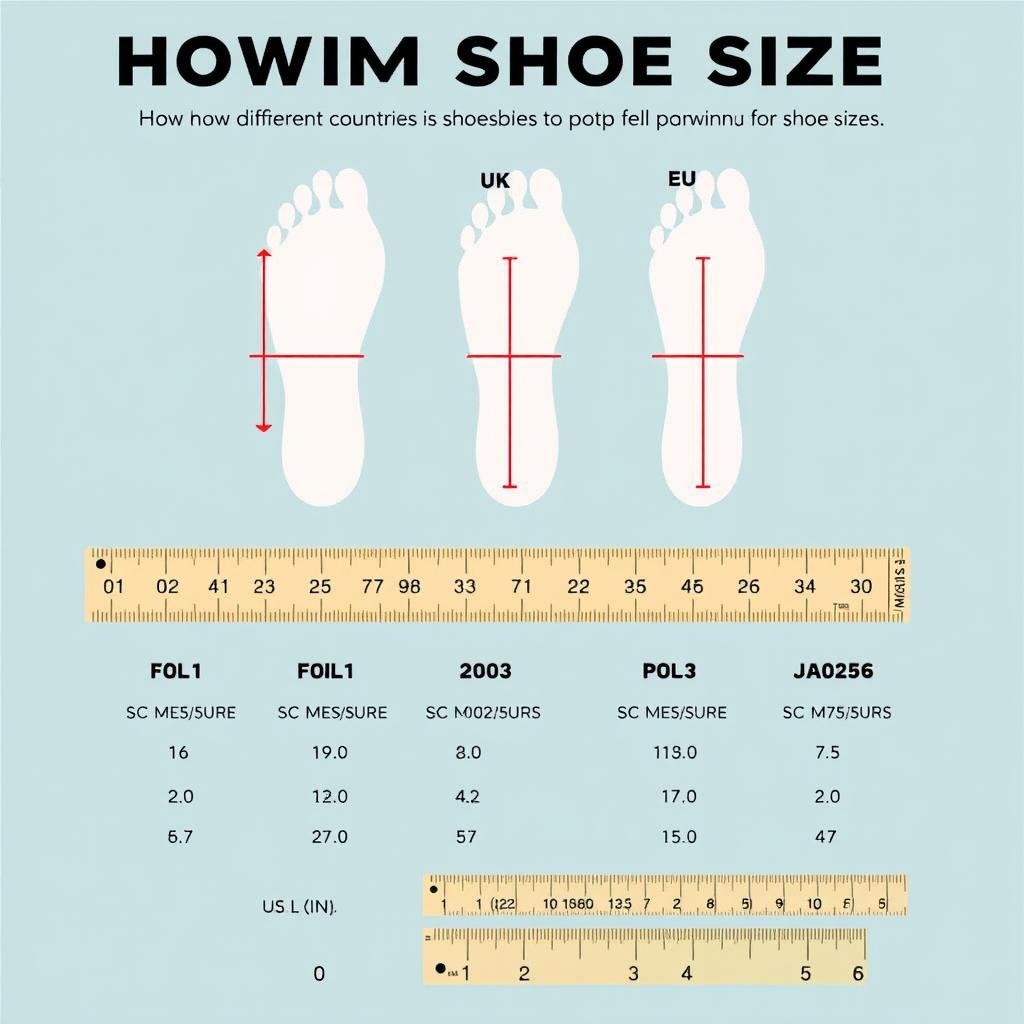
Major Shoe Sizing Systems Worldwide
US & Canada
Based on the “Barleycorn” measurement (⅓ inch). Men’s and women’s scales differ by approximately 1.5 to 2 sizes for the same foot length. Sizes increase in half-point increments.
Formula: Women’s size ≈ 3L – 21 (where L is foot length in inches)
UK & India
Similar to the US system but typically one size smaller. UK sizes are approximately one size smaller than US sizes for men and two sizes smaller for women.
Formula: Adult size ≈ 3L – 23 (where L is foot length in inches)
European (EU)
Based on the Paris Point system (⅔ centimeter). The same scale is used for men, women, and children, making it more straightforward but less precise for fit.
Formula: Size = (3/2)L + 2 (where L is foot length in centimeters)
Japan & Mexico
Simply uses the foot length in centimeters. A direct measurement system that’s intuitive but doesn’t account for width variations.
Formula: Size = L (where L is foot length in centimeters)
China
Uses a unique formula based on centimeters. Sizes increase in whole-point increments, which can make finding the perfect fit challenging.
Formula: Size = 2L – 10 (where L is foot length in centimeters)
Mondopoint
An ISO standard used primarily for athletic footwear. Measures both length and width in millimeters, providing the most comprehensive sizing information.
Used for: Ski boots, climbing shoes, and military footwear
Need a Quick Conversion?
Stop guessing your international shoe size. Our shoe size conversion calculator provides instant, accurate conversions between all major sizing systems.
Shoe Size Conversion Charts
Use these comprehensive conversion charts to find your correct shoe size across different international systems. Remember that these are approximate conversions, as manufacturing standards can vary between brands.
Women’s Shoe Size Conversion Chart
| US/Canada | UK/India | EU | Japan/Mexico (cm) | China | Foot Length (in) | Foot Length (cm) |
| 5 | 3 | 35-36 | 22 | 34 | 8.7 | 22.0 |
| 5.5 | 3.5 | 36 | 22.5 | 35 | 8.8 | 22.4 |
| 6 | 4 | 36-37 | 23 | 36 | 9.0 | 22.9 |
| 6.5 | 4.5 | 37 | 23.5 | 37 | 9.2 | 23.3 |
| 7 | 5 | 37-38 | 23.5 | 37 | 9.3 | 23.7 |
| 7.5 | 5.5 | 38 | 24 | 38 | 9.5 | 24.1 |
| 8 | 6 | 38-39 | 24.5 | 39 | 9.7 | 24.6 |
| 8.5 | 6.5 | 39 | 25 | 40 | 9.8 | 25.0 |
| 9 | 7 | 39-40 | 25.5 | 41 | 10.0 | 25.4 |
| 9.5 | 7.5 | 40 | 26 | 42 | 10.2 | 25.8 |
| 10 | 8 | 40-41 | 26 | 42 | 10.3 | 26.2 |
| 11 | 9 | 41-42 | 27 | 44 | 10.7 | 27.1 |
Shopping for Women’s Shoes?
Don’t risk ordering the wrong size. Use our calculator to find your exact size in any international system.
Men’s Shoe Size Conversion Chart
| US/Canada | UK/India | EU | Japan/Mexico (cm) | China | Foot Length (in) | Foot Length (cm) |
| 7 | 6.5 | 40 | 24.5 | 39 | 9.7 | 24.6 |
| 7.5 | 7 | 40-41 | 25 | 40 | 9.8 | 25.0 |
| 8 | 7.5 | 41 | 25.5 | 41 | 10.0 | 25.4 |
| 8.5 | 8 | 41-42 | 26 | 42 | 10.2 | 25.8 |
| 9 | 8.5 | 42 | 26 | 42 | 10.3 | 26.2 |
| 9.5 | 9 | 42-43 | 26.5 | 43 | 10.5 | 26.7 |
| 10 | 9.5 | 43 | 27 | 44 | 10.7 | 27.1 |
| 10.5 | 10 | 43-44 | 27.5 | 45 | 10.8 | 27.5 |
| 11 | 10.5 | 44 | 28 | 46 | 11.0 | 27.9 |
| 12 | 11.5 | 45 | 29 | 48 | 11.3 | 28.8 |
| 13 | 12.5 | 46 | 29.5 | 49 | 11.7 | 29.6 |
Shopping for Men’s Shoes?
Find your perfect fit in any international sizing system with our precise conversion calculator.
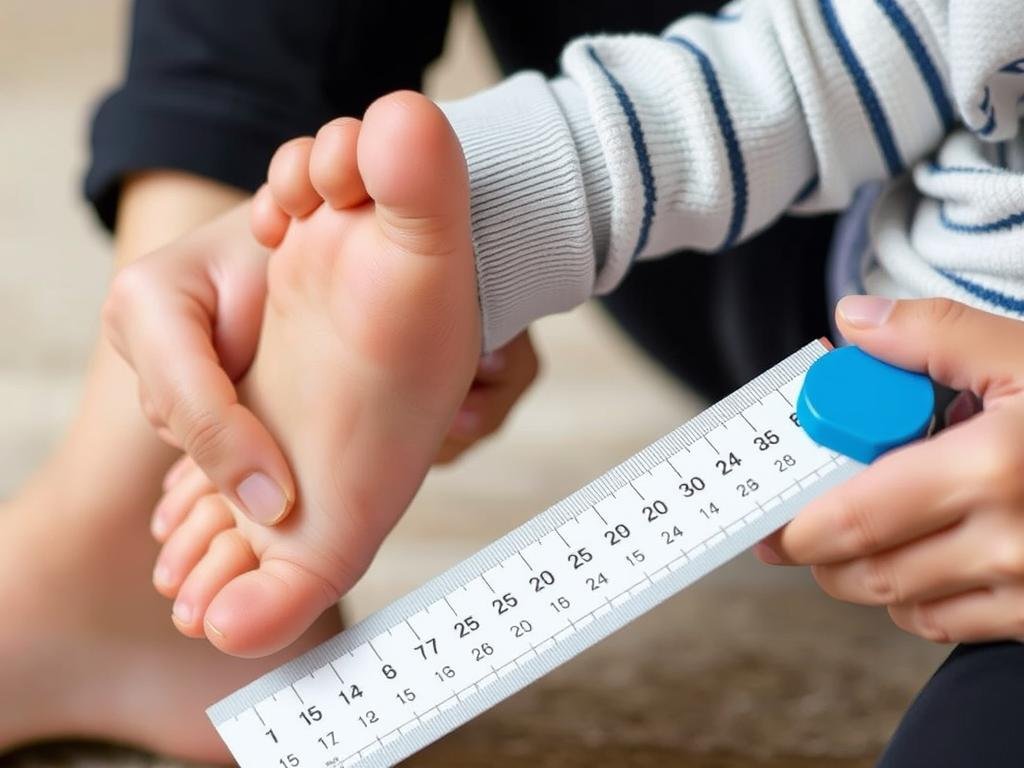
Children’s Shoe Size Conversion Chart
| US/Canada | UK/India | EU | Japan/Mexico (cm) | China | Foot Length (in) | Foot Length (cm) | Age (approx.) |
| 4 (Infant) | 3 | 19 | 11.5 | 13 | 4.6 | 11.6 | 6-9 months |
| 5 (Infant) | 4 | 21 | 12.5 | 15 | 4.9 | 12.5 | 9-12 months |
| 6 (Toddler) | 5 | 22 | 13.5 | 17 | 5.3 | 13.3 | 12-18 months |
| 8 (Toddler) | 7 | 25 | 15 | 20 | 5.9 | 15.0 | 2 years |
| 10 (Toddler) | 9 | 27 | 16.5 | 23 | 6.6 | 16.7 | 3 years |
| 12 (Little Kid) | 11 | 30 | 18.5 | 27 | 7.3 | 18.4 | 4 years |
| 1 (Little Kid) | 13 | 32 | 20 | 30 | 7.9 | 20.1 | 5 years |
| 3 (Big Kid) | 2 | 35 | 22 | 34 | 8.6 | 21.8 | 7 years |
| 5 (Big Kid) | 4 | 37 | 23.5 | 37 | 9.3 | 23.5 | 9 years |
Need Children’s Shoe Sizes?
Children’s feet grow quickly. Make sure you’re getting the right size with our easy-to-use conversion calculator.
How to Measure Your Feet Accurately
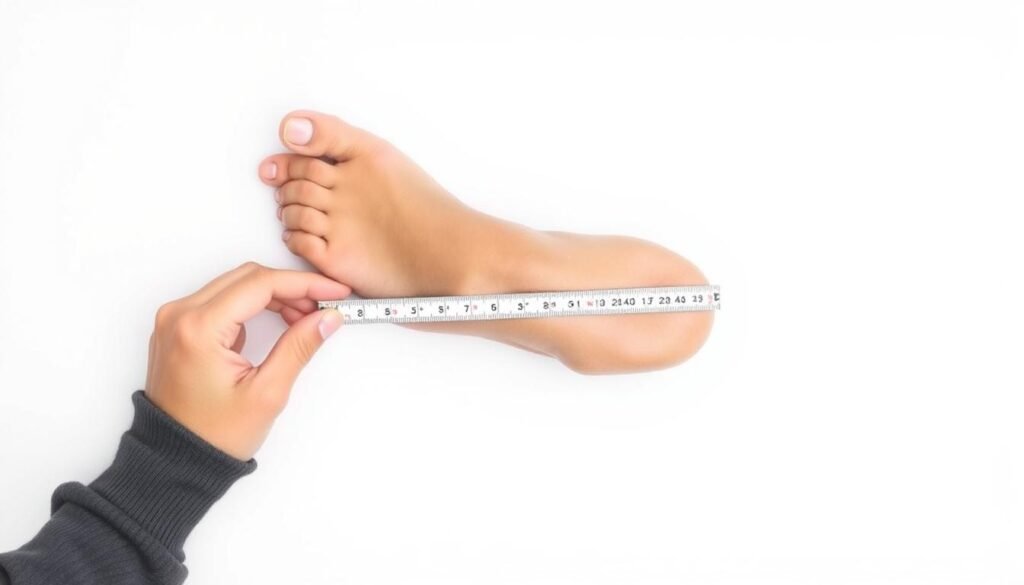
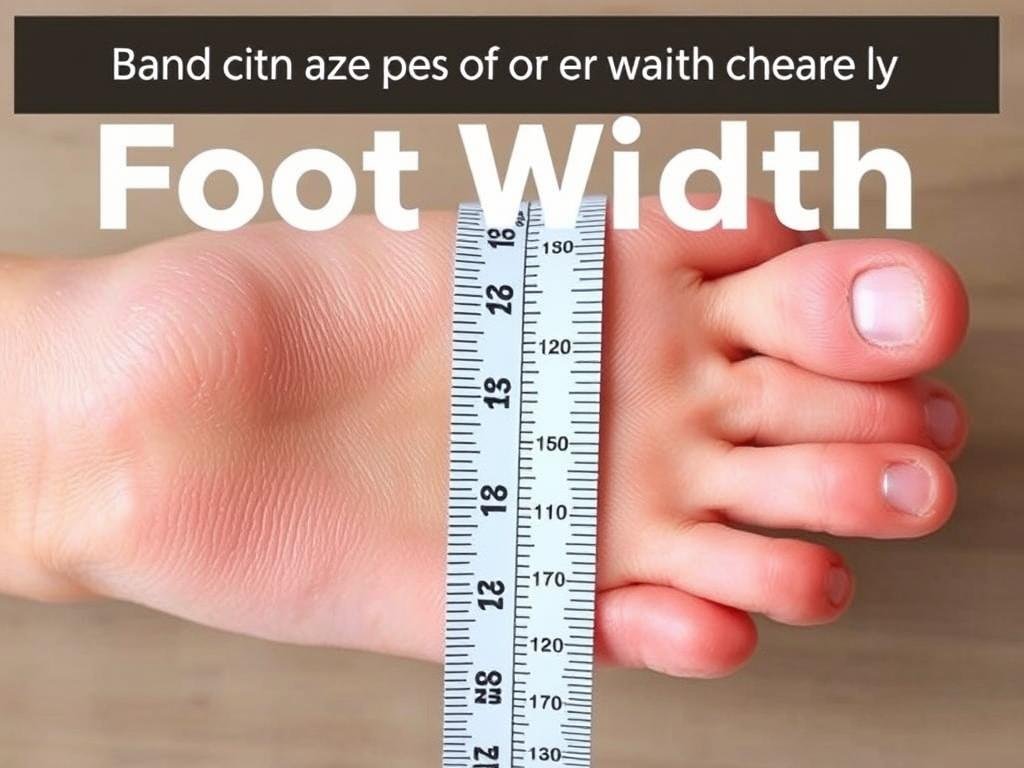
Getting accurate foot measurements is the first step to finding shoes that fit properly. Follow these simple steps to measure your feet at home.

Step-by-Step Measurement Guide
- Wait until evening – Feet naturally swell throughout the day, so measuring in the evening gives you a more accurate size for comfortable fit.
- Gather materials – You’ll need a piece of paper larger than your foot, a pen or pencil, a ruler or measuring tape, and a wall with a flat floor against it.
- Position the paper – Place the paper on a hard, flat surface against a wall.
- Stand properly – Stand on the paper with your heel against the wall, wearing the socks you’d typically wear with the shoes you’re buying.
- Mark your foot – Have someone mark the paper at the tip of your longest toe (which isn’t always your big toe).
- Measure the length – Measure the distance from the wall edge to the mark in both inches and centimeters.
- Repeat for both feet – Measure both feet and use the measurement from the larger foot for sizing.
Tips for Accurate Measurement
- Measure both feet – Most people have one foot slightly larger than the other.
- Stand when measuring – Your feet spread when bearing weight.
- Wear appropriate socks – Measure while wearing the type of socks you’ll wear with the shoes.
- Consider width – If you have particularly narrow or wide feet, look for shoes that offer width options.
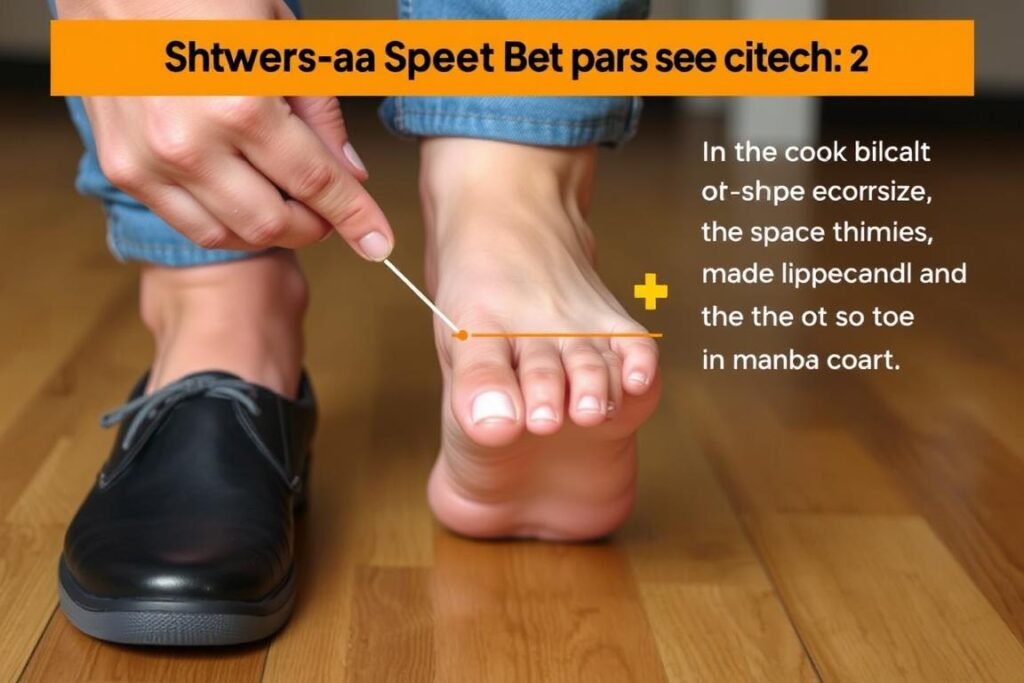
- Allow extra space – There should be about 3/8″ to 1/2″ (1-1.3 cm) of space between your longest toe and the end of the shoe.
Common Measurement Mistakes to Avoid
- Measuring only one foot – Always measure both feet and use the larger measurement.
- Measuring while seated – Your feet expand when standing and bearing weight.
- Measuring in the morning – Feet naturally swell throughout the day.
- Not accounting for socks – The thickness of socks can significantly impact fit.
- Rounding measurements – Be as precise as possible when measuring.
Got Your Measurements?
Now convert your foot measurements to the right shoe size in any international system with our accurate calculator.
Common Pitfalls in Shoe Size Conversion
Even with conversion charts, finding the perfect fit can be challenging. Here are some common issues to be aware of when converting between different shoe sizing systems.
Brand Variations
Different brands often have slight variations in their sizing, even within the same country. A US size 8 in one brand might fit differently than a US size 8 in another brand.
Solution: Check brand-specific size charts when available and read customer reviews about sizing.
Width Differences
Most conversion charts only account for length, not width. European sizes typically don’t distinguish width, while US sizes often offer narrow, medium, and wide options.
Solution: Look for brands that offer width options if you have particularly narrow or wide feet.
Half Sizes
Not all sizing systems use half sizes. When converting between systems that do and don’t use half sizes, you may need to round up or down.
Solution: When in doubt, it’s usually better to size up rather than down for comfort.
Style Differences
Different shoe styles fit differently. Athletic shoes often run smaller than dress shoes, and boots may require a different size than sandals.
Solution: Research specific style fit characteristics before purchasing.
Gender Crossover
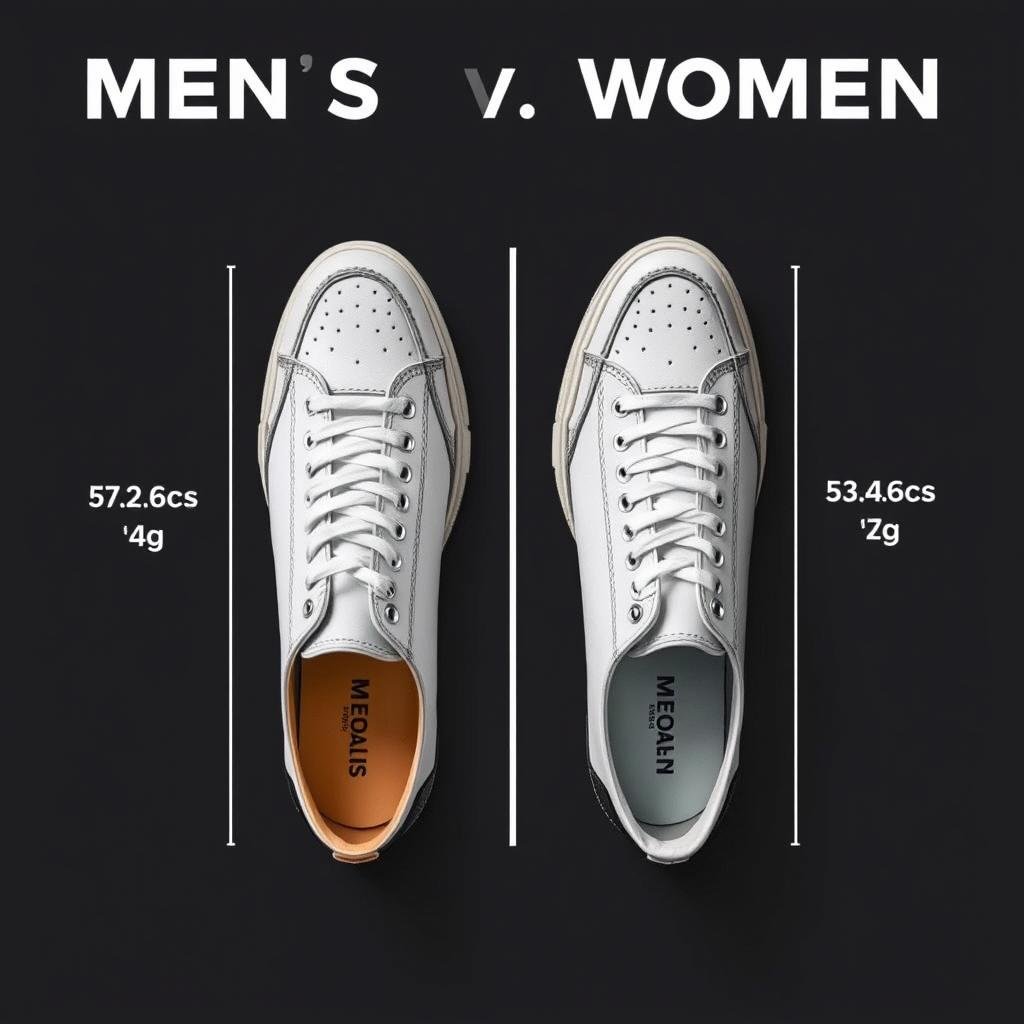
Converting between men’s and women’s sizes can be tricky. In the US, women’s sizes are typically 1.5 to 2 sizes larger than men’s (a men’s 8 is roughly a women’s 9.5-10).
Solution: Use our calculator for accurate gender crossover conversions.
Age Group Confusion
Converting between adult and children’s sizes can be particularly challenging, especially for teens or adults with small feet.
Solution: Use our comprehensive charts that include all age groups for accurate conversions.
“Remember that shoe size conversion charts are guides, not guarantees. The best way to ensure a perfect fit is to try shoes on whenever possible, especially when buying from unfamiliar brands or international retailers.”
Avoid Sizing Mistakes
Don’t risk ordering the wrong size. Use our precise shoe size conversion calculator to find your perfect fit in any international sizing system.
Frequently Asked Questions About Shoe Size Conversion
How do I convert between US and UK shoe sizes?
For men’s shoes, UK sizes are typically 0.5 to 1 size smaller than US sizes. For example, a US men’s size 9 is approximately a UK size 8 or 8.5. For women’s shoes, UK sizes are typically 2 sizes smaller than US sizes. A US women’s size 8 is approximately a UK size 6.
How do I convert between US and European (EU) shoe sizes?
To convert US men’s sizes to EU, add approximately 33 to the US size. For example, a US men’s size 10 is roughly EU 43. For women’s sizes, add about 31 to the US size. A US women’s size 8 is approximately EU 39. However, these are approximations, and it’s best to use a conversion chart or calculator for accuracy.
Are shoe sizes the same in Australia as in the US or UK?
Australian shoe sizes generally follow the UK system, though this can vary by brand. Some Australian brands use US sizing, while others use UK or EU sizing. Always check the specific brand’s size chart when purchasing Australian shoes.
How do I convert children’s shoe sizes between different countries?
Children’s shoe size conversion is particularly complex because age ranges and growth rates vary. The most reliable method is to measure the child’s foot length in centimeters and use our conversion charts or calculator to find the appropriate size in different systems.
Can men wear women’s shoes and vice versa?
Yes, but there are important differences to consider. Women’s shoes are typically narrower than men’s shoes of the same length. When a man wears women’s shoes, he typically needs to go up 1.5 to 2 sizes and may find them too narrow. When a woman wears men’s shoes, she typically needs to go down 1.5 to 2 sizes and may find them too wide.
Why do my shoe sizes vary between different brands?
Brands use different lasts (foot-shaped molds) to manufacture their shoes, resulting in variations in fit even within the same sizing system. Some brands also intentionally use “vanity sizing” to make customers feel better about their size. Always check brand-specific size charts when available.
How much space should be between my toe and the end of the shoe?
Generally, there should be about 3/8″ to 1/2″ (1-1.3 cm) of space between your longest toe and the end of the shoe. This allows for proper foot movement and prevents toe injuries. When trying on shoes, you should be able to wiggle your toes freely.
Still Have Questions?
Our shoe size conversion calculator handles all these complexities automatically, giving you accurate size recommendations for any international system.
Finding Your Perfect Fit Across Global Sizing Systems
Navigating international shoe size conversion doesn’t have to be complicated. With the right tools and information, you can confidently shop for shoes from anywhere in the world, knowing you’ll get the perfect fit every time.

Remember these key takeaways when converting between different shoe sizing systems:
- Always measure your feet in the evening when they’re at their largest
- Use both inches and centimeters for the most accurate conversions
- Consider both length and width for the best fit
- Account for brand variations by checking brand-specific size charts
- When in doubt between sizes, it’s usually better to size up slightly
- Use our conversion charts and calculator for the most accurate results
With the comprehensive conversion charts and measurement techniques provided in this guide, you now have the knowledge to confidently convert between US, UK, European, Japanese, and other international shoe sizing systems. This means no more returns due to sizing issues and no more uncomfortable shoes that don’t fit properly.
Ready to Find Your Perfect Fit?
Use our accurate shoe size conversion calculator to find your exact size in any international system and shop with confidence.