Sleep Calculator helps you find the best time to sleep and wake up. Improve rest with ideal sleep cycles for better health and productivity.
Sleep Calculator
Have you ever woken up feeling groggy despite getting a full night’s sleep? The problem might not be how long you sleep, but when you wake up during your sleep cycle. Our Sleep Calculator helps you find the optimal times to fall asleep or wake up based on your body’s natural sleep cycles, ensuring you wake feeling refreshed and energized every morning.
Find Your Optimal Sleep Schedule
Discover the best times to go to bed or wake up based on your body’s natural sleep cycles. Wake up feeling refreshed instead of groggy!
Understanding Sleep Cycles: The Science Behind Our Sleep Calculator
Sleep isn’t just one continuous state. Throughout the night, your body cycles through different stages of sleep, each serving a unique purpose for your physical and mental restoration. Understanding these cycles is key to optimizing your sleep schedule.

The typical 90-minute sleep cycle pattern through the night
The 90-Minute Sleep Cycle
On average, a complete sleep cycle lasts about 90 minutes. During this time, your body progresses through four distinct stages:
Non-REM Sleep Stages
- Stage 1 (N1): Light sleep where you drift in and out of consciousness and can be easily awakened.
- Stage 2 (N2): Body temperature drops and heart rate slows as you prepare for deep sleep.
- Stage 3 (N3): Deep sleep where your body repairs tissues, builds bone and muscle, and strengthens your immune system.
REM Sleep
REM (Rapid Eye Movement) sleep is when most dreaming occurs. Your brain is highly active during this stage, processing emotions and consolidating memories. Your body is temporarily paralyzed to prevent you from acting out dreams.
REM sleep is crucial for cognitive function, learning, and emotional well-being.
Waking up during deep sleep (Stage 3) can leave you feeling groggy and disoriented—a phenomenon known as “sleep inertia.” The Sleep Calculator helps you time your wake-up to avoid this stage.
How Our Sleep Calculator Works
The Sleep Calculator uses the science of sleep cycles to determine the best times for you to fall asleep or wake up. By aligning your sleep schedule with your natural sleep cycles, you can wake up between cycles rather than in the middle of deep sleep.

The Calculation Process
Our Sleep Calculator works in two ways:
If you know when you want to wake up:
- Enter your desired wake-up time
- The calculator adds 15 minutes (the average time it takes to fall asleep)
- It then calculates backward in 90-minute increments (the length of a typical sleep cycle)
- You’ll see several bedtime options that will help you wake up between cycles
If you know when you’re going to bed:
- Enter your bedtime
- The calculator adds 15 minutes for falling asleep
- It then calculates forward in 90-minute increments
- You’ll see optimal wake-up times that align with the end of your sleep cycles
The calculator also factors in age-specific sleep recommendations, as sleep needs vary throughout life. For example, teenagers need more sleep than adults, while older adults may need slightly less.
Benefits of Using a Sleep Calculator
Optimizing your sleep schedule with a Sleep Calculator can transform your sleep quality and overall well-being. Here are the key benefits:

Wake Up Refreshed
By waking up between sleep cycles rather than during deep sleep, you’ll feel more alert and energized in the morning. No more hitting the snooze button multiple times!
Improve Sleep Quality
Understanding and respecting your sleep cycles leads to more restorative sleep, even if you’re getting the same number of hours.
Enhance Daytime Performance
Better sleep quality translates to improved concentration, memory, and cognitive function during the day.
Regulate Your Body Clock
Consistent sleep and wake times help regulate your circadian rhythm, making it easier to fall asleep and wake up naturally.
Reduce Sleep Inertia
Minimize that groggy, disoriented feeling when you wake up by timing your alarm to go off between sleep cycles.
Support Overall Health
Quality sleep is linked to better immune function, mood regulation, and reduced risk of chronic health conditions.
Ready to Transform Your Sleep?
Now that you understand how sleep cycles work, use our Sleep Calculator to find your optimal bedtime or wake-up time.
How to Use Our Sleep Calculator
Using our Sleep Calculator is simple and takes just a few seconds. Follow these steps to find your optimal sleep schedule:
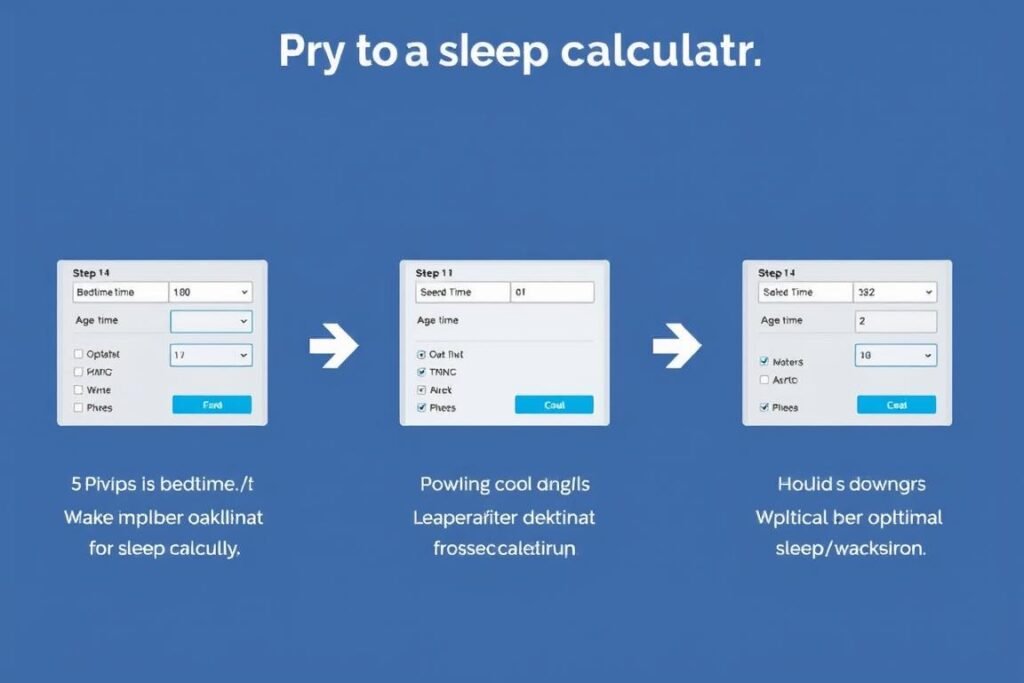
To Find Your Ideal Bedtime:
- Select “I want to wake up at” option
- Enter your desired wake-up time
- Select your age range (sleep needs vary by age)
- Click “Calculate”
- Review the recommended bedtime options
- Choose the bedtime that works best with your schedule
To Find Your Ideal Wake-Up Time:
- Select “I want to go to bed at” option
- Enter your planned bedtime
- Select your age range
- Click “Calculate”
- Review the recommended wake-up time options
- Set your alarm for the wake-up time that fits your schedule
Pro Tip: For the most accurate results, add about 15 minutes to your bedtime to account for the average time it takes to fall asleep. Our calculator already factors this in!
How Much Sleep Do You Need?
The amount of sleep you need varies based on your age, health, and individual factors. Our Sleep Calculator takes age into account when making recommendations. Here are the general guidelines for sleep duration by age group:
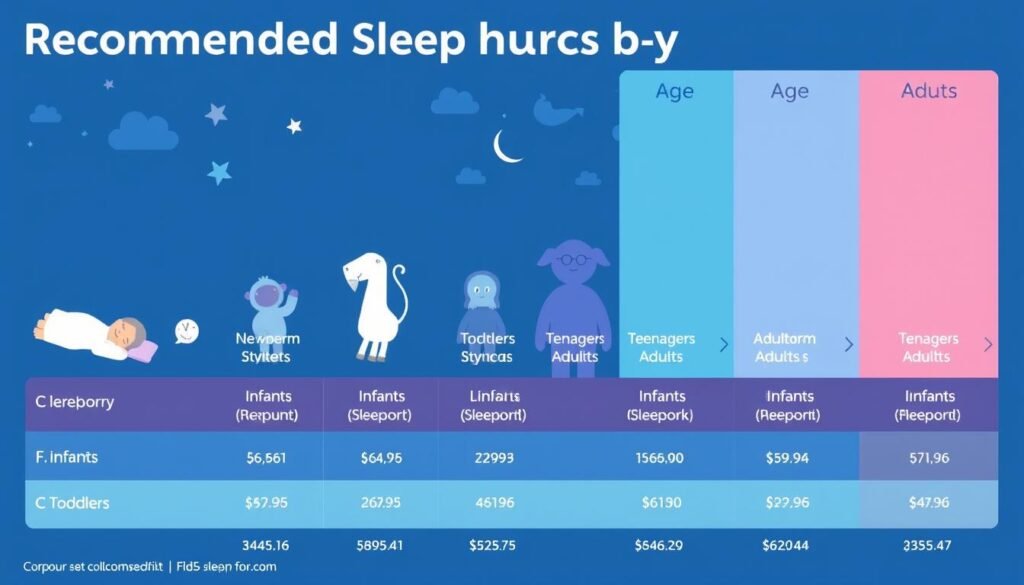
| Age Group | Recommended Hours of Sleep |
| Newborns (0-3 months) | 14-17 hours |
| Infants (4-12 months) | 12-16 hours (including naps) |
| Toddlers (1-2 years) | 11-14 hours (including naps) |
| Preschoolers (3-5 years) | 10-13 hours (including naps) |
| School-age children (6-12 years) | 9-12 hours |
| Teenagers (13-18 years) | 8-10 hours |
| Adults (18-64 years) | 7-9 hours |
| Older adults (65+ years) | 7-8 hours |
Remember that these are general guidelines. Some people naturally need more or less sleep than others in their age group. Pay attention to how you feel during the day to determine if you’re getting enough quality sleep.
The Impact of Sleep Deprivation
Not getting enough quality sleep can have serious consequences for your health and well-being. Understanding these risks highlights the importance of using tools like our Sleep Calculator to optimize your sleep.

Short-term Effects
- Decreased alertness and concentration
- Impaired memory and decision-making
- Mood changes, irritability, and stress
- Reduced coordination and reaction time
- Increased risk of accidents and errors
- Weakened immune response
Long-term Effects
- Increased risk of chronic health conditions (heart disease, diabetes, obesity)
- Mental health issues like depression and anxiety
- Compromised immune function
- Accelerated aging
- Cognitive decline
- Reduced quality of life
“Sleep is the single most effective thing we can do to reset our brain and body health each day.”
Tips for Better Sleep Quality
While our Sleep Calculator helps you optimize when to sleep and wake up, these sleep hygiene practices can further improve your sleep quality:

Consistent Schedule
- Go to bed and wake up at the same time every day, even on weekends
- Use our Sleep Calculator to find the optimal times
- Maintain a regular pre-sleep routine to signal your body it’s time to wind down
Optimize Your Environment
- Keep your bedroom cool (65-68°F or 18-20°C)
- Make your room as dark as possible
- Reduce noise or use white noise
- Invest in a comfortable mattress and pillows
Daytime Habits
- Get regular exercise (but not too close to bedtime)
- Expose yourself to natural sunlight during the day
- Limit caffeine after noon
- Avoid large meals before bedtime
Digital Detox
- Avoid screens 1-2 hours before bed
- Use night mode or blue light filters if necessary
- Keep electronics out of the bedroom
Relaxation Techniques
- Practice deep breathing or meditation
- Try progressive muscle relaxation
- Read a physical book (not on a screen)
- Take a warm bath or shower
Manage Stress
- Write down worries or to-do lists before bed
- Practice mindfulness
- Develop a gratitude practice
- Consider cognitive behavioral therapy for insomnia (CBT-I)
Frequently Asked Questions About Sleep Calculators

Why do I still feel tired after 8 hours of sleep?
You might feel tired despite getting enough hours if you’re waking up during deep sleep rather than between sleep cycles. Our Sleep Calculator helps you time your wake-up to avoid this. Other factors like sleep quality, sleep disorders, or health issues can also contribute to daytime fatigue despite adequate sleep duration.
How accurate is a sleep calculator?
Sleep calculators provide estimates based on average sleep cycle lengths (about 90 minutes). While they work well for many people, individual sleep cycles can vary from 80-120 minutes. The calculator becomes more accurate when you use it consistently and adjust based on your personal experience.
Can a sleep calculator help with insomnia?
A sleep calculator can be one tool in managing insomnia by helping you establish a consistent sleep schedule. However, chronic insomnia often requires additional interventions like cognitive behavioral therapy for insomnia (CBT-I) or consultation with a sleep specialist.
Should I prioritize bedtime or wake-up time?
For most people, maintaining a consistent wake-up time is more important for regulating your circadian rhythm. Our Sleep Calculator can help you work backward from your desired wake-up time to find the ideal bedtime that ensures you get enough complete sleep cycles.
Do naps affect nighttime sleep calculations?
Yes, naps can affect your nighttime sleep needs. If you take regular naps, you might need slightly less sleep at night. However, long or late-day naps can disrupt your nighttime sleep. Short naps (20-30 minutes) earlier in the day are generally best if you need to nap.
Start Waking Up Refreshed Today
Now that you understand how sleep cycles work and the importance of quality sleep, try our Sleep Calculator to find your optimal sleep schedule. Wake up feeling energized and ready to take on the day!
Conclusion: Transform Your Sleep with Our Sleep Calculator
Quality sleep is one of the most important factors in your overall health and well-being. By understanding your sleep cycles and using our Sleep Calculator to optimize your sleep schedule, you can wake up feeling refreshed and energized every day.

Remember that consistency is key when it comes to sleep. Use our calculator to find your ideal schedule, then stick to it as closely as possible, even on weekends. Combined with good sleep hygiene practices, this approach can dramatically improve your sleep quality and overall health.
Don’t settle for feeling tired and groggy in the morning. Take control of your sleep and transform your days with our simple yet effective Sleep Calculator.