Building stairs requires precision and careful planning. A stair calculator helps you determine the exact measurements needed for safe, code-compliant stairs that are comfortable to use. Whether you’re a DIY enthusiast or a professional builder, accurate stair calculations are essential for creating structurally sound stairs that meet building regulations and provide years of safe use.
What is a Stair Calculator?
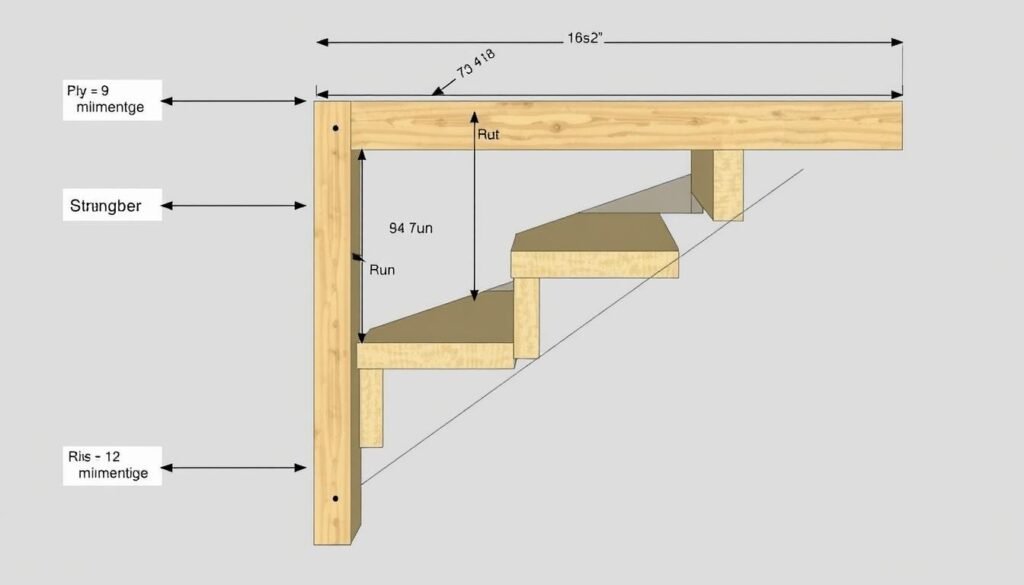
A stair calculator is a specialized tool that helps determine the precise measurements needed for building safe, comfortable stairs. It takes the guesswork out of calculating important dimensions like rise, run, stringer length, and the number of steps required for your specific project.
Using a stair calculator ensures your stairs will comply with building codes while providing optimal comfort for users. Rather than relying on estimates or complex manual calculations, a stair calculator provides accurate measurements based on the total rise (height) of your stairs and other key parameters.
Most stair calculators will help you determine:
- Total rise and run of the staircase
- Number of steps required
- Individual step height (rise) and depth (run)
- Stringer length and angle
- Headroom clearance

Need Accurate Stair Measurements?
Stop guessing and ensure your stairs meet building codes with precise calculations.
Key Stair Measurements to Calculate
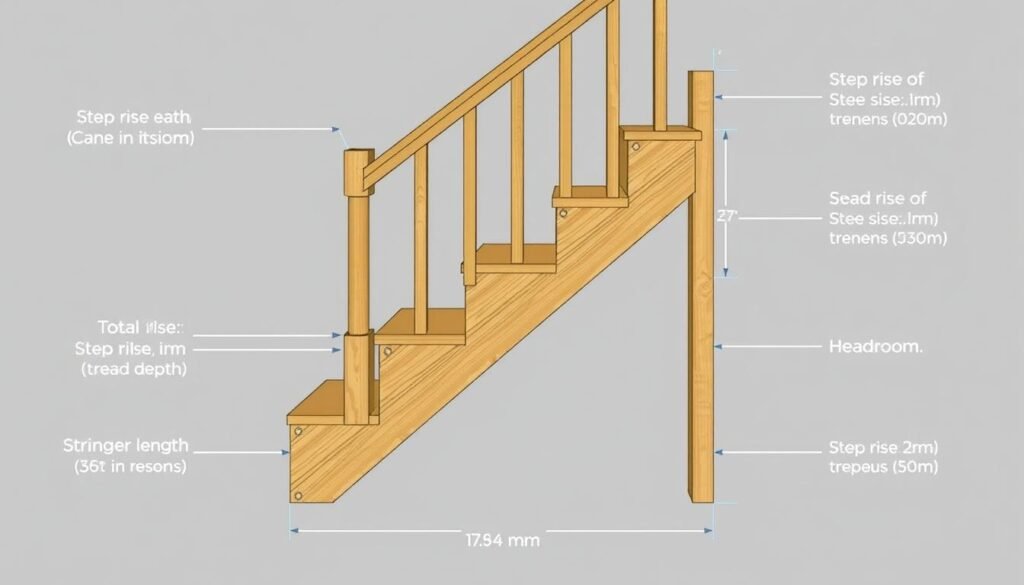
Understanding the essential stair measurements is crucial for proper stair design and construction. Here are the key dimensions that a stair calculator helps you determine:
Total Rise
The total vertical height from the bottom floor to the top landing. This is the first measurement you need before calculating any other dimensions. Measure from the finished floor surface at the bottom to the finished floor surface at the top.
Total Run
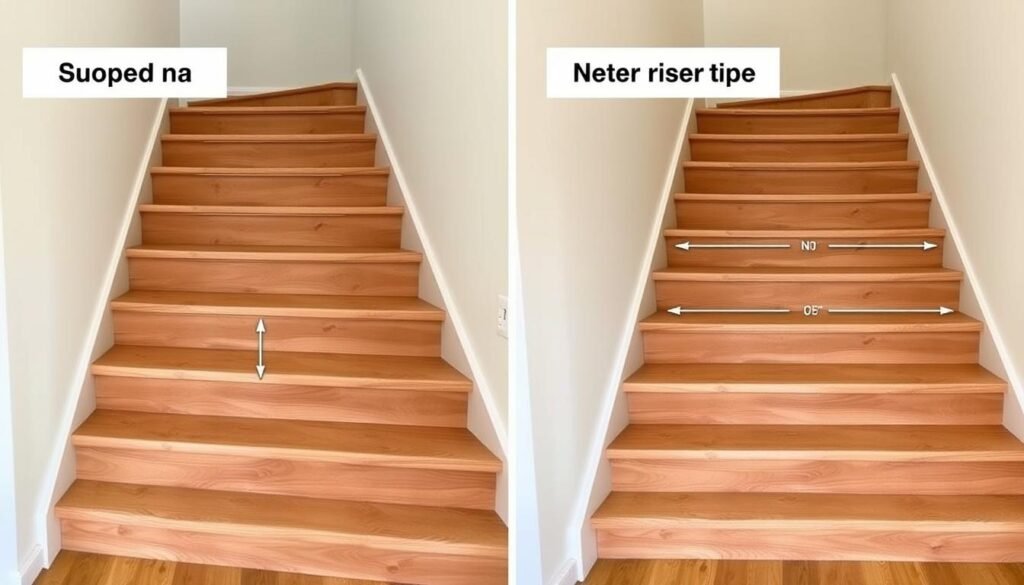
The horizontal distance covered by the entire staircase. This determines how far the stairs will project into the room or space. The total run equals the number of steps multiplied by the run of each step.
Step Rise
The vertical height of each individual step. Building codes typically require this to be between 4-7¾ inches (10-19.7 cm). All step rises should be equal throughout the staircase for safety and comfort.
Step Run (Tread Depth)
The horizontal depth of each step, measured from the front edge of one step to the front edge of the next. Building codes typically require a minimum of 10 inches (25.4 cm) for safe footing.
Stringer Length
The diagonal measurement of the stair stringer, which supports the treads and risers. This is calculated using the Pythagorean theorem based on the total rise and run.
Headroom
The vertical clearance from the tread to any overhead obstruction. Building codes typically require a minimum of 6’8″ (203.2 cm) of headroom for safety and comfort.
How to Manually Calculate Stair Dimensions
While a stair calculator automates the process, understanding how to manually calculate stair dimensions helps you grasp the underlying principles. Here’s a step-by-step guide to calculating your stair measurements:
Step 1: Determine Total Rise
Measure the vertical distance from the finished lower floor to the finished upper floor. This is your total rise.
Step 2: Calculate Number of Steps
Divide the total rise by your desired step height (typically 7 inches for comfort):
Number of Steps = Total Rise ÷ Desired Step Height
Always round to the nearest whole number, as you can’t have partial steps.
Step 3: Calculate Actual Step Height
Once you know the number of steps, calculate the exact height of each step:
Actual Step Height = Total Rise ÷ Number of Steps
This ensures all steps are exactly the same height for safety.
Step 4: Determine Step Run (Tread Depth)
The standard formula for comfortable stairs is:
2 × Rise + Run = 24 to 26 inches
Rearranging to solve for run: Run = 25 – (2 × Rise)
Step 5: Calculate Total Run
Total Run = Step Run × (Number of Steps – 1)
We subtract 1 because the top step typically ends at the landing.
Step 6: Calculate Stringer Length
Use the Pythagorean theorem to find the stringer length:
Stringer Length = √(Total Rise² + Total Run²)
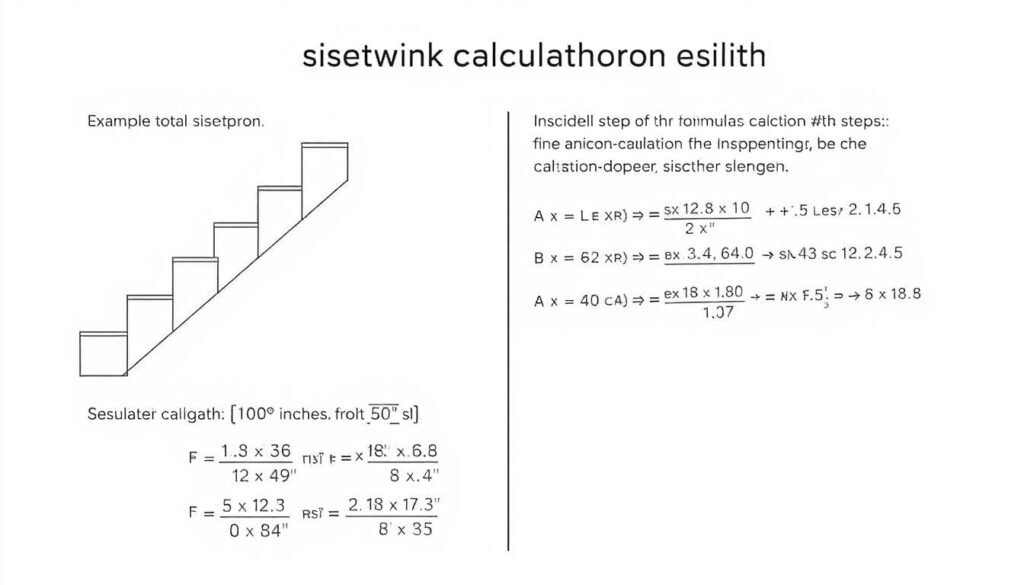
Example Calculation: For a total rise of 108 inches with a desired step height of 7 inches:
Number of Steps = 108 ÷ 7 = 15.43 (round to 15 steps)
Actual Step Height = 108 ÷ 15 = 7.2 inches
Step Run = 25 – (2 × 7.2) = 10.6 inches
Total Run = 10.6 × 14 = 148.4 inches
Stringer Length = √(108² + 148.4²) = 183.6 inches
Skip the Complex Math
Let our stair calculator handle these calculations instantly and accurately.
Building Codes and Safety Regulations for Stairs
Building codes ensure stairs are safe and comfortable to use. While codes may vary slightly by location, here are the standard requirements based on the International Residential Code (IRC) that a stair calculator will help you meet:
| Stair Component | Building Code Requirement | Purpose |
| Step Rise (Riser Height) | Maximum 7¾ inches (19.7 cm) | Prevents tripping hazards and ensures comfortable climbing |
| Step Run (Tread Depth) | Minimum 10 inches (25.4 cm) | Provides adequate foot support |
| Riser Variation | Maximum ⅜ inch (9.5 mm) between tallest and shortest riser | Prevents tripping due to unexpected height changes |
| Tread Variation | Maximum ⅜ inch (9.5 mm) between largest and smallest tread | Ensures consistent footing throughout the staircase |
| Headroom | Minimum 6’8″ (203.2 cm) | Prevents head injuries and allows for comfortable passage |
| Stair Width | Minimum 36 inches (91.44 cm) | Allows for safe passage and furniture moving |
| Handrail Height | 34-38 inches (86.4-96.5 cm) from tread nosing | Provides proper support at optimal height |
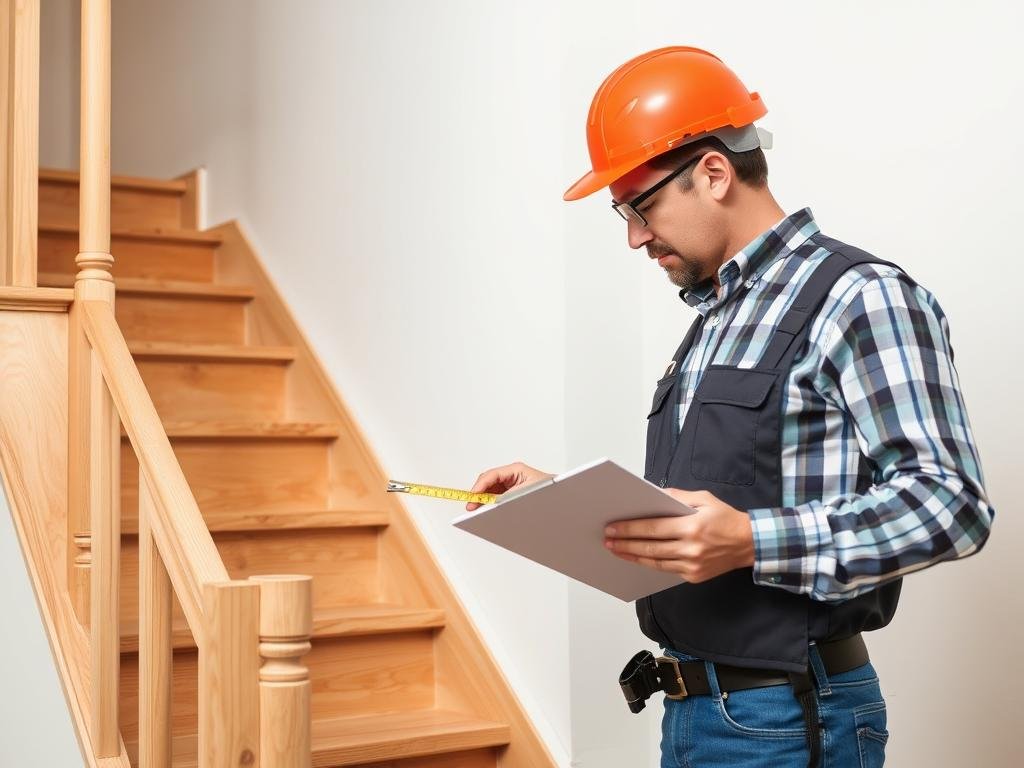
Important: Always check your local building codes as requirements may vary by jurisdiction. Failure to comply with building codes can result in failed inspections, fines, and potentially unsafe stairs.
Types of Stairs and Calculation Considerations
Different stair designs require specific calculation approaches. Here’s how to use a stair calculator for various stair types:
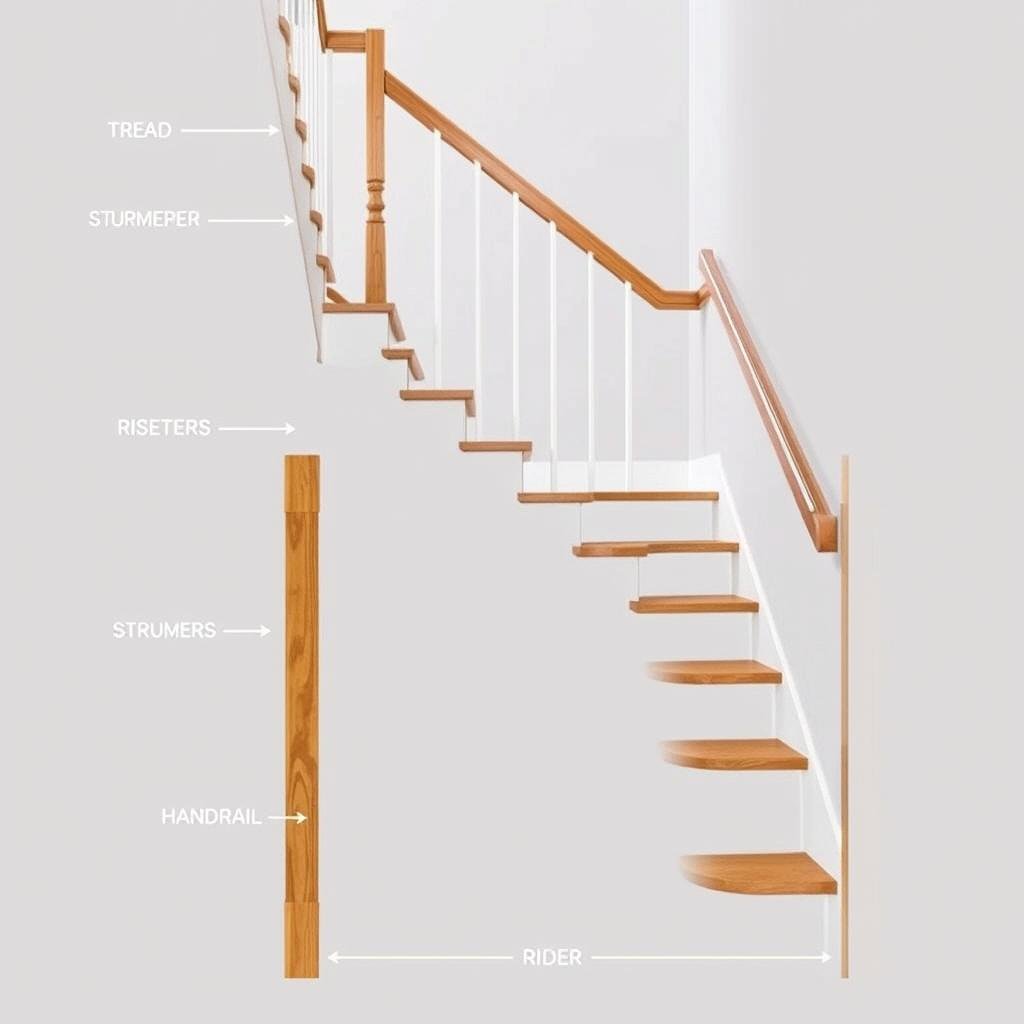
Straight Stairs
The simplest design, running straight from one level to another without turns. Calculations are straightforward, using the basic formulas for rise, run, and stringer length. Ideal for most residential applications where space permits.

L-Shaped Stairs
Features a 90-degree turn with a landing. Calculate each straight section separately, treating them as two distinct straight staircases. The landing size must be at least as wide as the stairs and a minimum of 36 inches in the direction of travel.

U-Shaped Stairs
Features a 180-degree turn with a landing. Calculate each straight section separately. These stairs are space-efficient and provide a natural resting point at the landing. Ensure adequate landing size according to building codes.

Spiral Stairs
Winds around a central pole with wedge-shaped treads. Requires specialized calculations for tread width at different points. Building codes often have specific requirements for spiral stairs, including minimum tread width at the walkline (typically 7.5 inches).
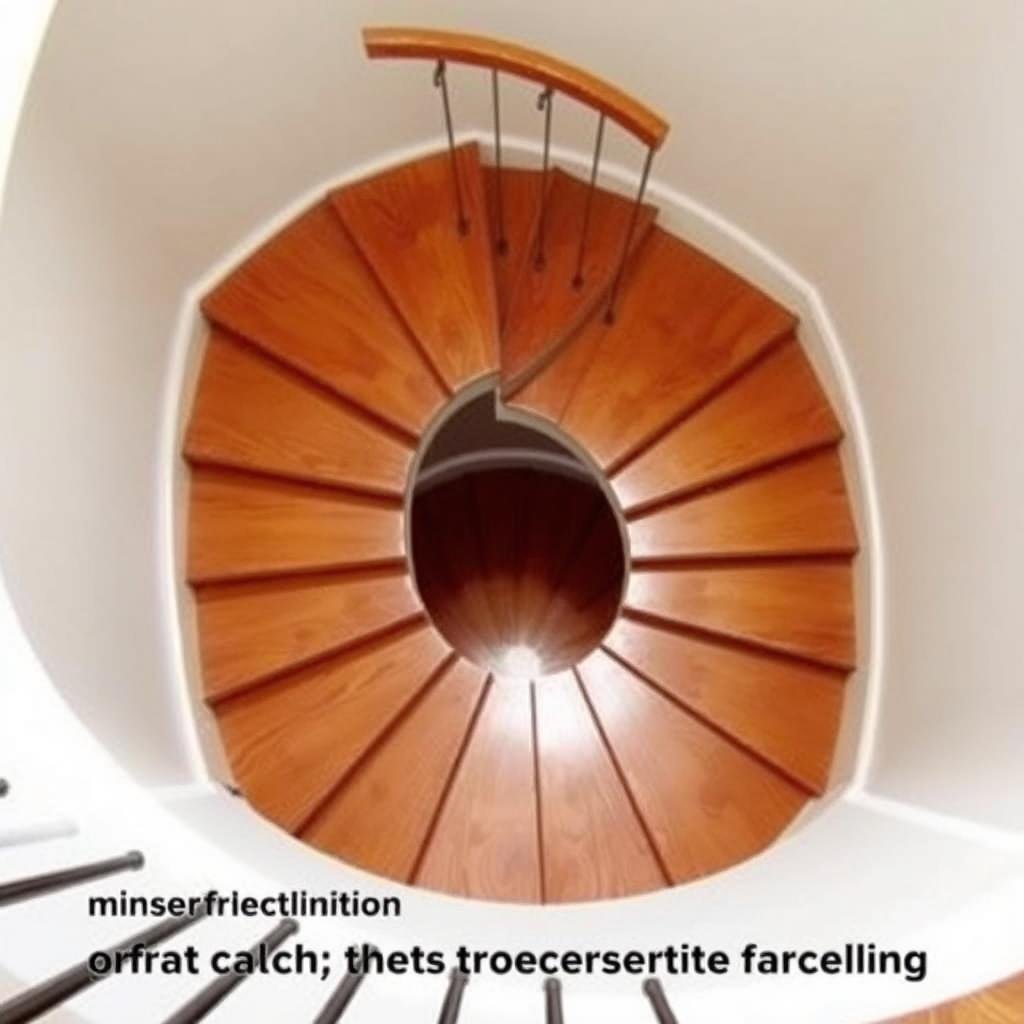
Winder Stairs
Features triangular steps at the turn instead of a landing. Requires careful calculation of tread width at the walkline. Building codes typically require the inside width of winder treads to be at least 6 inches and the walkline width to match regular treads.
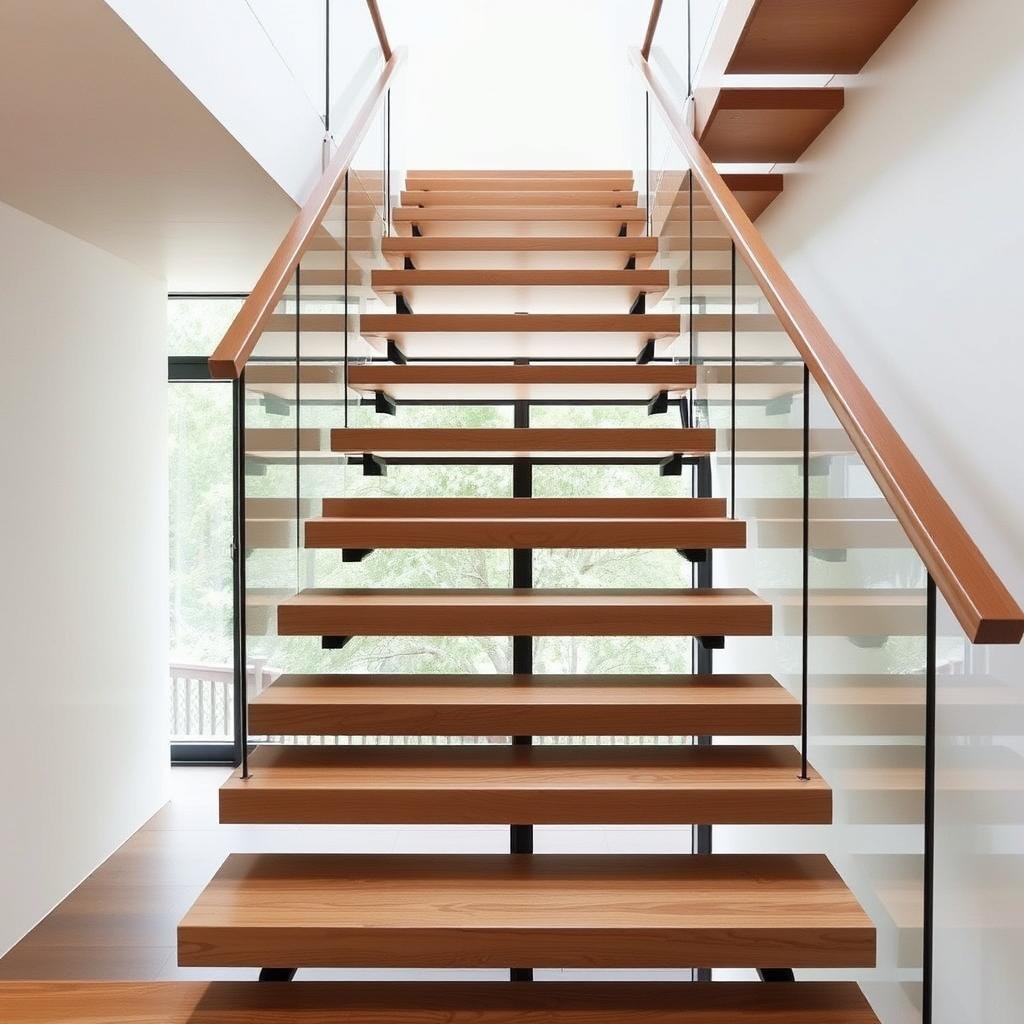
Floating Stairs
Features treads that appear to float with minimal visible support. While aesthetically pleasing, these require the same basic calculations plus additional structural considerations. Open risers must not allow the passage of a 4-inch sphere if the total rise exceeds 30 inches.
Pro Tip: When using a stair calculator for complex stair designs, calculate each straight section separately and ensure landings meet minimum size requirements.
Materials and Tools for Stair Construction
Once you’ve used a stair calculator to determine your dimensions, you’ll need the right materials and tools to build your stairs:
Essential Materials
- Stringers: Typically 2×12 lumber (minimum 5 inches uncut width)
- Treads: 2×12 or two 2×6 boards per step (or hardwood for finished stairs)
- Risers: 1×8 boards for closed risers
- Handrails: According to code requirements (34-38 inches high)
- Balusters/Spindles: To prevent gaps larger than 4 inches
- Fasteners: Galvanized or coated deck screws, carriage bolts
- Concrete: For ground-level footings (if applicable)
Required Tools
- Measuring Tape: For accurate dimensions
- Framing Square: Essential for marking stringers
- Circular Saw: For cutting stringers and lumber
- Jigsaw: For intricate cuts in stringers
- Drill/Driver: For fastening components
- Level: To ensure treads are level
- Chalk Line: For marking long, straight lines
- Safety Equipment: Gloves, eye protection, dust mask

Common Mistakes to Avoid When Building Stairs
Best Practices
- Use a stair calculator for precise measurements
- Ensure all risers are exactly the same height
- Maintain consistent tread depth throughout
- Secure stringers properly to both upper and lower supports
- Install proper handrails at code-compliant heights
- Use weather-resistant materials for exterior stairs
- Check local building codes before starting
Common Mistakes
- Eyeballing measurements instead of calculating precisely
- Creating uneven riser heights (major tripping hazard)
- Making treads too shallow for comfortable footing
- Cutting stringers incorrectly, weakening the structure
- Failing to account for finished flooring thickness
- Ignoring building code requirements
- Inadequate attachment to the supporting structure
Benefits of Using an Online Stair Calculator
While understanding manual calculations is valuable, using an online stair calculator offers numerous advantages:
Accuracy and Precision
Eliminates human error in complex calculations, ensuring all measurements are precise to the fraction of an inch. This accuracy is crucial for safety and building code compliance.
Time Savings
Performs complex calculations instantly, saving hours of manual work. This allows you to focus on the actual construction rather than getting bogged down in mathematical formulas.
Code Compliance
Many stair calculators are programmed with building code parameters, helping ensure your design meets local requirements before you cut a single board.
Material Optimization
Provides exact measurements for materials, reducing waste and saving money on your project. Knowing precise stringer lengths and tread counts helps with purchasing.
Design Flexibility
Allows you to quickly try different configurations to find the optimal design for your space and needs. Experiment with different rise and run combinations instantly.
Confidence in Construction
Gives you peace of mind knowing your stair design is mathematically sound and will result in a safe, comfortable staircase that meets all requirements.

“The difference between a comfortable, safe staircase and a hazardous one often comes down to fractions of an inch. A stair calculator eliminates guesswork and ensures precision where it matters most.”
Ready to Build Your Perfect Staircase?
Building stairs doesn’t have to be intimidating. With the right calculations and preparation, you can create a safe, comfortable, and code-compliant staircase for your home or project. Our stair calculator takes the complexity out of the process, providing you with precise measurements tailored to your specific requirements.
Remember that accurate stair calculations are not just about convenience—they’re essential for safety and building code compliance. Taking the time to get your measurements right from the beginning will save you significant time, money, and frustration during construction.
Calculate Your Stair Dimensions Now
Get instant, accurate measurements for your stair project with our free online calculator.
What information do I need before using a stair calculator?
At minimum, you need to know the total rise (vertical height) from the lower floor to the upper floor. For more precise results, you should also know your preferred step height (rise) or the available horizontal space (total run).
How do I ensure my stairs meet building codes?
Our stair calculator incorporates standard building code requirements, but always check your local building department for specific regulations. Generally, risers should not exceed 7¾ inches, treads should be at least 10 inches deep, and all steps should be uniform in size.
What’s the ideal rise/run ratio for comfortable stairs?
The most comfortable stairs typically follow the formula: 2 × Rise + Run = 24 to 26 inches. For example, if your rise is 7 inches, your run should be around 10-12 inches for optimal comfort.