Use our Target Heart Rate Calculator to find your ideal heart rate for exercise. Improve fitness, burn calories efficiently, and train safely for optimal results.
Understanding your target heart rate is key to getting the most from your workouts. Whether you’re looking to burn fat, improve cardiovascular fitness, or enhance athletic performance, exercising at the right intensity makes all the difference. Our target heart rate calculator helps you find your optimal training zones based on your age, resting heart rate, and fitness goals.

Target Heart Rate Calculator
Enter your age and resting heart rate to calculate your target heart rate zones for different exercise intensities.
What Is Target Heart Rate?
Target heart rate is the ideal range of heart beats per minute you should aim for during exercise to achieve specific fitness goals. It’s typically expressed as a percentage of your maximum heart rate, which is the highest number of times your heart can beat in one minute during maximum physical exertion.
Your target heart rate varies depending on your fitness goals:
Why Target Heart Rate Matters
Exercising at the right intensity is crucial for effective workouts. If you exercise below your target zone, you might not get the full benefits. If you push too hard above your zone, you risk injury and excessive fatigue without additional benefits.
Monitoring your heart rate during exercise helps you:
- Ensure you’re working at the right intensity
- Avoid overtraining or undertraining
- Track improvements in cardiovascular fitness
- Customize workouts for specific goals
- Exercise more efficiently
Understanding Maximum Heart Rate
Maximum heart rate (MHR) is the highest number of beats per minute your heart can achieve during intense exercise. It’s the foundation for calculating your target heart rate zones.
How to Calculate Maximum Heart Rate
Several formulas exist to estimate maximum heart rate. The most common ones include:
| Formula | Calculation | Best For |
| Haskell & Fox (Traditional) | 220 – Age | General population, simple calculation |
| Tanaka, Monahan & Seals | 208 – (0.7 × Age) | More accurate for adults over 40 |
| Nes, Janszky, Wisløff | 211 – (0.64 × Age) | Based on recent research, good accuracy across ages |
Example: For a 40-year-old person using the traditional formula: 220 – 40 = 180 beats per minute maximum heart rate.
It’s important to note that these formulas provide estimates. Your actual maximum heart rate may vary based on genetics, fitness level, and other factors. For the most accurate measurement, a supervised exercise stress test conducted by healthcare professionals is recommended.
Heart Rate Reserve and the Karvonen Method
Heart rate reserve (HRR) is the difference between your maximum heart rate and resting heart rate. The Karvonen method uses heart rate reserve to calculate target heart rate zones more accurately than methods based solely on maximum heart rate.
Measuring Your Resting Heart Rate
To find your resting heart rate, count your pulse for 60 seconds when you’re completely relaxed – ideally first thing in the morning before getting out of bed. A normal resting heart rate for adults ranges from 60 to 100 beats per minute, with physically fit people often having lower rates.
Karvonen Formula
The Karvonen formula calculates target heart rate as follows:
Target HR = ((Max HR – Resting HR) × % Intensity) + Resting HR
Example: For a 35-year-old with a resting heart rate of 70 bpm, wanting to exercise at 70% intensity:
1. Calculate Max HR: 220 – 35 = 185 bpm
2. Calculate Heart Rate Reserve: 185 – 70 = 115 bpm
3. Calculate Target HR: (115 × 0.70) + 70 = 150.5 bpm

Calculate Your Heart Rate Reserve
Know your resting heart rate? Use our calculator to find your heart rate reserve and get more accurate training zones.
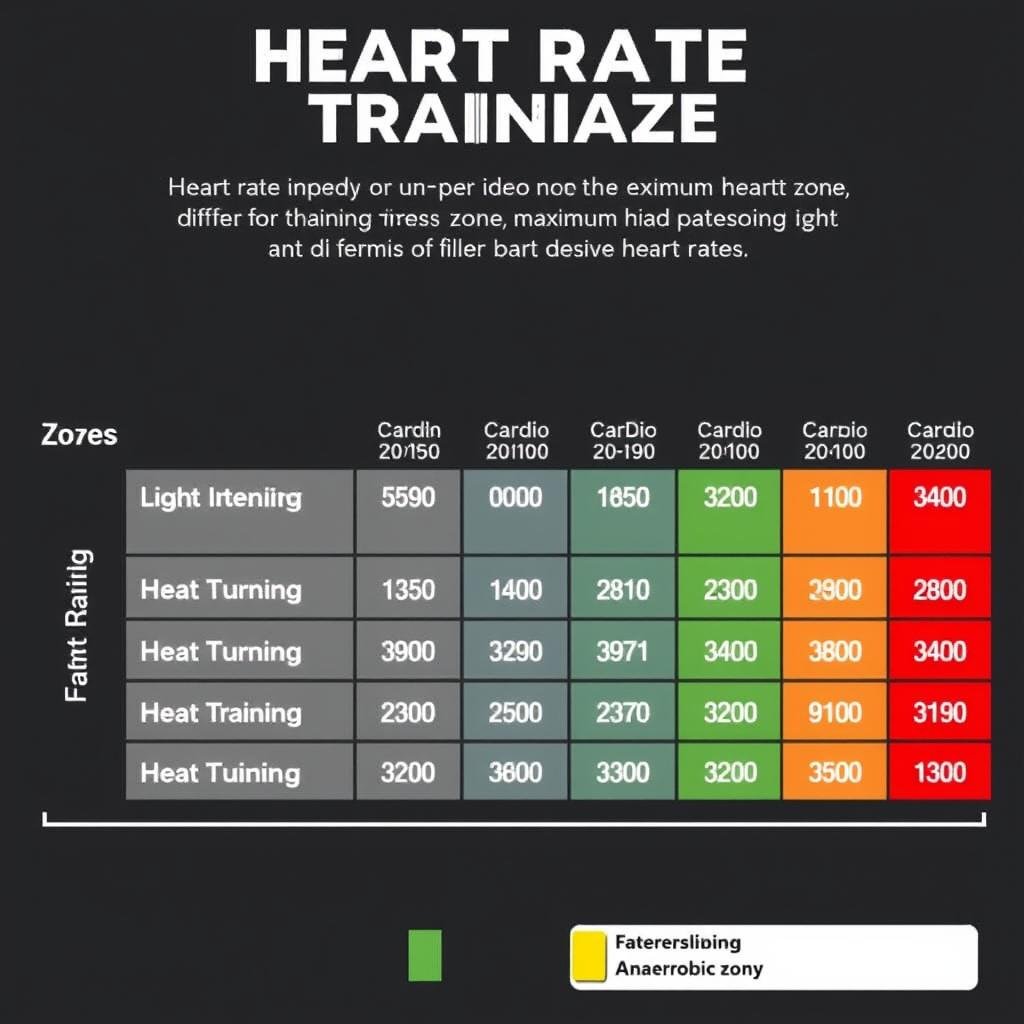
Target Heart Rate Zones Explained
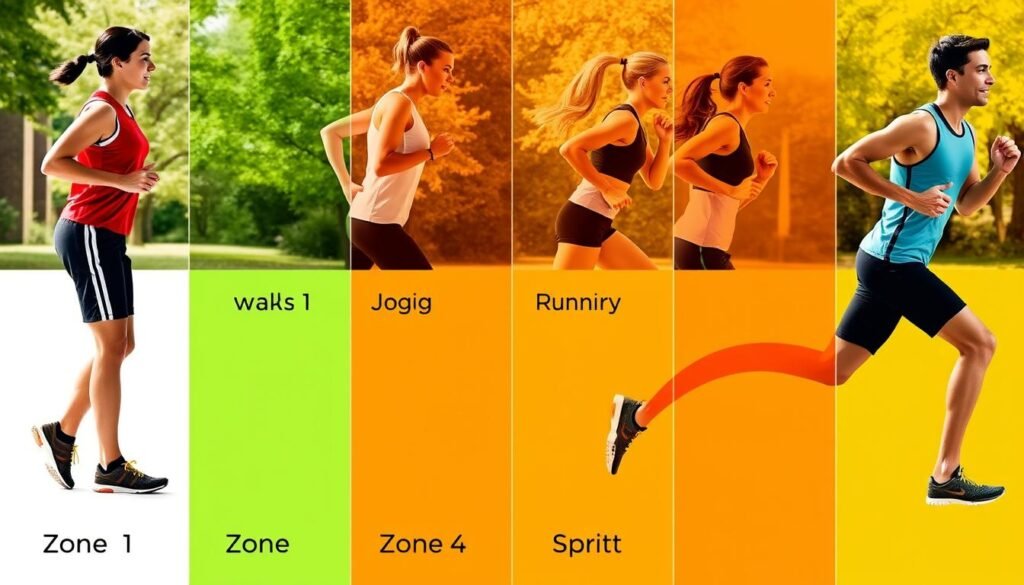
Different heart rate zones serve different training purposes. Understanding these zones helps you tailor your workouts to specific fitness goals.
| Zone | Intensity (% of Max HR) | Benefits | Best For |
| Zone 1: Very Light | 50-60% | Improves basic endurance and fat metabolism | Warm-up, recovery, beginners |
| Zone 2: Light | 60-70% | Improves basic endurance, fat burning | Weight management, longer workouts |
| Zone 3: Moderate | 70-80% | Improves aerobic fitness and endurance | Cardiovascular conditioning |
| Zone 4: Hard | 80-90% | Improves anaerobic threshold | Performance training, intervals |
| Zone 5: Maximum | 90-100% | Develops maximum performance and speed | Elite athletes, short intervals |
Applying Heart Rate Zones to Different Fitness Goals
Fat Burning
For optimal fat burning, focus on Zones 2-3 (60-80% of max HR). These moderate intensity zones allow for longer workouts where your body primarily uses fat for fuel.
Recommended workout: 30-60 minutes in Zone 2-3, 3-5 times per week.
Cardiovascular Fitness
To improve cardio fitness, incorporate training in Zones 3-4 (70-90% of max HR). This intensity challenges your cardiovascular system to become more efficient.
Recommended workout: 20-40 minutes in Zone 3-4, 2-3 times per week.
Performance Training
For athletic performance, include some training in Zones 4-5 (80-100% of max HR), but balance with lower intensity work to avoid overtraining.
Recommended workout: Interval training with 1-5 minutes in Zone 4-5, followed by recovery periods.
How to Measure Your Heart Rate During Exercise
Accurately measuring your heart rate during exercise is essential for staying in your target zones. Several methods are available, each with its own advantages.
Manual Pulse Check
The traditional method involves checking your pulse at your wrist (radial artery) or neck (carotid artery):
- Place your index and middle fingers on your pulse point
- Count the beats for 15 seconds
- Multiply by 4 to get your beats per minute
While this method is free and requires no equipment, it’s less accurate during exercise and interrupts your workout.
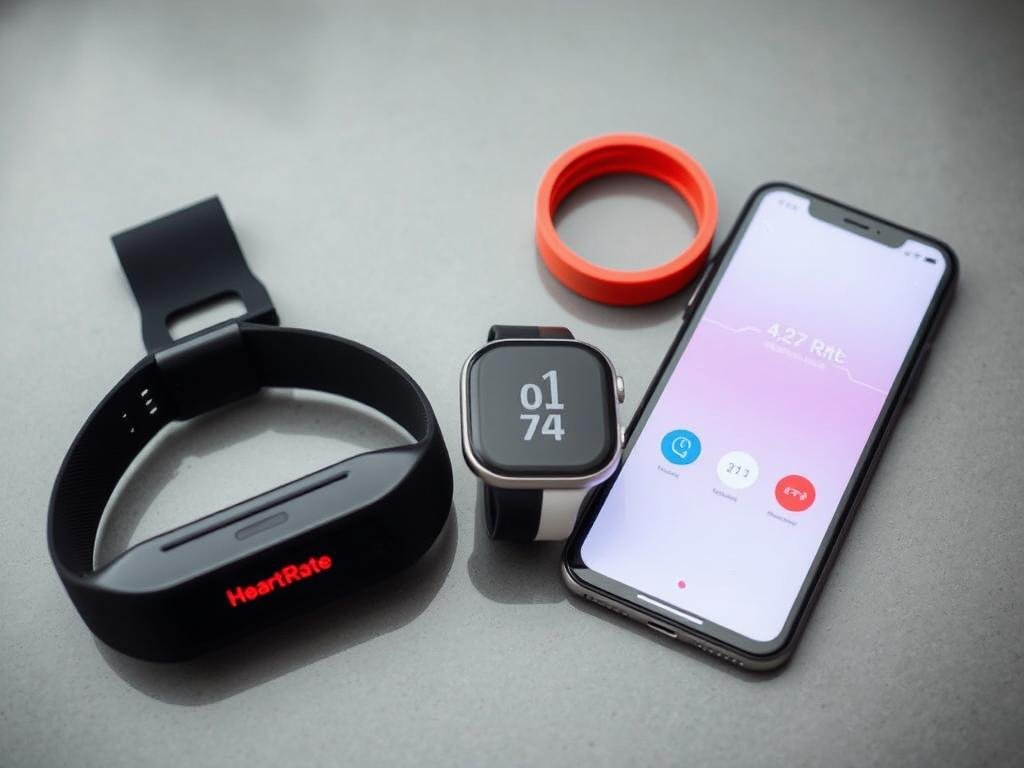
Heart Rate Monitors
For greater accuracy and convenience, consider using:
- Chest Strap Monitors: Most accurate, sends data to a watch or phone
- Fitness Watches/Trackers: Convenient wrist-based monitoring
- Smartphone Apps: Some can measure heart rate using your phone’s camera
- Exercise Equipment: Many machines have built-in pulse sensors
Track Your Heart Rate During Workouts
Ready to start training with heart rate? Use our calculator to determine your zones, then track your progress over time.
Practical Examples for Different Age Groups
Let’s look at how target heart rate calculations apply to different individuals:
Young Adult (25 years)
Maximum HR: 220 – 25 = 195 bpm
Resting HR: 65 bpm
Heart Rate Reserve: 195 – 65 = 130 bpm
Target Zones (Karvonen):
- Zone 1 (50-60%): 130 – 143 bpm
- Zone 2 (60-70%): 143 – 156 bpm
- Zone 3 (70-80%): 156 – 169 bpm
- Zone 4 (80-90%): 169 – 182 bpm
- Zone 5 (90-100%): 182 – 195 bpm
Middle-Aged Adult (45 years)
Maximum HR: 220 – 45 = 175 bpm
Resting HR: 70 bpm
Heart Rate Reserve: 175 – 70 = 105 bpm
Target Zones (Karvonen):
- Zone 1 (50-60%): 123 – 133 bpm
- Zone 2 (60-70%): 133 – 144 bpm
- Zone 3 (70-80%): 144 – 154 bpm
- Zone 4 (80-90%): 154 – 165 bpm
- Zone 5 (90-100%): 165 – 175 bpm
Older Adult (65 years)
Maximum HR: 220 – 65 = 155 bpm
Resting HR: 72 bpm
Heart Rate Reserve: 155 – 72 = 83 bpm
Target Zones (Karvonen):
- Zone 1 (50-60%): 114 – 122 bpm
- Zone 2 (60-70%): 122 – 130 bpm
- Zone 3 (70-80%): 130 – 138 bpm
- Zone 4 (80-90%): 138 – 147 bpm
- Zone 5 (90-100%): 147 – 155 bpm

Using Perceived Exertion with Heart Rate
While heart rate monitoring is valuable, combining it with how you feel (perceived exertion) provides a more complete picture of exercise intensity. The Rating of Perceived Exertion (RPE) scale helps you gauge how hard you’re working based on how you feel.
Borg RPE Scale (6-20)
| RPE | Intensity | % Max HR |
| 6-8 | Very, very light | ~40-50% |
| 9-10 | Very light | ~50-55% |
| 11-12 | Fairly light | ~55-65% |
| 13-14 | Somewhat hard | ~65-75% |
| 15-16 | Hard | ~75-85% |
| 17-18 | Very hard | ~85-95% |
| 19-20 | Very, very hard | ~95-100% |
Talk Test
Another simple way to gauge intensity is the talk test:
- Zone 1-2: You can carry on a full conversation
- Zone 3: You can speak in complete sentences but need to breathe more frequently
- Zone 4: You can only speak a few words at a time
- Zone 5: You can barely speak at all
Using both heart rate data and perceived exertion gives you a more complete picture of how hard you’re working and helps account for daily variations in how you feel.

Safety Considerations and Special Populations
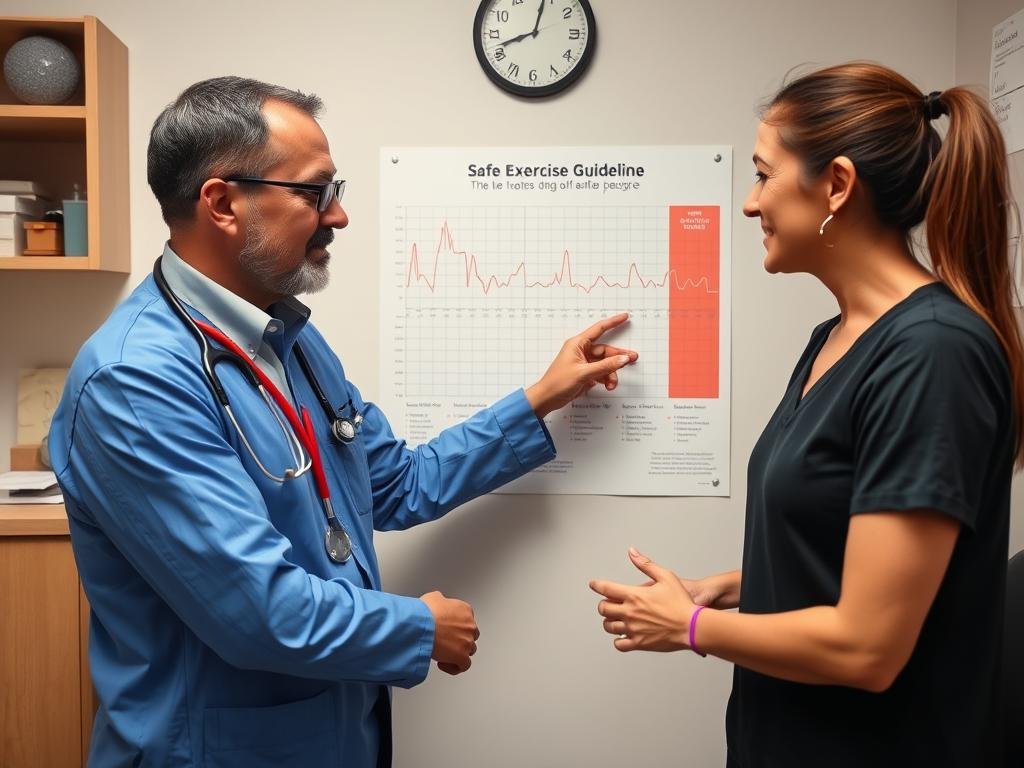
Important: Consult with a healthcare provider before starting a new exercise program, especially if you have any existing health conditions, are over 40, or have been inactive for a long period.
Medical Conditions
Certain conditions and medications can affect your heart rate response to exercise:
- Beta-blockers: Lower both resting and maximum heart rates
- Heart conditions: May require modified target zones
- Diabetes: Can affect heart rate response
- Thyroid disorders: Can influence baseline heart rate
If you have any of these conditions, work with your healthcare provider to determine appropriate heart rate targets.
When to Stop Exercising
Stop exercise and seek medical attention if you experience:
- Chest pain or pressure
- Unusual shortness of breath
- Dizziness or lightheadedness
- Irregular heartbeat or palpitations
- Nausea
- Extreme fatigue
Special Populations
Beginners
If you’re new to exercise, start with lower intensity (Zone 1-2) and gradually progress. Focus on consistency rather than intensity at first.
Consider working with a fitness professional to establish appropriate starting points.
Older Adults
Standard formulas may be less accurate. The Tanaka formula (208 – 0.7 × age) is often more appropriate for older adults.
Focus on relative intensity using the talk test and perceived exertion alongside heart rate.
Athletes
Trained athletes often have lower resting heart rates and may need to use the Karvonen method for more accurate zones.
Consider field tests or laboratory testing for precise maximum heart rate determination.
Tracking Progress and Adjusting Your Zones
As your fitness improves, your heart becomes more efficient. You’ll notice that the same workout feels easier and your heart rate is lower at the same intensity. This is a sign of improved cardiovascular fitness!
Signs of Improvement
- Lower resting heart rate
- Faster recovery after intense exercise
- Lower heart rate at the same exercise intensity
- Ability to maintain higher intensities for longer
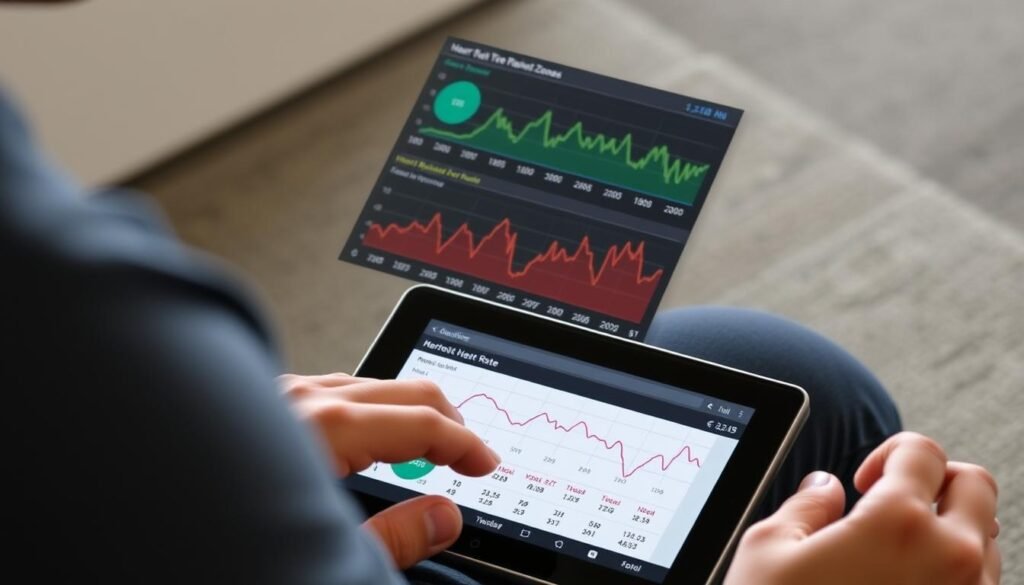
Track these metrics over time to see your progress. As you improve, you may need to adjust your target zones or increase your workout intensity to continue challenging your cardiovascular system.
When to Recalculate
Consider recalculating your heart rate zones when:
- Your resting heart rate decreases significantly (5+ bpm)
- You’ve been consistently training for 8-12 weeks
- Your perceived exertion doesn’t match your heart rate zone
- You’ve made significant lifestyle changes
- You’ve started or stopped medications that affect heart rate
Start Tracking Your Heart Rate Today
Use our calculator to establish your baseline zones, then monitor your progress as your fitness improves.
Conclusion: Making Heart Rate Training Work for You
Understanding and using target heart rate zones can transform your workouts by helping you exercise at the right intensity for your specific goals. Whether you’re looking to improve general fitness, lose weight, or enhance athletic performance, heart rate training provides objective feedback to guide your efforts.
Remember that heart rate formulas provide estimates – your individual response may vary. The most effective approach combines heart rate monitoring with attention to how you feel during exercise. Start with the calculator to establish your zones, then adjust based on your experience and progress.
By consistently training in the appropriate heart rate zones and tracking your progress over time, you’ll be able to see tangible improvements in your cardiovascular fitness and overall health.
How often should I check my heart rate during exercise?
For beginners, check every 5-10 minutes to ensure you’re in the right zone. As you become more familiar with how different intensities feel, you may need to check less frequently. Continuous monitoring with a heart rate monitor or fitness watch provides the most accurate tracking.
Can I use the same target heart rate for all types of exercise?
Heart rate response can vary between activities. For example, swimming typically produces lower heart rates than running at the same perceived effort. Focus on consistent monitoring within the same activity and adjust your zones based on the specific exercise you’re doing.
How long does it take to see improvements in heart rate metrics?
With consistent training, you may notice changes in your resting heart rate within 2-4 weeks. More significant improvements in exercise heart rate and recovery time typically become apparent after 6-8 weeks of regular training.