Time calculations can be challenging due to the unique way we measure time. Unlike the decimal system, time uses a sexagesimal system with 60 seconds in a minute and 60 minutes in an hour. Whether you’re tracking work hours, planning project timelines, or calculating travel duration, accurate time calculations are essential. Our Time Calculator simplifies these complex calculations, saving you time and eliminating errors.
Why Use a Time Calculator?
Manual time calculations are prone to errors, especially when dealing with different time units or complex operations. A Time Calculator provides instant, accurate results for various time-related tasks.

Time Calculator eliminates the frustration of manual calculations
Benefits of Using a Time Calculator
- Instant and accurate results
- Eliminates calculation errors
- Handles complex time operations easily
- Converts between different time units
- Saves valuable time and mental effort
- Improves productivity and planning
Challenges of Manual Calculation
- Prone to human error
- Time-consuming process
- Difficult with complex operations
- Challenging unit conversions
- Inconsistent results
- Mental fatigue with multiple calculations
Ready to Simplify Your Time Calculations?
Stop struggling with manual time math. Our Time Calculator handles all calculations instantly and accurately.
Common Use Cases for a Time Calculator
A Time Calculator serves numerous practical purposes in both personal and professional settings. Here are some of the most common applications:
Work Hour Tracking

Calculate total work hours, overtime, and breaks accurately. Essential for freelancers, hourly workers, and payroll processing.
Project Planning
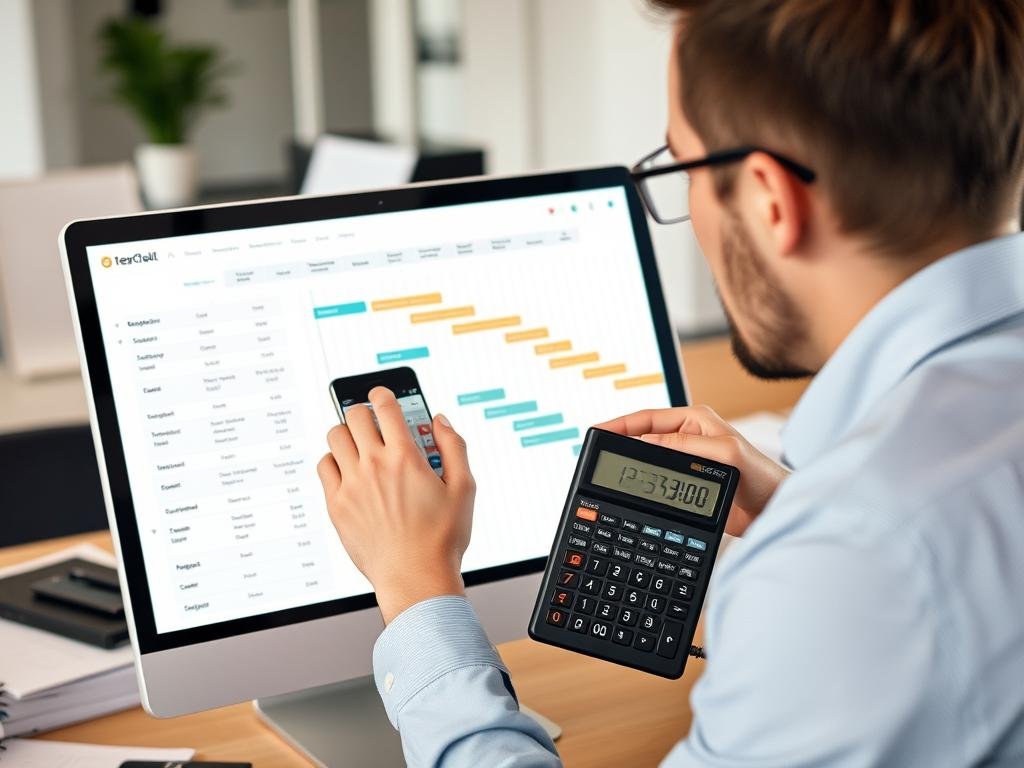
Estimate project durations, set deadlines, and allocate time resources efficiently for better project management.
Travel Planning

Calculate travel durations, time zone differences, and create detailed itineraries for seamless trip planning.
Cooking & Baking

Adjust recipe cooking times, coordinate multiple dishes, and schedule meal preparation efficiently.
Fitness Tracking

Track workout durations, rest periods, and progress over time for optimized fitness routines.
Event Planning

Create detailed event schedules, coordinate activities, and manage time allocations for smooth event execution.
These examples demonstrate how a Time Calculator can simplify various aspects of daily life and professional tasks, saving you from the headaches of manual time calculations.
Essential Time Calculation Operations
A comprehensive Time Calculator can perform several types of operations to meet different needs. Understanding these operations helps you make the most of this powerful tool.
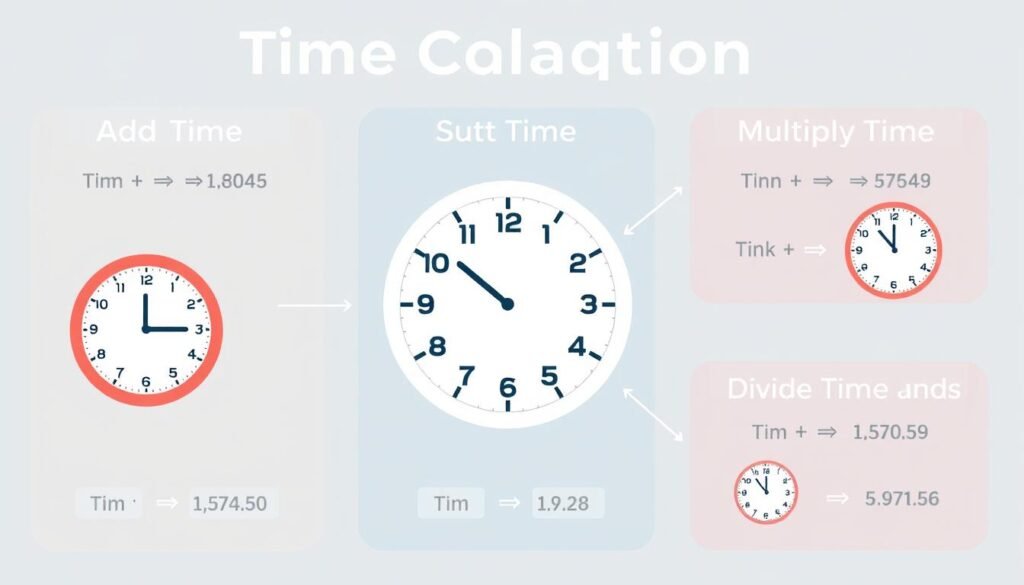
Time Calculator handles multiple operation types for versatile use
Adding Time
Adding time values is one of the most common operations. This is useful when you need to calculate total duration, such as combined work hours or total travel time across multiple segments.
Example: Adding Time
Task 1: 2 hours 45 minutes
Task 2: 1 hour 30 minutes
Task 3: 50 minutes
Total time: 5 hours 5 minutes
Subtracting Time
Time subtraction helps calculate time differences or remaining time. This is valuable for determining how much time has elapsed or how much time is left until a deadline.
Example: Subtracting Time
Meeting duration: 9:00 AM to 10:45 AM
Time difference: 1 hour 45 minutes
Converting Time Units
Converting between different time units (seconds, minutes, hours, days) is essential for consistent calculations. A Time Calculator handles these conversions automatically.
Example: Converting Time Units
150 minutes = 2 hours 30 minutes
3.5 days = 84 hours
10,800 seconds = 3 hours
Time Between Dates
Calculating the duration between two dates helps with project planning, age calculation, and event scheduling. This operation accounts for varying month lengths and leap years.
Need to Perform These Calculations?
Our Time Calculator handles all these operations instantly, saving you from complex manual calculations.
How to Calculate Time Manually
While a Time Calculator is the most efficient solution, understanding how to calculate time manually provides valuable insight into the process. Here’s how to perform basic time calculations:
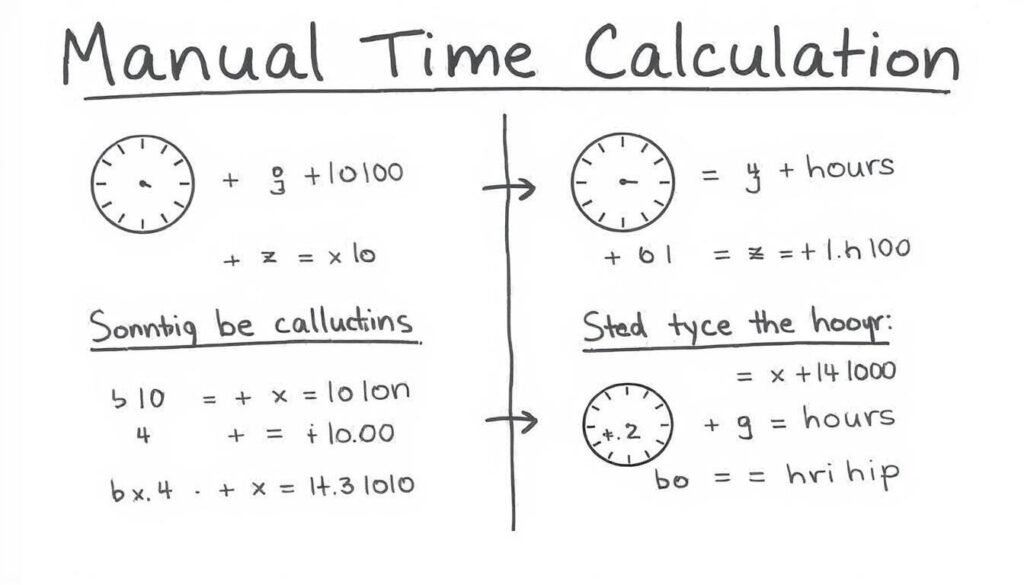
Manual time calculation requires careful attention to conversions
Adding Time Manually
To add time values manually:
- Add hours to hours, minutes to minutes, and seconds to seconds separately
- If minutes exceed 60, convert by adding 1 to hours and subtracting 60 from minutes
- If seconds exceed 60, convert by adding 1 to minutes and subtracting 60 from seconds
- Continue conversions until all units are in proper ranges
Manual Addition Example
2h 45m + 3h 30m
Hours: 2 + 3 = 5
Minutes: 45 + 30 = 75
Convert 75 minutes: 1h 15m
Final result: 5h + 1h 15m = 6h 15m
Subtracting Time Manually
Time subtraction can be more complex, especially when borrowing is required:
- If the minutes or seconds in the first time are smaller than in the second, borrow from the larger unit
- When borrowing from hours to minutes, add 60 minutes
- When borrowing from minutes to seconds, add 60 seconds
- Subtract each unit separately after borrowing
Why Manual Calculations Are Risky
Manual time calculations are prone to errors due to the sexagesimal system (base-60) and borrowing complexities. Even small mistakes can lead to significant discrepancies in results.
While understanding these manual processes is valuable, a Time Calculator eliminates these complexities and potential errors, providing instant, accurate results every time.
Time Calculator for Better Time Management
Beyond simple calculations, a Time Calculator can be a valuable tool for improving your overall time management skills. Here’s how it can help:

Time Calculator as part of an effective time management system
Track Time Investments
Use a Time Calculator to track how you spend your time across different activities. This awareness is the first step toward more effective time allocation.
Set Realistic Timeframes
Calculate accurate time estimates for tasks and projects. This helps set realistic deadlines and prevents the stress of time crunches.
Balance Work and Rest
Calculate optimal work-to-rest ratios for maximum productivity. Research shows that regular breaks improve overall efficiency.
Identify Time Wasters
Track and calculate time spent on low-value activities. This data helps identify and eliminate time-wasting habits.
Plan Buffer Time
Calculate and add buffer time between activities to account for unexpected delays and transitions.
Optimize Routines
Calculate the most efficient sequence and duration for routine tasks to streamline daily activities.
“The key is not to prioritize what’s on your schedule, but to schedule your priorities.”
Ready to Master Your Time?
Start with accurate time calculations as the foundation of effective time management.
Frequently Asked Questions About Time Calculations
Here are answers to common questions about time calculations and using a Time Calculator effectively:
Why is calculating time different from regular decimal calculations?
Time calculations use a sexagesimal (base-60) system rather than the decimal system. This means 60 seconds make a minute and 60 minutes make an hour, requiring different calculation methods than decimal-based math.
How do I convert decimal hours to hours and minutes?
To convert decimal hours to hours and minutes, take the whole number as hours. Multiply the decimal portion by 60 to get minutes. For example, 2.5 hours = 2 hours and (0.5 × 60) = 30 minutes.
Can a Time Calculator handle time zones?
Advanced Time Calculators can account for time zone differences when calculating time between locations or scheduling across different regions. This eliminates the complexity of manual time zone conversions.
How do I calculate overtime hours?
To calculate overtime, first determine regular working hours (typically 40 hours per week). Use a Time Calculator to add up all worked hours, then subtract regular hours to find overtime. For example, if you worked 46 hours in a week, you have 6 hours of overtime.
How accurate are online Time Calculators?
Quality online Time Calculators provide precise results for all time calculations. They handle the complexities of time unit conversions automatically, eliminating human error and ensuring accuracy to the second.
Simplify Your Time Calculations Today
Time calculations don’t have to be complicated or error-prone. Whether you’re tracking work hours, planning projects, or managing personal activities, a Time Calculator provides the accuracy and efficiency you need.
By eliminating manual calculation errors and saving valuable time, our Time Calculator helps you focus on what truly matters. From simple addition and subtraction to complex time unit conversions, this versatile tool handles all your time calculation needs in seconds.
Experience the Difference
Join thousands of users who have simplified their time calculations with our easy-to-use tool.