When winter winds blow, the temperature your body actually experiences can be dramatically lower than what the thermometer shows. This phenomenon, known as wind chill, can turn a chilly day into a dangerous one. Our comprehensive guide explains how wind chill works, why it matters for your safety, and how it’s calculated to help you prepare properly for cold weather conditions.

What is Wind Chill?
Wind chill represents the perceived decrease in air temperature felt by the human body due to the flow of air. When wind blows across exposed skin, it draws heat away from the body, making the air feel much colder than the actual temperature reading. This isn’t just a subjective feeling—it’s a measurable effect that impacts how quickly your body loses heat.
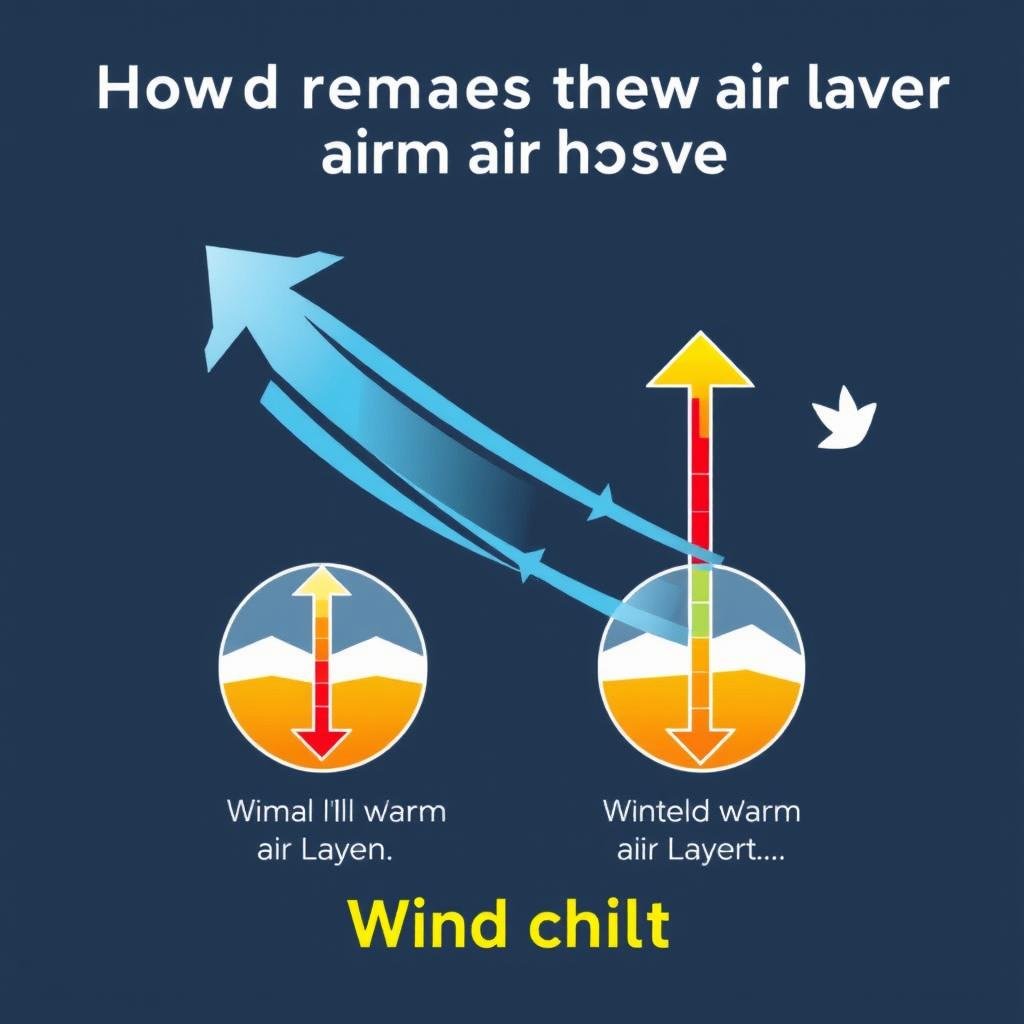
The wind chill effect occurs because wind disrupts the insulating layer of warm air that normally surrounds your body. In still conditions, your body warms the air immediately surrounding your skin, creating a thin buffer of warmth. When wind blows, it continuously sweeps away this protective layer, forcing your body to work harder to maintain its core temperature.
It’s important to understand that wind chill doesn’t actually lower the air temperature—it increases the rate at which objects lose heat. This distinction matters because while wind chill affects humans and animals, it doesn’t cause inanimate objects like car engines to freeze faster.
Why is Wind Chill Important?
Understanding wind chill is crucial for anyone who spends time outdoors during cold weather. It’s not just about comfort—it’s about safety. When the wind chill temperature drops below certain thresholds, the risk of cold-related injuries increases significantly.
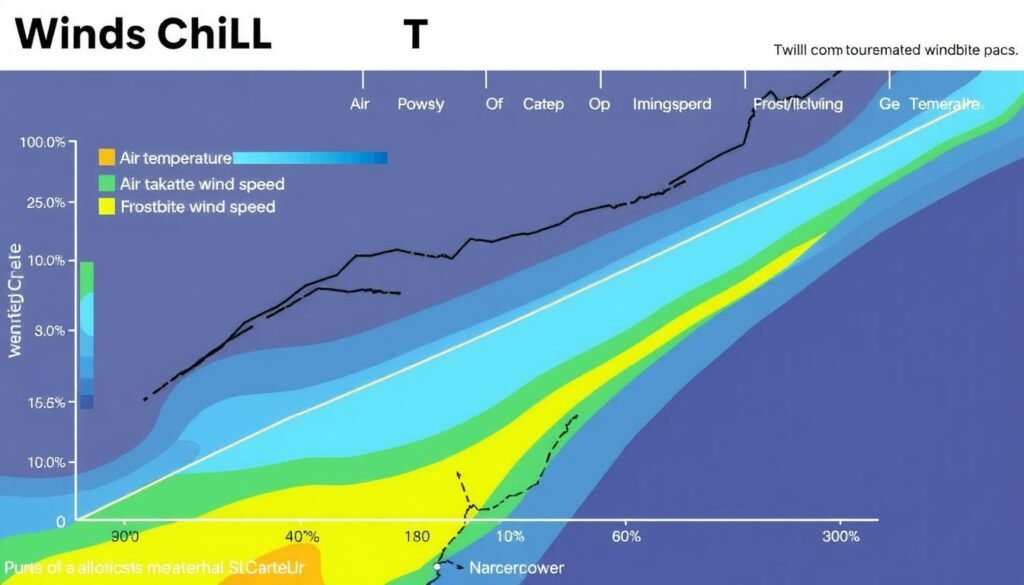
Wind chill chart showing how different combinations of temperature and wind speed affect the perceived temperature
Frostbite Risk
When wind chill temperatures fall below -18°F (-28°C), exposed skin can freeze in just 30 minutes or less. Frostbite damages skin and underlying tissues, potentially leading to permanent damage or even amputation in severe cases.
The extremities of your body—fingers, toes, ears, and nose—are particularly vulnerable because they’re furthest from your core and often exposed to the elements.
Hypothermia Danger
Wind chill accelerates heat loss from your entire body, increasing the risk of hypothermia—a potentially fatal condition where your core body temperature drops below 95°F (35°C).
Early symptoms include shivering and confusion, progressing to more serious complications like decreased heart rate and loss of consciousness if left untreated.
Stay Safe in Cold Weather
Understanding wind chill is essential for outdoor safety. Use our resources to plan your activities wisely.
How is Wind Chill Calculated?
The wind chill formula used today was developed through extensive research and human testing. Scientists measured heat loss from exposed facial skin under various wind and temperature conditions to create an accurate model of how wind affects perceived temperature.
Wind Chill Formula (North American Standard)
Wind Chill Temperature = 35.74 + 0.6215T – 35.75(V0.16) + 0.4275T(V0.16)
Where:
- T = Air temperature in degrees Fahrenheit
- V = Wind speed in miles per hour
For those using the metric system, the formula is:
Wind Chill Formula (Metric)
Wind Chill Temperature = 13.12 + 0.6215T – 11.37(V0.16) + 0.3965T(V0.16)
Where:
- T = Air temperature in degrees Celsius
- V = Wind speed in kilometers per hour

The formula is valid for temperatures at or below 50°F (10°C) and wind speeds above 3 mph (5 km/h). Below these wind speeds, the formula doesn’t apply because the natural heat envelope around the body remains relatively intact.
Wind Chill Chart: Quick Reference Guide
While the formula gives precise results, a wind chill chart provides a quick way to estimate the perceived temperature based on the actual air temperature and wind speed. The color-coded zones indicate increasing danger levels.
| Air Temperature (°F) | 5 mph | 10 mph | 15 mph | 20 mph | 25 mph | 30 mph |
| 40 | 36 | 34 | 32 | 30 | 29 | 28 |
| 30 | 25 | 21 | 19 | 17 | 16 | 15 |
| 20 | 13 | 9 | 6 | 4 | 3 | 1 |
| 10 | 1 | -4 | -7 | -9 | -11 | -12 |
| 0 | -11 | -16 | -19 | -22 | -24 | -26 |
| -10 | -22 | -28 | -32 | -35 | -37 | -39 |
| -20 | -34 | -41 | -45 | -48 | -51 | -53 |

Low Risk (>0°F)
Minimal danger for properly dressed individuals. Wear layers and cover exposed skin for comfort.

Moderate Risk (0°F to -18°F)
Increasing risk of frostbite with prolonged exposure. Limit outdoor activities and dress in multiple layers.

High Risk (
Frostbite possible within 30 minutes or less. Avoid outdoor activities if possible or take extreme precautions.
Wind Chill Safety Tips
Understanding wind chill is only valuable if you take appropriate action to protect yourself. Here are essential safety tips for dealing with low wind chill conditions:
Dress Appropriately
Plan Outdoor Activities Wisely
Recognize Warning Signs
Emergency Response
If you suspect frostbite or hypothermia, seek medical attention immediately. While waiting for help:
- Move to a warm area and remove wet clothing
- Warm frostbitten areas gradually with body heat or warm (not hot) water
- Do not rub or massage frostbitten areas
- For hypothermia, provide warm, dry clothing and blankets
Prepare for Cold Weather
Don’t let wind chill catch you unprepared. Use our resources to stay safe in cold conditions.
Frequently Asked Questions About Wind Chill
What exactly does wind chill mean?
Wind chill is the perceived decrease in air temperature felt by the human body due to the flow of air. It represents how cold it actually feels on your skin when the cooling effect of wind is combined with the air temperature. While the thermometer may read one temperature, your body experiences a much lower effective temperature due to increased heat loss caused by wind.
How does wind make you feel colder?
Your body naturally warms a thin layer of air next to your skin. In still conditions, this layer acts as insulation. Wind continuously sweeps away this warm air layer, replacing it with colder air that must be reheated by your body. This accelerated heat loss makes you feel colder than the actual air temperature and forces your body to work harder to maintain its core temperature.
At what wind chill temperature does frostbite occur?
Frostbite becomes a significant risk when the wind chill temperature falls below -18°F (-28°C). At this threshold, exposed skin can freeze in 30 minutes or less. As wind chill temperatures drop further, the time it takes for frostbite to develop decreases dramatically. At wind chill values below -48°F (-44°C), frostbite can occur in just 5-10 minutes of exposure.
Does wind chill affect inanimate objects like cars or pipes?
Wind chill only affects the rate at which living things (humans and animals) lose heat. Inanimate objects like car engines or water pipes will only cool to the actual air temperature, not the wind chill temperature. However, wind can still make these objects reach the air temperature faster than they would in still conditions. So while your car won’t get colder than the actual air temperature, it will reach that temperature more quickly on a windy day.
How accurate is the wind chill calculator?
The modern wind chill formula was developed based on scientific studies of heat loss from exposed human skin. While it provides a good approximation for most situations, it makes certain assumptions: it’s calibrated for a person walking at 3 mph, assumes no sunlight, and is based on the heat loss from an exposed face. Individual factors like metabolism, body fat, and clothing can affect how cold you actually feel. The calculator is most accurate for temperatures below 50°F (10°C) and wind speeds above 3 mph (5 km/h).
Understanding Wind Chill for Your Safety
Wind chill is more than just an interesting weather phenomenon—it’s a critical safety factor for anyone spending time outdoors in cold weather. By understanding how wind chill works, knowing how to calculate it, and taking appropriate precautions, you can protect yourself and others from the dangers of cold-related injuries.
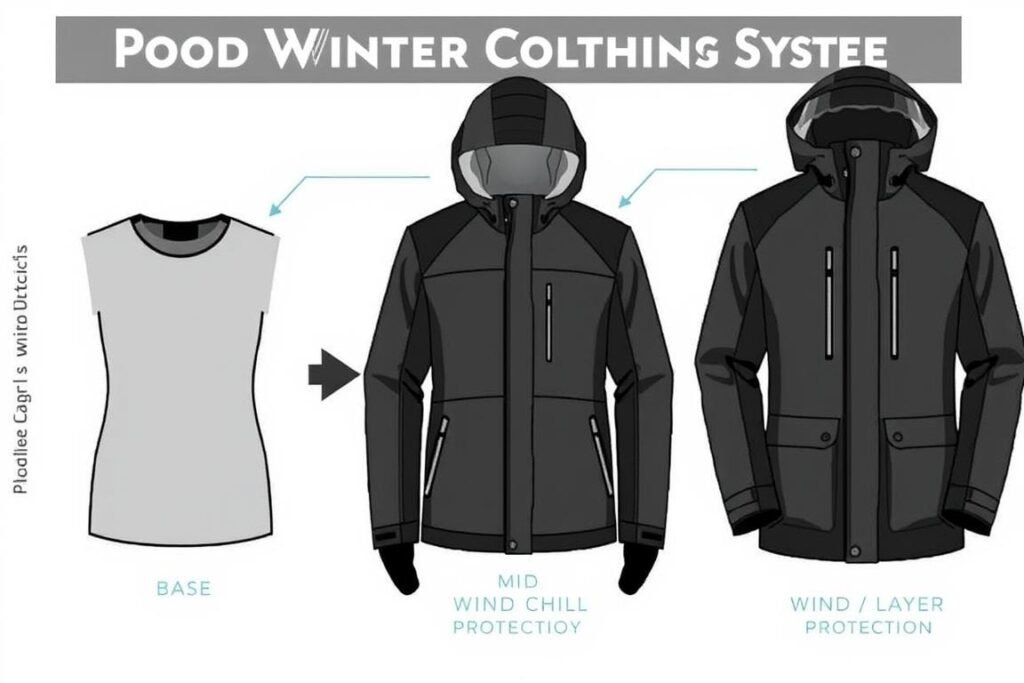
Remember that wind chill affects how quickly your body loses heat, which can lead to serious conditions like frostbite and hypothermia if not properly addressed. Always check both the temperature and wind speed before heading outside in winter, and dress accordingly with layers, windproof outer garments, and full coverage of exposed skin.
Explore More Weather Safety Tools
Our calculators help you stay prepared for all weather conditions.
Try Our Heat Index Calculator
Explore All Weather Calculators