Use our Payment Calculator to estimate monthly payments, interest, and total cost for loans. Plan your finances and manage debt effectively.
Our payment calculator helps you estimate monthly payments for various loans and financial commitments. Whether you’re planning to buy a home, finance a car, or take out a personal loan, understanding your potential payment obligations is crucial for sound financial planning. This comprehensive tool provides accurate calculations based on loan amount, interest rate, and term length to help you make informed decisions.

Using a payment calculator helps you plan your budget and make informed financial decisions
How Payment Calculators Work
Payment calculators use mathematical formulas to determine your monthly payment based on several key factors. Understanding these calculations can help you make better financial decisions and potentially save thousands of dollars over the life of your loan.
The Payment Calculation Formula
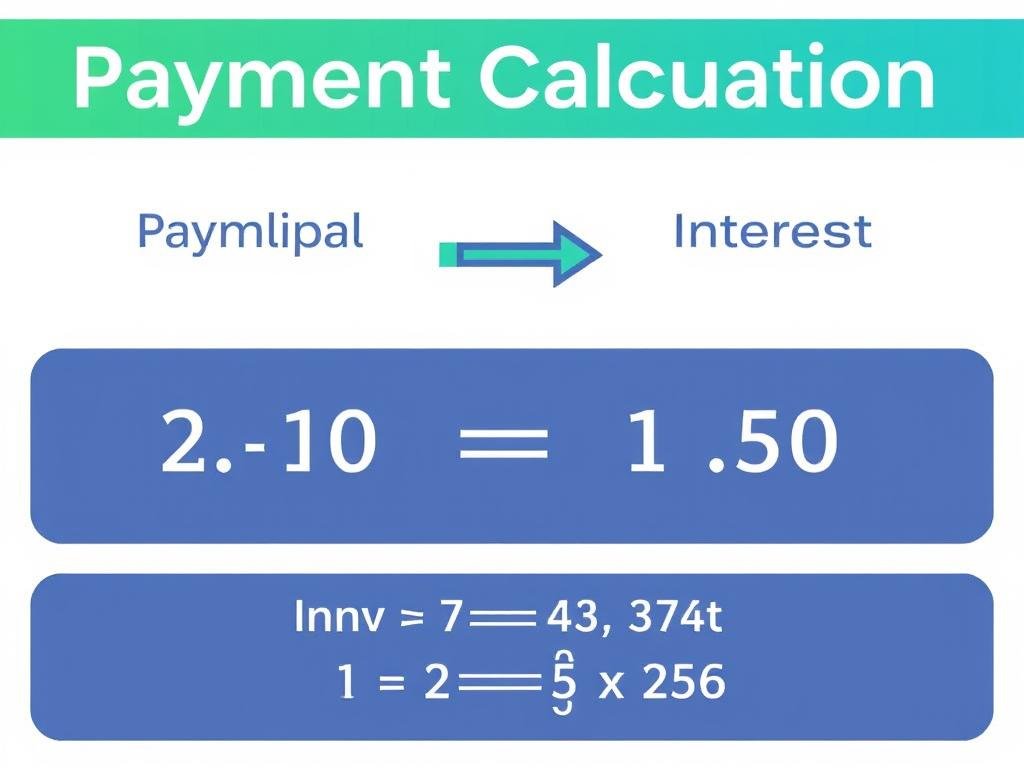
Most payment calculators use the standard amortization formula:
Monthly Payment = P × [r(1+r)^n] ÷ [(1+r)^n-1]
Where:
- P = Principal (loan amount)
- r = Monthly interest rate (annual rate divided by 12)
- n = Total number of payments (term in years × 12)
This formula ensures that each payment covers both the interest due for that period and a portion of the principal, gradually paying down the loan until it reaches zero at the end of the term.
Amortization: How Payments Are Applied
When you make a loan payment, it’s split between principal and interest. In the early years of a loan, a larger portion goes toward interest. As you progress through the loan term, more of each payment goes toward reducing the principal balance.
| Year | Beginning Balance | Interest Paid | Principal Paid | Ending Balance |
| 1 | $200,000 | $9,840 | $3,425 | $196,575 |
| 5 | $182,250 | $8,875 | $4,390 | $177,860 |
| 15 | $125,380 | $5,940 | $7,325 | $118,055 |
| 25 | $45,720 | $2,050 | $11,215 | $34,505 |
| 30 | $10,980 | $480 | $10,980 | $0 |
Example amortization schedule for a $200,000 loan at 5% interest over 30 years
Types of Payment Calculators
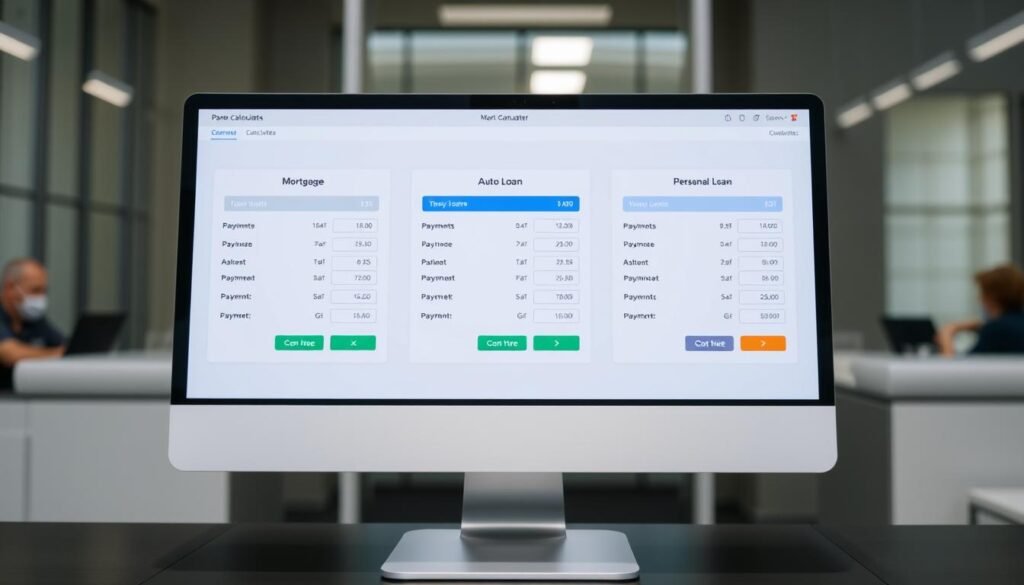
Different financial situations require specialized calculators. Here are the most common types of payment calculators and how they can help you make informed decisions.
Mortgage Payment Calculator
Estimate monthly payments for home loans based on purchase price, down payment, interest rate, and term. These calculators often include property taxes, insurance, and PMI.
Auto Loan Calculator
Calculate car payments with factors like vehicle price, down payment, trade-in value, sales tax, and loan terms. Helps compare financing options from different lenders.
Personal Loan Calculator
Determine payments for personal loans with various terms and interest rates. Useful for debt consolidation, home improvements, or major purchases.
Student Loan Calculator
Estimate education loan payments with options for federal and private loans, including income-driven repayment plans and loan forgiveness programs.
Credit Card Payment Calculator
Calculate how long it will take to pay off credit card debt with different payment amounts, or determine the payment needed to eliminate debt by a specific date.
Business Loan Calculator
Analyze business financing options with calculations for commercial loans, equipment financing, and business lines of credit with various repayment structures.
Factors Affecting Your Payment Amount
Several key factors influence your monthly payment amount. Understanding these variables can help you find ways to reduce your payments and save money over time.
Loan Amount
The principal amount you borrow directly impacts your payment size. A larger loan means higher monthly payments. Consider making a larger down payment to reduce your loan amount and monthly obligation.
Interest Rate
Even small differences in interest rates can significantly affect your payment amount and total interest paid over the life of the loan. Factors affecting your rate include:
- Credit score and history
- Loan-to-value ratio
- Loan term length
- Current market conditions
- Lender policies and competition
Loan Term
The length of your loan affects both your monthly payment and total interest paid. Longer terms reduce monthly payments but increase overall interest costs. Shorter terms have higher monthly payments but lower total interest.

Payment Impact Example
For a $250,000 loan:
- 30-year term at 5%: $1,342/month ($233,140 total interest)
- 15-year term at 5%: $1,977/month ($105,860 total interest)
- 30-year term at 6%: $1,499/month ($289,640 total interest)
Reducing your term from 30 to 15 years saves $127,280 in interest!
Additional Factors
Down Payment
A larger down payment reduces your loan amount, potentially qualifying you for better interest rates and eliminating the need for private mortgage insurance (PMI) in home loans.
Fees and Closing Costs
Various fees may be included in your loan, such as origination fees, application fees, and closing costs. These can be paid upfront or rolled into the loan amount, affecting your monthly payment.
Taxes and Insurance
For mortgages, property taxes and homeowners insurance are often included in the monthly payment through an escrow account, increasing the total payment amount beyond principal and interest.
Prepayment Options
Some loans allow extra payments toward principal without penalty, which can reduce your loan term and total interest paid. Check if your loan has prepayment penalties before making extra payments.
Benefits of Using Payment Calculators
Payment calculators offer numerous advantages for financial planning and decision-making. Here’s how they can help you manage your finances more effectively.

Advantages of Payment Calculators
- Budget Planning: Accurately estimate monthly obligations to ensure they fit within your budget
- Comparison Shopping: Compare different loan options, terms, and rates to find the best deal
- Scenario Testing: Experiment with different down payments, terms, and rates to optimize your loan
- Time Savings: Quickly calculate complex financial scenarios without manual calculations
- Negotiation Power: Enter negotiations with lenders knowing exactly what terms you need
- Long-term Planning: Understand the total cost of loans over their entire term
- Financial Education: Learn how different factors affect your payments and total costs
Limitations to Consider
- Estimates Only: Results are approximations and may differ from actual loan offers
- Simplified Assumptions: May not account for all variables like changing interest rates
- Missing Fees: Some calculators don’t include all potential fees and costs
- Qualification Factors: Doesn’t determine if you’ll qualify for the loan terms entered
- Market Changes: Interest rates and loan products change frequently
“Payment calculators are essential tools for financial planning. They provide clarity about future obligations and help consumers make informed decisions about major purchases and loans.”
Tips for Using Payment Calculators Effectively
To get the most accurate and useful results from payment calculators, follow these practical tips and best practices.
Before Using the Calculator
- Gather accurate information about your loan amount, interest rate options, and potential terms
- Know your credit score to estimate the interest rates you might qualify for
- Research current market rates for the type of loan you’re considering
- Understand all fees that might be included in your loan
While Using the Calculator
- Try multiple scenarios with different down payments, terms, and rates
- Include all relevant costs such as taxes, insurance, and fees
- Be realistic about the terms you’re likely to qualify for
- Save or print results for different scenarios to compare later

After Getting Results
- Compare with actual loan offers to verify accuracy
- Consider the total cost of the loan, not just the monthly payment
- Evaluate how the payment fits into your overall budget
- Consult with financial advisors for major financial decisions
Pro Tip: The 28/36 Rule
Financial experts recommend that your monthly mortgage payment should not exceed 28% of your gross monthly income, and your total debt payments (including mortgage, auto loans, credit cards, etc.) should not exceed 36% of your gross monthly income. Use payment calculators to ensure your loans stay within these guidelines.
Common Questions About Payment Calculators
How accurate are online payment calculators?
Online payment calculators provide reasonably accurate estimates when you input correct information. However, they may not account for all variables that lenders consider when determining your actual loan terms. Use them as planning tools rather than definitive figures. For the most accurate information, consult directly with lenders about specific loan products.
Do payment calculators check my credit score?
No, standard payment calculators do not check your credit score or report to credit bureaus. They are informational tools only. You’ll need to know your approximate credit score to estimate the interest rate you might qualify for. Some lender websites offer pre-qualification tools that do perform soft credit checks, but these are different from basic payment calculators.
What’s the difference between APR and interest rate in calculators?
Interest rate is the percentage charged for borrowing the principal amount. Annual Percentage Rate (APR) includes both the interest rate and certain loan fees, providing a more comprehensive measure of loan cost. Some calculators use interest rate only, while others may incorporate APR. Check which rate the calculator is using for the most accurate results.
Can payment calculators help with refinancing decisions?
Yes, payment calculators are excellent tools for refinancing decisions. They allow you to compare your current loan with potential refinancing options to see if you could save money by changing your interest rate or term. Be sure to include any refinancing costs in your calculations to determine the true break-even point and long-term savings.
How do I calculate the total interest paid over the life of a loan?
To calculate total interest, multiply your monthly payment by the number of payments, then subtract the original loan amount. For example, if you borrow $200,000 with monthly payments of $1,073 for 30 years (360 payments), your calculation would be: ($1,073 × 360) – $200,000 = $186,280 in total interest. Most payment calculators will show this figure automatically in their results.
Ready to Calculate Your Payments?
Use our comprehensive suite of financial calculators to plan your next loan or financial decision
Related Financial Calculators
Explore our other financial calculators to help with various aspects of your financial planning and decision-making.
Amortization Calculator
See a complete breakdown of each payment throughout your loan term, showing how much goes to principal and interest each month.
Affordability Calculator
Determine how much house, car, or other purchase you can afford based on your income, expenses, and desired payment amount.
Refinance Calculator
Compare your current loan with refinancing options to see potential savings and determine if refinancing makes financial sense.

Make Informed Financial Decisions with Payment Calculators
Payment calculators are powerful tools that can help you navigate complex financial decisions with confidence. By understanding how different factors affect your monthly payments and total costs, you can make choices that align with your financial goals and budget constraints.
Whether you’re planning to buy a home, finance a vehicle, consolidate debt, or make any other significant financial commitment, taking the time to calculate and compare your options can save you thousands of dollars over the life of your loans. Remember that while calculators provide valuable estimates, consulting with financial professionals for major decisions is always recommended.
Start Planning Your Financial Future Today
Use our suite of financial calculators to make informed decisions